

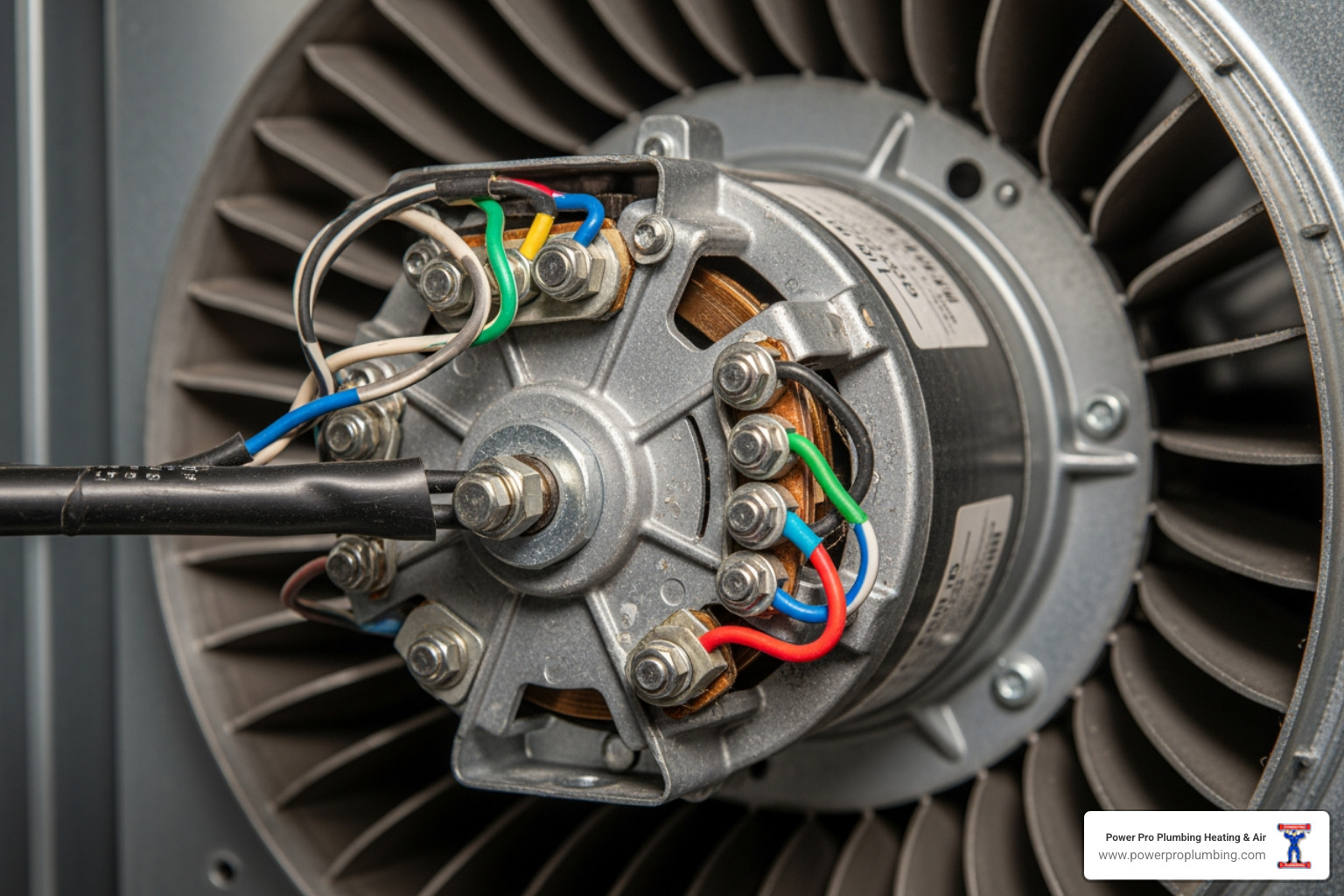
Why Your Furnace Blower Motor Matters More Than You Think
A blower fan for furnace replacement becomes necessary when your heating system can't circulate warm air effectively. This motor is the heart of your furnace, pushing heated air through ductwork to every room. If it fails, your furnace produces heat it can't deliver, leaving you with cold rooms and high energy bills as the system struggles to compensate.
Quick Guide to Blower Fan Replacement:
- PSC Motors: Standard, single-speed motors in older furnaces; more affordable but less efficient.
- ECM Motors: Variable-speed motors that adjust airflow automatically; quieter and up to 50% more energy-efficient.
- Key Specifications: Horsepower (HP), voltage, RPM, and frame size must match your furnace.
- Professional vs. DIY: Replacement involves electrical work and is best left to professionals for safety and warranty protection.
- Expected Lifespan: 10-20 years with proper maintenance.
When to Consider Replacement:
- Weak or no airflow
- Strange noises (squealing, grinding)
- System overheating
- Rising energy bills
As an experienced HVAC professional, I've seen how understanding your options for a blower fan for furnace replacement helps homeowners make confident repair decisions. This guide will walk you through the key signs of failure, motor types, and the replacement process.
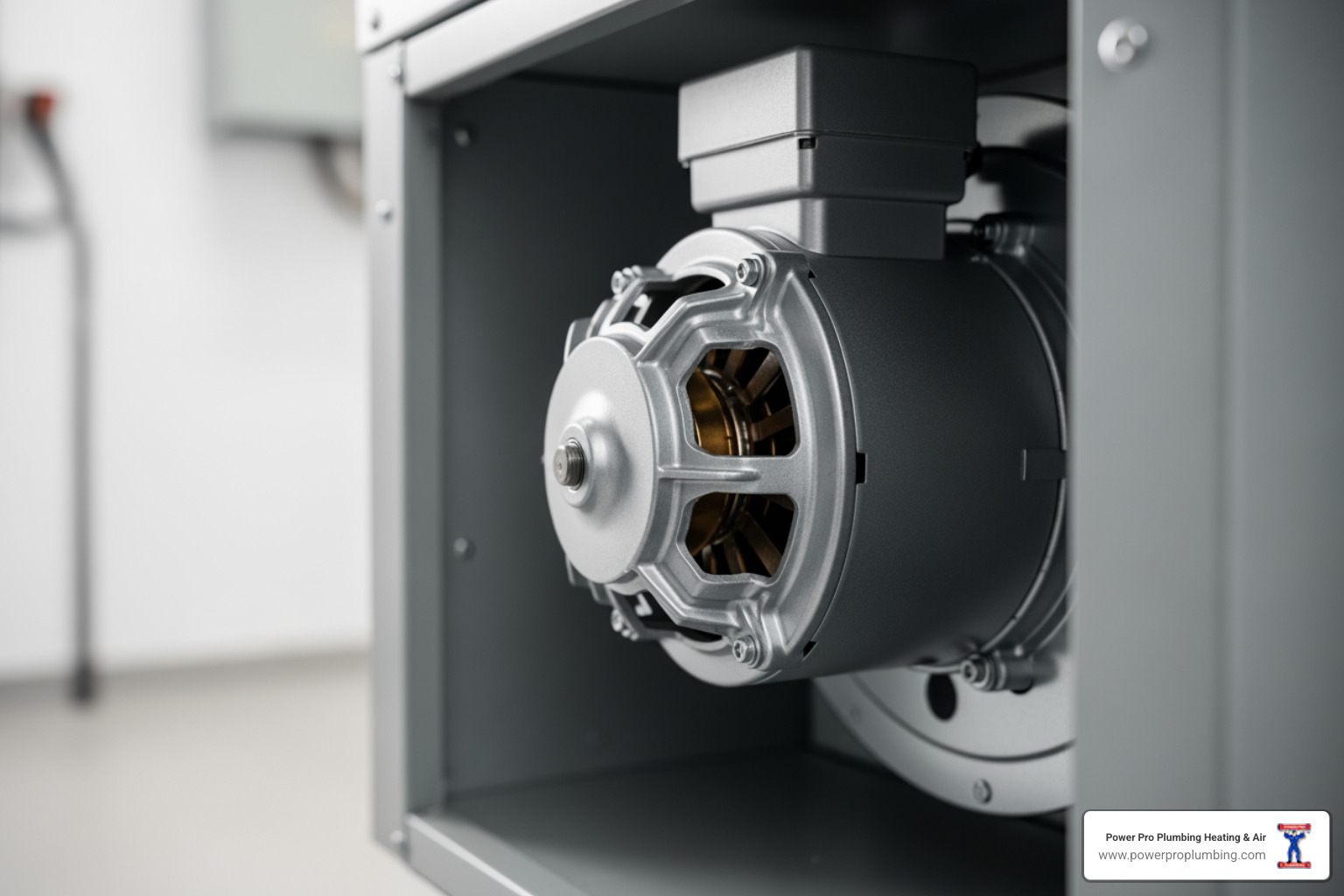
Simple guide to blower fan for furnace replacement:
5 Common Signs Your Furnace Blower Motor Needs Replacement
If your blower motor is failing, all the warm air your furnace generates stays trapped inside the unit. The motor is responsible for pushing heated air through your ductwork, and when it fails, comfort drops, and energy bills climb. Catching these warning signs early can prevent a minor repair from turning into a complete system breakdown.
Most blower motor failures stem from worn bearings, electrical problems, or overheating from restricted airflow. Let's walk through the five telltale signs that you might need a blower fan for furnace replacement.

Poor or Uneven Airflow
If some rooms feel arctic while others are cozy, your blower motor is likely struggling. Weak airflow from your vents is one of the most obvious signs of trouble. A healthy motor pushes air forcefully, but a failing one reduces that stream to a trickle. This forces your furnace to run longer, burning more energy to heat your home and creating frustrating cold spots. Often, the cause is a clogged air filter, so checking and changing your filter is a crucial first step to protect your motor from strain.
If you're experiencing inconsistent heating, your Heater Needs Professional Repair before the problem worsens.
Strange Noises from the Furnace
Your furnace should operate quietly. If you hear unusual sounds, it's time to investigate.
- Squealing or screeching typically means the motor's bearings are wearing out. Ignoring this can cause the motor to seize completely.
- Grinding or rattling can point to loose components or debris in the fan blades. These noises often get worse as the motor runs.
- A loud humming or buzzing without the fan spinning usually signals an electrical issue, like a failed capacitor that can't provide the initial power boost.
These noises are warning signals of imminent failure. If you also notice unusual smells, learn more about Why is my furnace smell bad? to understand the cause.
Overheating and Burning Smells
An overworked blower motor can overheat, causing your furnace to cycle on and off frequently. You might also notice a distinct burning smell from your vents. This odor could be from overheating motor wiring or dust burning off the motor—a genuine fire hazard that needs immediate attention.
An overheating motor will trigger the furnace's safety limit switch, shutting the system down. While this protects your equipment, frequent shutdowns indicate dangerous stress on the motor. If your furnace keeps shutting off or you smell something burning, it's an urgent sign that requires professional diagnosis. Learn more about Addressing Common Furnace Issues before they become emergencies.
Skyrocketing Energy Bills
A sudden jump in your utility bills without a change in thermostat settings can be a sign of a failing blower motor. A struggling motor consumes more electricity to do its job, running longer and working harder while accomplishing less. This inefficiency directly impacts your monthly bill and accelerates wear and tear on the entire heating system, leading to more repairs down the road. A timely blower fan for furnace replacement can pay for itself through lower energy bills.
The Dangers of a Faulty Blower Motor
Postponing a blower motor repair creates genuine risks. A struggling motor puts excessive strain on your entire furnace, accelerating wear on components like the heat exchanger and control board.
The most serious risk involves the heat exchanger. Poor airflow can cause it to overheat and crack, allowing dangerous carbon monoxide to leak into your home's air supply. A cracked heat exchanger is a critical emergency.
Eventually, a neglected motor will lead to a complete system breakdown, often on the coldest night of the year. Don't let small problems become major emergencies. If you notice these signs, it's Time for Furnace Repair to get your system professionally evaluated.
Understanding the Different Types of Furnace Blower Motors
When you're facing a blower fan for furnace replacement, understanding the different motor types can make a real difference in your comfort and energy bills. The two main types you'll encounter are older PSC motors and modern ECM motors.
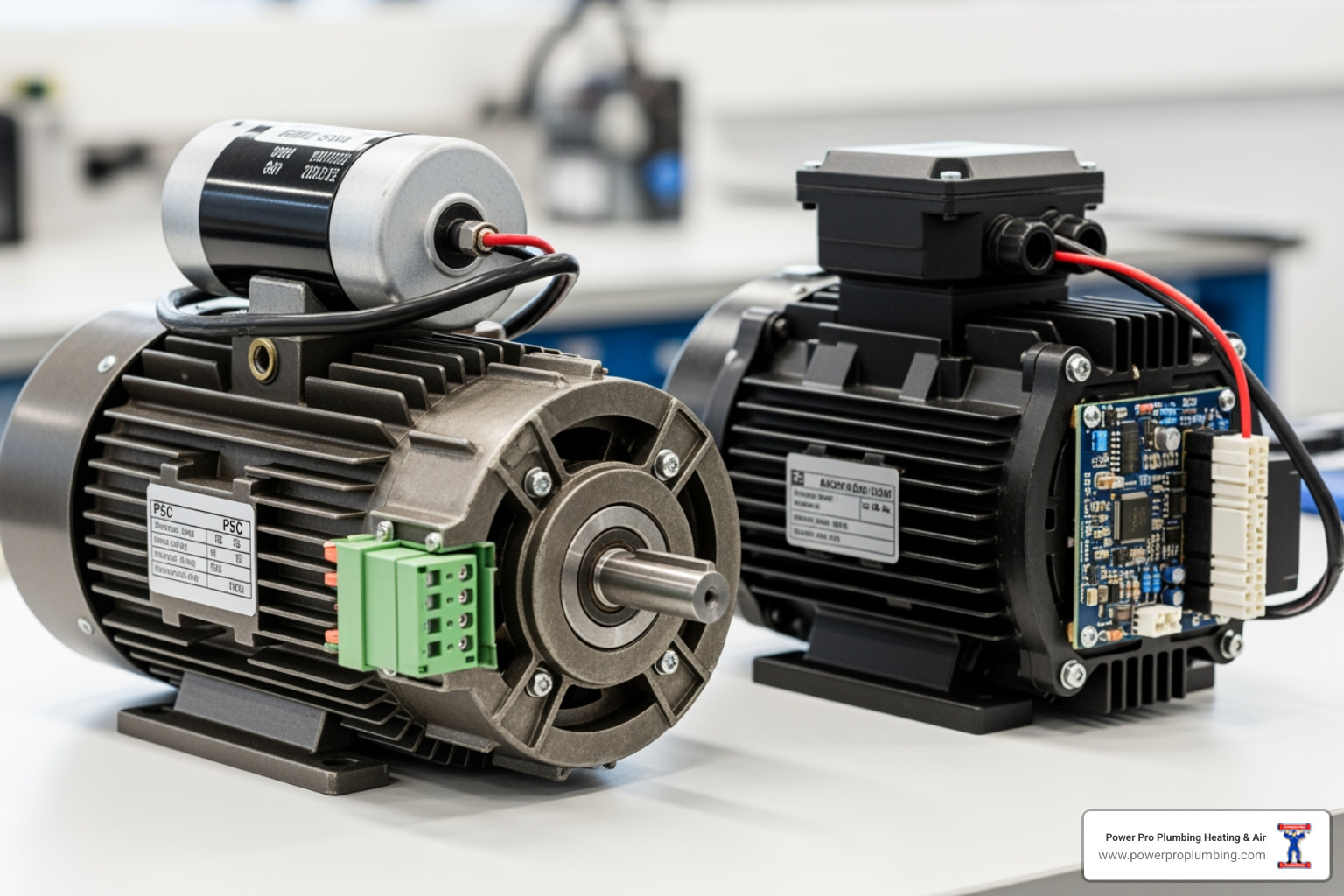
Permanent Split Capacitor (PSC) Motors
If you have an older furnace, it likely has a Permanent Split Capacitor (PSC) motor. These are single-speed units that work like a light switch: they're either fully on or completely off. When your thermostat calls for heat, the PSC motor kicks on at full power and stays there.
While simple and historically less expensive, this all-or-nothing approach is inefficient. Running at full speed all the time draws maximum power, even when only gentle circulation is needed. This translates to higher electricity bills and represents older technology that lacks the efficiency of modern alternatives.
Electronically Commutated Motors (ECM) or Variable-Speed Motors
Electronically Commutated Motors (ECMs), also known as variable-speed motors, are the game-changer in furnace technology. Unlike PSC motors, ECMs intelligently adjust their speed and power based on your home's real-time needs. This is like cruise control for your furnace, maintaining perfect comfort without wasting energy.
The advantages are significant:
- High-efficiency: ECMs can reduce your fan's electricity consumption by up to 50% compared to PSC motors, leading to substantial savings on utility bills.
- Quieter operation: By running at lower speeds most of the time, ECMs are significantly quieter than single-speed motors.
- Better temperature control: They provide gentle, consistent airflow that eliminates hot and cold spots, maintaining even temperatures throughout your home.
- Reduced electricity use: This efficiency saves you money year-round, during both heating and cooling seasons.
Many modern high-efficiency furnaces, like our Daikin Furnaces, come standard with ECM technology. While a PSC motor may have a lower upfront cost, the long-term savings and improved comfort of an ECM often make it the smarter investment.
Key Factors for Choosing the Right Blower Fan for Furnace Replacement
When it's time for a blower fan for furnace replacement, you can't just pick any motor. The replacement must match your furnace's specific requirements to ensure it runs efficiently and safely.
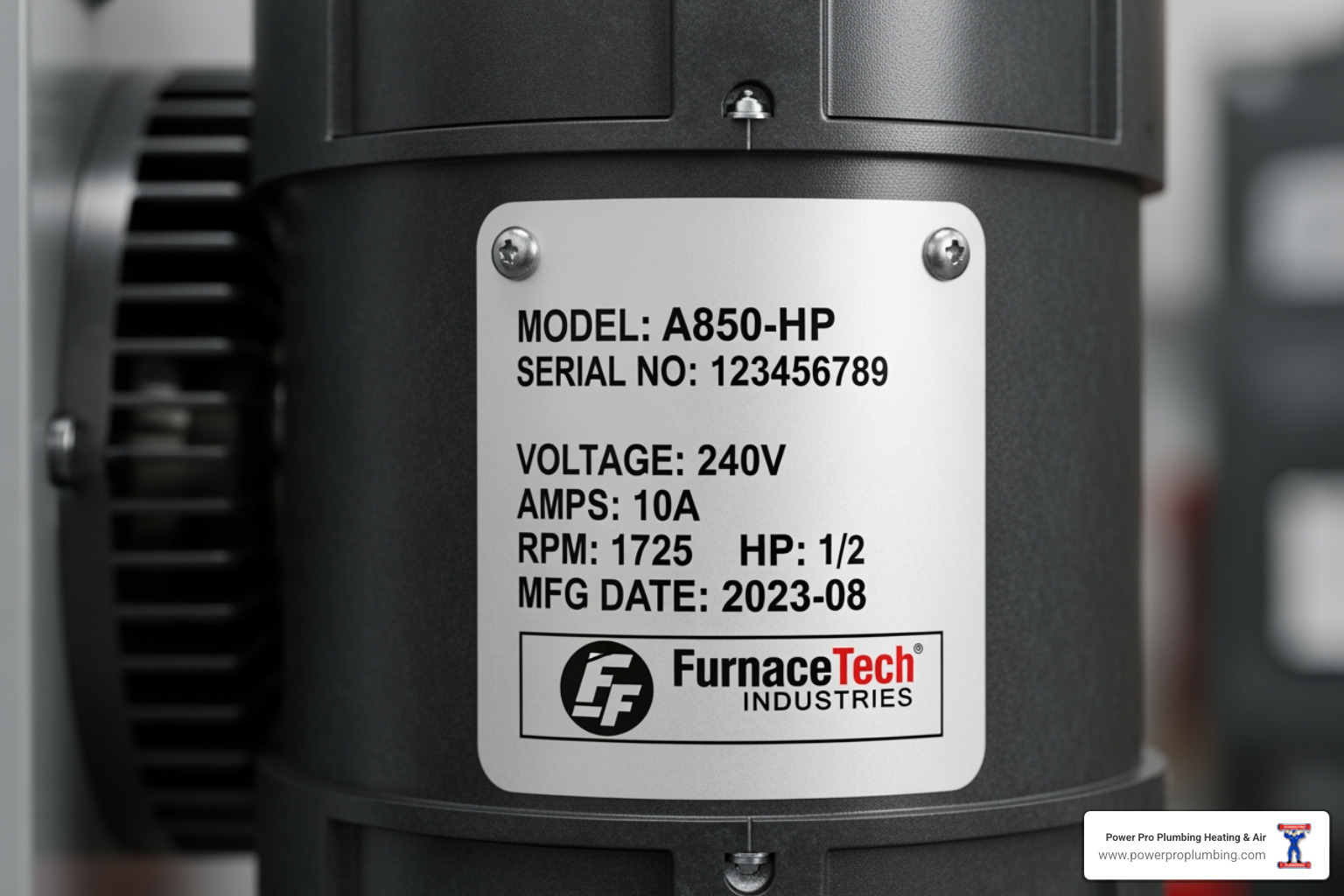
Matching Technical Specifications
Every blower motor has a specification label that acts as its ID card. Getting these details right is critical for compatibility. A professional will verify all of these to ensure a perfect match:
- Horsepower (HP): Determines how much air the motor can move. It must be matched to your system's needs.
- Voltage: Must match exactly (typically 115V or 230V) to prevent damage and safety hazards.
- Rotations Per Minute (RPM): The speed at which the motor spins must be compatible with your furnace's design for proper airflow.
- Frame Size & Shaft Dimensions: These physical measurements ensure the motor will fit correctly in the blower compartment and connect to the fan.
- Rotation Direction: Motors spin either clockwise (CW) or counter-clockwise (CCW), and the replacement must match your system's requirement.
Getting these specifications right is why we recommend working with professionals who can verify compatibility before installation.
Why Choose an Energy-Efficient Blower Fan for Furnace Replacement?
When replacing your motor, consider upgrading to an energy-efficient ECM model. While the upfront cost is higher than a basic PSC motor, the long-term benefits make it a smart investment.
The energy savings are the main draw. An ECM motor can cut your fan's electricity use by up to 50%, which adds up to significant savings over the motor's lifespan. The improved comfort from consistent airflow eliminates hot and cold spots, and the quieter operation makes for a more peaceful home.
An energy-efficient motor also contributes to a longer lifespan for your entire furnace by reducing strain on other components. They also integrate well with smart thermostats, giving you greater control over your home's climate. Upgrading is a smart move we often recommend during HVAC Services for Winter Prep to ensure peak performance.
The Replacement Process: DIY vs. Professional Installation
A blower fan for furnace replacement is not a simple DIY project. It involves high-voltage electricity, precise assembly, and specialized knowledge to ensure your heating system operates safely and efficiently. What seems like a straightforward swap can quickly become a costly and dangerous situation.
Can a Homeowner Replace a Blower Motor?
We strongly advise against DIY blower motor replacement. The risks are significant and include:
- Electrical Shock Hazard: Furnaces use high voltage, and a mistake can cause severe injury. Professionals have the training and tools to work safely.
- Incorrect Wiring: Modern motors, especially ECMs, have complex wiring. A wrong connection can destroy the new motor, damage the furnace's control board, or create a fire hazard.
- Further System Damage: An improperly installed motor can strain the heat exchanger and other components, leading to more expensive repairs.
- Voiding Your Warranty: Most manufacturers require professional installation to keep the warranties on the motor and furnace valid.
Professionals use specialized tools like multimeters and manometers to ensure the job is done correctly. For more on this, see our guide on Avoiding Furnace Installation Errors.
What to Expect During a Professional Blower Fan for Furnace Replacement
When you call a professional, you're getting expertise, safety, and peace of mind. The process includes:
- System Diagnosis: A technician first confirms the motor is the true cause of the problem, checking capacitors and control boards to avoid unnecessary replacement.
- Safe Power Disconnection: Power is shut off at the breaker and verified with testing equipment before any work begins.
- Blower Assembly Removal: The entire blower housing is carefully removed from the furnace cabinet.
- Motor and Fan Replacement: The old motor is detached, and the new one is installed and correctly balanced with the blower wheel to prevent vibration and noise.
- Wiring and Configuration: The new motor is wired according to manufacturer specifications. ECM motors are programmed to match the furnace's requirements.
- System Testing and Calibration: After reassembly, the technician runs the furnace through a full cycle, checking airflow, temperature, and safety controls to ensure optimal performance.
This thorough process ensures your furnace works correctly and safely. For all your heating needs, you can count on our Professional Heating Services to get the job done right.
How Regular Maintenance Can Extend Your Blower Motor's Lifespan
With proper preventative care, your furnace blower motor can easily reach or exceed its typical 10 to 20-year lifespan. Most premature failures are due to a lack of basic maintenance, but the good news is that keeping your motor healthy is simple.
The Importance of Clean Air Filters
The single most important thing you can do to protect your blower motor is to change your air filter regularly. A clogged filter is the #1 cause of motor strain. It forces the motor to work much harder to pull in air, causing it to overheat, wear down its bearings, and fail prematurely.
A clean filter allows for effortless improved airflow and reduced strain. This means better heating performance, lower electricity use, and a longer life for your motor. We recommend checking your filter monthly and replacing it every 1-3 months. This five-minute task can add years to your motor's life. For more tips, see our Furnace Maintenance Guide.
Annual Professional Tune-Ups
While changing filters is crucial, an annual professional tune-up provides a comprehensive check-up for your furnace. During a tune-up, a technician performs tasks that go beyond homeowner maintenance:
- Component Cleaning: We thoroughly clean the blower motor housing and fan blades, removing grime that causes the motor to run hot.
- Lubrication: For older motors with oil ports, we lubricate the bearings to reduce friction and prevent squealing.
- Electrical Connection Check: We inspect all wiring and terminals for looseness or corrosion that can lead to motor failure.
- Performance Testing: We measure the motor's electrical draw and verify it's operating within manufacturer specifications to catch problems early.
Regular maintenance prevents midnight emergencies. Scheduling a Furnace Tune-Up Long Beach, CA ensures your system is ready when you need it. For more winter-ready tips, explore our guide on HVAC Services for Winter Prep.
Frequently Asked Questions about Furnace Blower Motors
Homeowners often have questions when their furnace acts up. Here are answers to some of the most common questions we hear about blower motors.
What is the life expectancy of a furnace blower motor?
A furnace blower motor typically lasts 10 to 20 years. The actual lifespan depends heavily on two factors: usage and maintenance. A motor in a home with harsh winters will work harder, but the biggest factor is maintenance impact. A motor with clean filters and annual tune-ups can easily reach the 20-year mark, while a neglected one may fail in under 10 years.
Is it worth replacing just the furnace blower motor?
It depends on your furnace's age and overall health.
- For a younger furnace (under 12 years old): Yes, replacing just the motor is a cost-effective repair that can add many more years of reliable service.
- For an older furnace (over 15 years old): It's a tougher call. If the furnace has a history of repairs, it may be time to consider a full replacement. However, upgrading to an efficient ECM motor can still be a great investment, as the energy savings and improved comfort can justify the cost even on an older unit.
We can provide an honest assessment to help you make the best financial decision.
What happens if you don't replace a failing blower motor?
Ignoring a failing blower motor leads to bigger problems. You'll experience reduced efficiency and higher energy costs as the furnace struggles to heat your home. This strain causes damage to other components, like the heat exchanger and control board, leading to more expensive repairs.
Your comfort will suffer from uneven heating, and eventually, the motor will fail completely, leading to an unexpected breakdown on the coldest day of the year. Most importantly, there are safety risks. An overworked motor can cause the heat exchanger to crack, potentially leaking deadly carbon monoxide into your home. Prompt replacement is crucial for your safety, comfort, and budget.
Trust the Experts for Your Furnace Needs
Your home's heating system is critical for your family's comfort and safety. A blower fan for furnace replacement is a complex job that requires professional expertise to ensure it's done right. While DIY is great for some projects, this is one best left to certified technicians.

At Power Pro Plumbing Heating & Air, we've been keeping homes across Southern California comfortable for years. Our commitment is to get the job right the first time. We provide a professional diagnosis to identify the real problem, perform safe repairs to protect your family, and optimize your system efficiency to save you money. This approach gives you peace of mind knowing your heating system is in expert hands.
We serve communities from Long Beach to Cerritos and across the greater Los Angeles Area, including Orange County, the South Bay, and San Bernardino. Our technicians arrive prepared to work efficiently, communicate clearly, and treat your home with respect.
Don't wait for a complete breakdown. If you've noticed weak airflow, strange noises, or climbing energy bills, it's time to reach out. Schedule your appointment today and let us show you why Power Pro is the trusted name in home comfort.
https://www.powerproplumbing.com/heating-repair-installation-maintenance