

Is Your Home's Water Trying to Tell You Something in Los Angeles or Orange County?
If you've been noticing signs your home needs water treatment, you're not alone - and your instincts are probably right. Here's a quick look at the most common red flags:
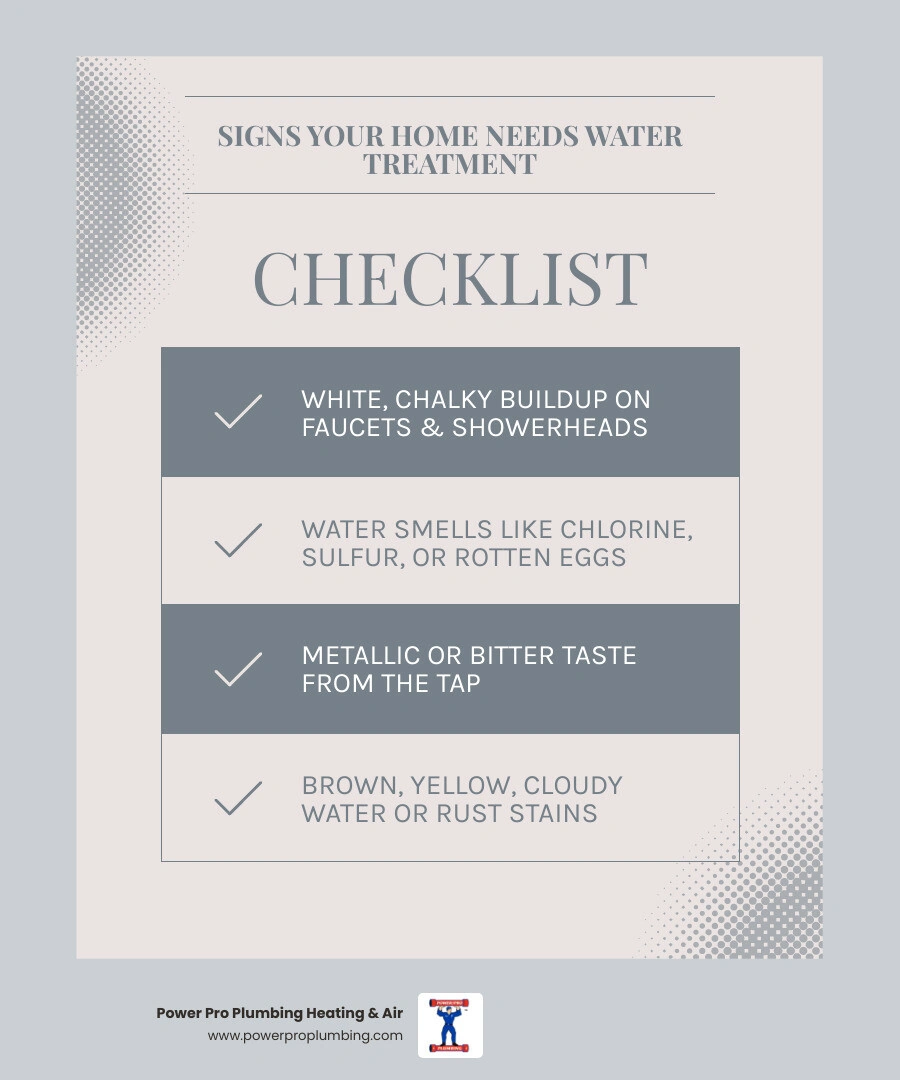
Common Signs Your Home Needs Water Treatment:
- White, chalky buildup on faucets and showerheads
- Water that smells like chlorine, sulfur, or rotten eggs
- Metallic or bitter taste from the tap
- Brown, yellow, or cloudy water in the glass
- Orange or rust-colored stains on sinks, toilets, or tubs
- Dry, itchy skin or brittle hair after showering
- Spots on dishes and glassware after washing
- Stiff, faded, or dull laundry
- Low water pressure throughout the home
- Appliances like water heaters and dishwashers wearing out faster than expected
Most homeowners do not give their water a second thought until something feels off. Maybe the tap water smells faintly like a swimming pool. Maybe your morning coffee has a metallic edge you cannot ignore. Or maybe you have been scrubbing the same chalky white crust off your faucet every few weeks and wondering why it keeps coming back. These are not random nuisances. They are your home's way of signaling that something in the water supply needs attention.
Here in the Greater Los Angeles, Orange County, and South Bay areas, water quality can vary widely depending on your neighborhood, your home's plumbing age, and whether your supply comes from local groundwater or imported surface water. As of May 2026, municipal systems meet EPA baseline standards, but meeting the legal minimum and delivering truly clean, comfortable water are two different things. Hard water, chlorine residuals, iron, and even less noticeable contaminants like PFAS are common concerns for Southern California homeowners, and many of the symptoms show up in daily life long before anyone thinks to test the water.
At Power Pro Plumbing Heating & Air, we help homeowners across Los Angeles County, Orange County, and the South Bay make sense of these issues with honest guidance, licensed technicians, and reliable local service. Recognizing the signs your home needs water treatment early can help protect your plumbing, improve day-to-day comfort, and keep your home's water working the way it should.
Common Sensory Signs Your Home Needs Water Treatment
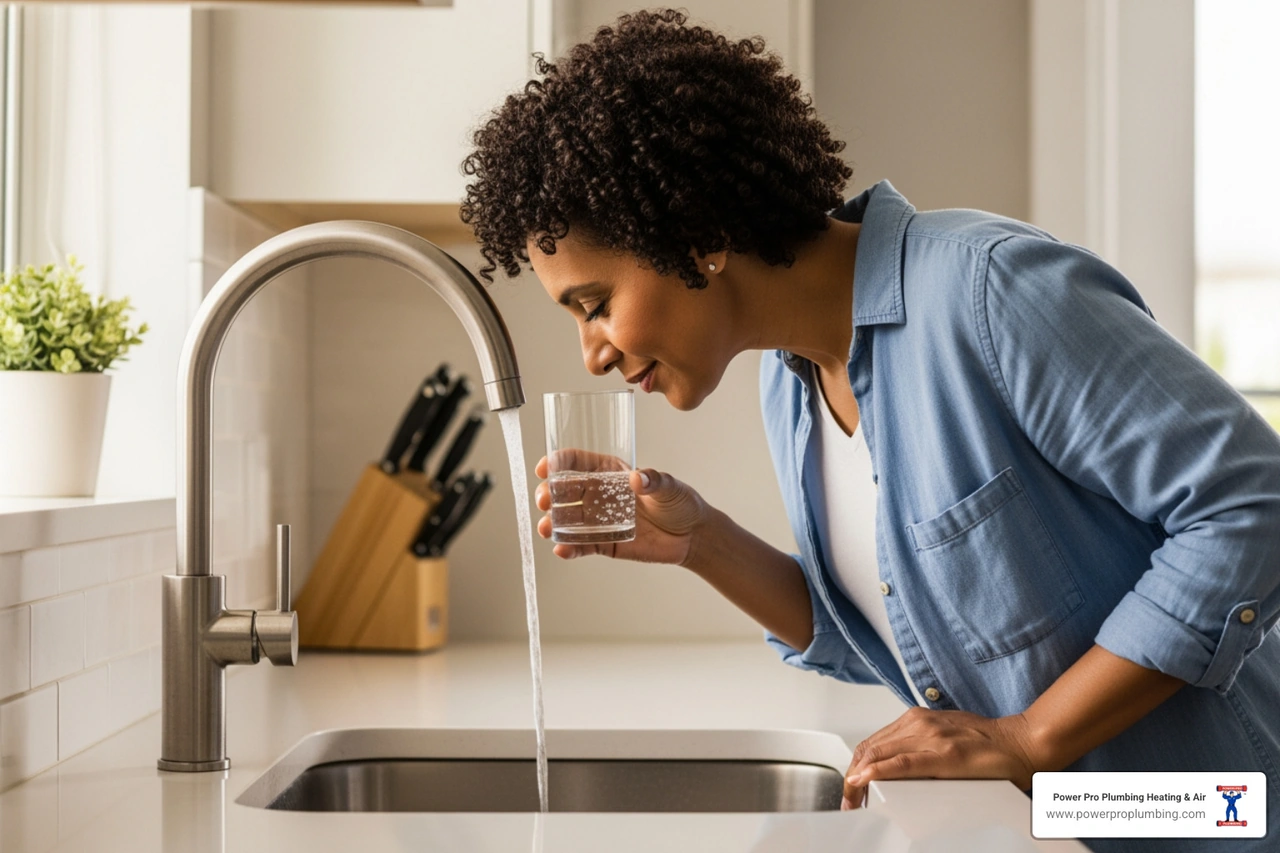
Sometimes your water tells on itself immediately. Before you ever see a lab result, you may notice that it smells odd, tastes off, or looks a little suspicious in the glass. Those sensory clues are often the earliest and easiest-to-spot signs your home needs water treatment.
A good rule of thumb: drinking water should be clear, mostly odorless, and neutral in taste. If it reminds you of a pool, pennies, wet rocks, or rotten eggs, your water is asking for attention.
If you're already noticing multiple issues around the house, it's smart to learn more about your overall plumbing system too: More info about plumbing services
Foul Odors and Chemical Tastes
A chlorine smell is one of the most common complaints in municipal water. Cities disinfect water for safety, but leftover chlorine or chloramine can still make it to your tap. The EPA limit is under 4 mg/L, yet many people can smell chlorine at around 1 mg/L or even less. That means your water can be legally compliant and still smell like a public pool.
Other smells can point to different problems:
- Rotten egg smell often suggests hydrogen sulfide
- Musty or earthy odors can be linked to organic matter or algae-related issues
- Metallic taste may signal iron, copper, or other dissolved metals
- Bitter taste can be associated with elevated mineral content, including magnesium
If the smell is strongest in hot water only, the issue may involve your water heater rather than the entire incoming supply. If both hot and cold water smell bad, the problem is more likely in the home's water source or distribution.
Cloudy or Discolored Water
Cloudy water is not always dangerous, but it should never be ignored. Sometimes it's just tiny air bubbles, which usually clear from the bottom up within a minute or two. If the cloudiness lingers, suspended particles, sediment, or mineral content may be the cause.
For clarity, potable water generally should not exceed 0.5 NTU turbidity. You are not measuring NTU at the kitchen sink, of course, but persistent haze is a sign worth investigating.
Color changes matter too:
- Brown or reddish water can indicate iron or rust
- Yellow or tea-colored water may come from aging pipes or mineral contamination
- Black or dark staining can point to manganese
- Blue-green staining may suggest copper corrosion from acidic water
If your water changes color after road work, hydrant flushing, or plumbing repairs, it may be temporary. But if discoloration keeps returning, treatment or plumbing correction may be needed.
How Hard Water Damages Your Southern California Home
Southern California homeowners deal with hard water all the time, and many mistake the symptoms for normal wear and tear. They are not. Hard water contains elevated levels of calcium and magnesium, and it affects everything from how your soap lathers to how long your water heater lasts.
Research consistently shows that about 85% of U.S. households have hard water. In practical terms, that means scale buildup, soap scum, and appliances that have to work harder than they should.
| Issue | Hard Water | Soft Water |
|---|---|---|
| Faucet and showerhead condition | White scale buildup and clogging | Cleaner surfaces with less residue |
| Soap and shampoo performance | Poor lather, harder rinsing | Better lather and easier rinsing |
| Dishes and glassware | Spots and cloudy film | Cleaner finish |
| Laundry results | Stiff, dull, faded fabrics | Softer, brighter clothes |
| Plumbing and appliances | Mineral buildup reduces efficiency | Less internal scaling |
| Skin and hair feel | Dry, tight, rough feeling | Smoother feel after washing |
If you see several of these issues at once, hard water is one of the most likely culprits. You can also explore More info about plumbing services if water quality is already affecting fixtures and pipes.
Limescale Buildup on Fixtures
That white, chalky crust on faucets, shower doors, and showerheads is not just ugly. It is mineral scale left behind as hard water evaporates. Over time, it can:
- Clog tiny openings in showerheads
- Build up around faucet aerators
- Leave a rough film on sinks and tubs
- Make fixtures look older than they are
A showerhead that sprays sideways like it has a personal grudge usually has mineral buildup inside. That is one of the clearest household signs of hard water.
Scale also tends to keep coming back quickly after cleaning. If you feel like you are in a never-ending battle with white residue, water treatment is often the missing piece.
Plumbing Issues as Signs Your Home Needs Water Treatment
Hard water does not stay politely on the surface. It also builds up inside pipes, valves, supply lines, and appliances. Over time, mineral deposits can narrow the inside diameter of pipes dramatically. In severe cases, buildup can reduce pipe diameter by up to 50%, which contributes to weak flow and recurring plumbing trouble.
Watch for these warning signs:
- Lower water pressure at multiple fixtures
- Showerheads and faucet aerators clogging often
- Toilets or fill valves needing frequent service
- Water heater rumbling from sediment and scale
- More frequent leaks in aging plumbing systems
Low pressure is often blamed on the city's supply, but internal scale can be the real problem. In older homes, especially where galvanized piping still exists, mineral buildup and corrosion can work together to restrict flow and worsen water quality.
The Impact of Poor Water Quality on Your Family and Belongings
Poor water quality is not just a plumbing issue. It can affect your comfort, your cleaning routine, your laundry, and even how confident you feel using the tap water every day.
If your soap does not rinse well, your dishes come out spotted, and your clothes never seem fully clean, that is not your imagination. Untreated water changes how soap and detergent work.
Some of the most common household effects include:
- Soap scum on tubs and shower walls
- White spots on dishes and glassware
- Dingy or stiff laundry
- Rust or orange stains on toilets and sinks
- More soap and detergent used for the same results
Iron is a big one here. Research shows excessive iron appears in about 17% of private water supplies tested, and even much lower levels can leave noticeable orange or brown staining. Stain color can offer clues:
- Orange or reddish stains often suggest iron
- Brown or black stains may indicate manganese
- Blue-green marks can point to copper corrosion
Again, if these issues are popping up throughout the home, More info about plumbing services can help you connect the dots between water quality and plumbing wear.
Dry Skin and Brittle Hair
If your skin feels tight after a shower or your hair seems dull no matter what products you buy, your water may be part of the problem. Hard water minerals make soap harder to rinse away, while chlorine and similar disinfectant residuals can strip away natural oils.
That can lead to:
- Dry, itchy skin
- Hair that feels rough or brittle
- Scalp irritation
- Soap residue left on the skin
- More noticeable flare-ups for people with sensitive skin
Many homeowners assume this is just dry weather, aging, or the wrong shampoo. Sometimes it is. But sometimes the shower water is the real troublemaker.
Premature Appliance Failure
This is where untreated water gets expensive in a hurry, even if the damage is gradual. Mineral deposits and sediment collect inside water-using appliances, reducing performance and forcing components to work harder.
Water heaters are especially vulnerable. Hard water can shorten a water heater's life by about 25% to 40%. Scale coating on heating elements and tank surfaces also reduces efficiency, which means more energy is needed to deliver the same hot water.
Other affected appliances include:
- Dishwashers
- Washing machines
- Ice makers
- Refrigerator water lines
- Tankless water heaters
If appliances seem to wear out faster than expected, need repeated repairs, or just do not perform as well as they used to, untreated water may be a major reason.
Invisible Contaminants and Why Testing Matters
Some of the most serious water problems are the ones you cannot see, smell, or taste. That is why testing matters so much. Clear water is not always clean water.
A proper test can identify issues such as:
- Hardness levels
- Chlorine or chloramine
- Iron and manganese
- pH imbalance
- Copper or lead
- Nitrates
- PFAS and other persistent contaminants
- Sediment and turbidity concerns
This is where guesswork stops being helpful. The right treatment depends on what is actually in the water.
Common treatment categories include:
- Water softeners for hardness caused by calcium and magnesium
- Filtration systems for chlorine, sediment, tastes, and many contaminants
- Whole-house treatment systems for broad protection at the main water line
- Point-of-use systems, such as under-sink filters or reverse osmosis, for drinking water
A softener is not the same thing as a filter. Softeners target hardness minerals. Filters target contaminants like chlorine, sediment, and certain chemicals. Whole-house systems treat water before it reaches fixtures and appliances throughout the home. In many cases, homeowners need a combination of solutions rather than a single device.
You can learn more and schedule help here: More info about plumbing services
Undetectable Signs Your Home Needs Water Treatment
Some contaminants do not announce themselves. PFAS, often called "forever chemicals," are a good example. They generally cannot be detected by sight, smell, or taste. The same goes for some nitrates, arsenic concerns, and other unregulated or less noticeable contaminants.
Testing is especially important if:
- Your home has older plumbing
- Your house was built before 1986 and may contain lead solder or older materials
- You rely on private well water
- A family member has a weakened immune system
- You have recurring health concerns and no obvious cause
- Your water report shows recent concerns or violations
For private wells, annual testing is a smart baseline. For municipal water, testing is still useful because the water can change between the treatment plant and your kitchen tap.
Reviewing Your Local Water Quality Report
If you are on city water in Los Angeles County, Orange County, or the South Bay, your utility should provide an annual Consumer Confidence Report, often called a CCR. This report can tell you:
- Where your water comes from
- Which contaminants were detected
- Whether any standards were exceeded
- What disinfectants are used
- Whether there were any violations
Pay attention to more than the word "compliant." A report can meet federal rules and still reveal things homeowners care about, such as chlorine residuals, hardness, or emerging contaminants that affect taste, comfort, and plumbing life.
Southern California water sources vary. Some areas rely more heavily on imported surface water, while others use groundwater blends. That can influence hardness, mineral content, and overall feel. Even homes in the same city can have different water experiences based on pipe age and neighborhood infrastructure.
Frequently Asked Questions about Water Treatment
Why does my water smell like a swimming pool?
That pool-like smell usually comes from chlorine or chloramine residuals used in municipal disinfection. The water may still meet safety standards, but the odor can be noticeable and unpleasant. If it affects the taste of coffee, tea, soup, or ice, filtration may help.
Can hard water actually increase my utility bills?
Yes. Scale buildup on heating elements and inside plumbing makes appliances less efficient. Water heaters are a major example. When minerals coat the heating surfaces, the system has to work harder and longer to heat water. That wasted effort can show up on your utility bill.
Is cloudy water always dangerous to drink?
Not always. If cloudiness is caused by tiny air bubbles and clears quickly, it is usually harmless. But if the water stays cloudy, contains visible particles, or appears discolored, it may indicate sediment, suspended solids, or another water quality issue. Persistent cloudiness should be tested.
Conclusion
When you step back and look at the full picture, the warning signs are usually pretty clear. Strange tastes, odd smells, scale on fixtures, stained laundry, dry skin, low pressure, and underperforming appliances are not random household annoyances. They are often connected symptoms of a water quality problem that can affect your comfort, your plumbing system, and the lifespan of important equipment throughout your home.
The good news is that once you know what to look for, you can take the next step with confidence. Start by paying attention to patterns. If more than one issue is showing up at the same time, testing your water is a smart move. That gives you a clearer answer on whether your home may benefit from a water softener, a filtration system, whole-home treatment, or a combination based on your actual water conditions.
At Power Pro Plumbing Heating & Air, we help homeowners across the Greater Los Angeles area, Orange County, and the South Bay understand what their water is really saying. With experienced, licensed technicians, same-day service availability, and a trusted local reputation, we are here when you need us. If your home is showing the signs your home needs water treatment, our team can help you protect your plumbing, improve water quality, and make everyday life a little easier.