

Is a Heat Pump or Separate AC and Furnace Right for Your Southern California Home?
Choosing between a heat pump vs separate ac and furnace for a southern california home comes down to a few key factors. Here is a quick answer if you need it fast:
Quick Comparison: Heat Pump vs AC + Furnace in Southern California
| Factor | Heat Pump | Separate AC + Gas Furnace |
|---|---|---|
| Systems needed | One unit handles heating and cooling | Two separate systems |
| Best climate fit | Coastal, inland, and most SoCal areas | Mountain zones, higher elevations |
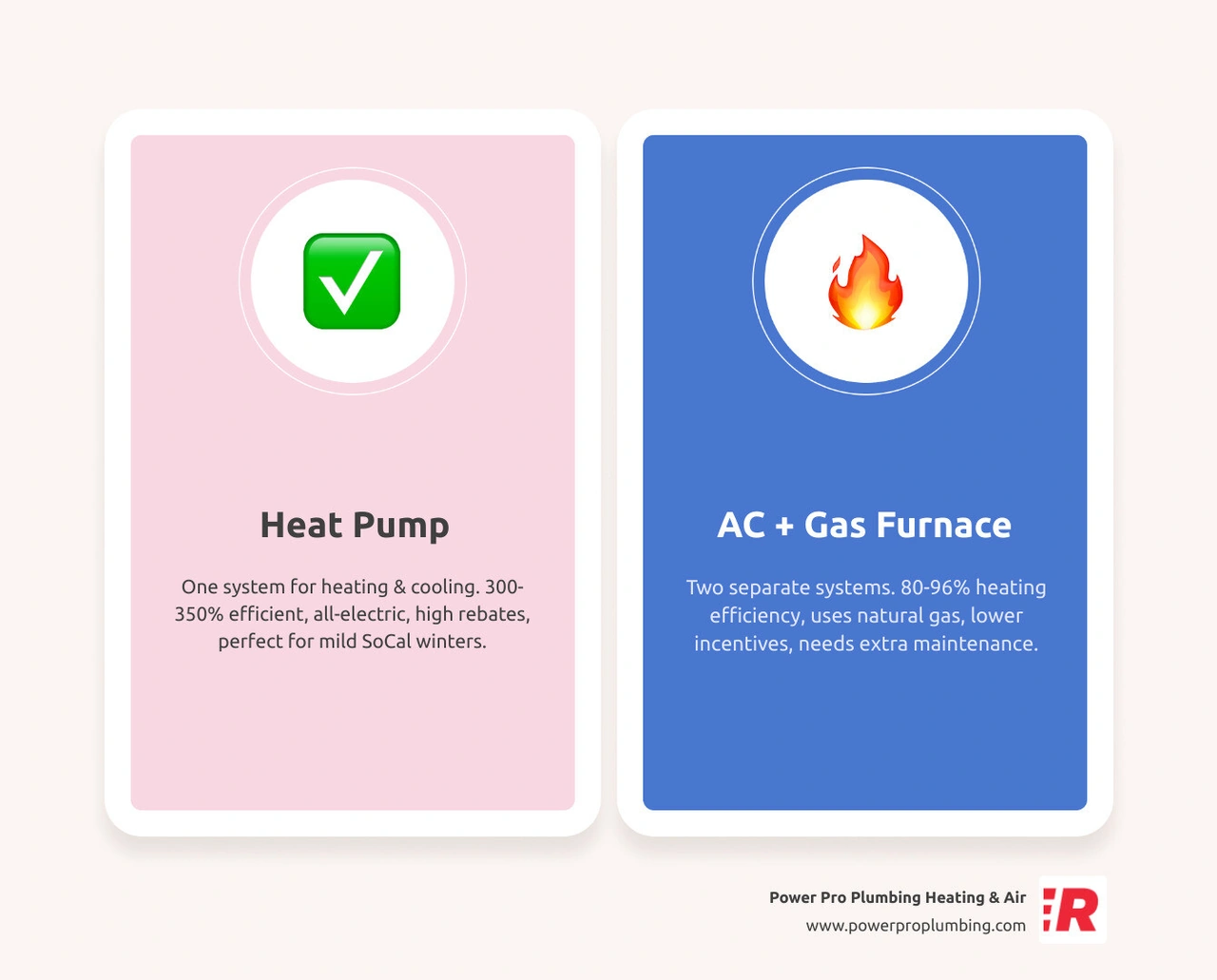
| Heating efficiency | 300-350% (COP 3.0-3.5) | 80-96% AFUE |
| Utility rebates | Significantly higher incentives available | Lower incentives |
| All-electric / solar ready | Yes | No |
| Upfront cost | Slightly higher | Slightly lower |
| Long-term operating cost | Lower in most SoCal conditions | Depends on gas vs electric rates |
| Good for existing ductwork | Yes, if ductwork is in good condition | Yes |
Southern California's mild winters — where overnight lows rarely drop below 35-40°F in most areas — make it one of the best climates in the country for heat pumps. Unlike colder regions where a gas furnace may be necessary to handle sustained freezing temperatures, most SoCal homes barely stress a modern heat pump. Still, the right choice depends on your home's age, location, electrical setup, and whether you have an existing gas line.
I'm Daniel Rodriguez, a second-generation tradesman with C36 and C20 licenses in plumbing and HVAC, and I've helped homeowners across Southern California navigate exactly this decision — including weighing a heat pump vs separate ac and furnace for a southern california home based on real utility rates, home conditions, and long-term goals. In the sections below, we'll walk you through everything you need to know to make a confident, well-informed choice for your home.
Heat Pump vs Separate AC and Furnace for a Southern California Home: Key Differences
To understand which system is right for your home, it helps to understand how they differ mechanically. While both systems are designed to keep you cool in the summer and warm in the winter, they go about the process of heating in completely different ways.
A traditional split system relies on two separate units: an electric central air conditioner for cooling and a natural gas furnace for heating. During the summer, the air conditioner uses an outdoor condenser and an indoor evaporator coil to extract heat from inside your home and release it outdoors. When winter arrives, the air conditioner shuts down, and the gas furnace takes over. The furnace burns natural gas to generate heat, warming up a metal component called a heat exchanger. Air is then blown across this hot exchanger and distributed through your vents.
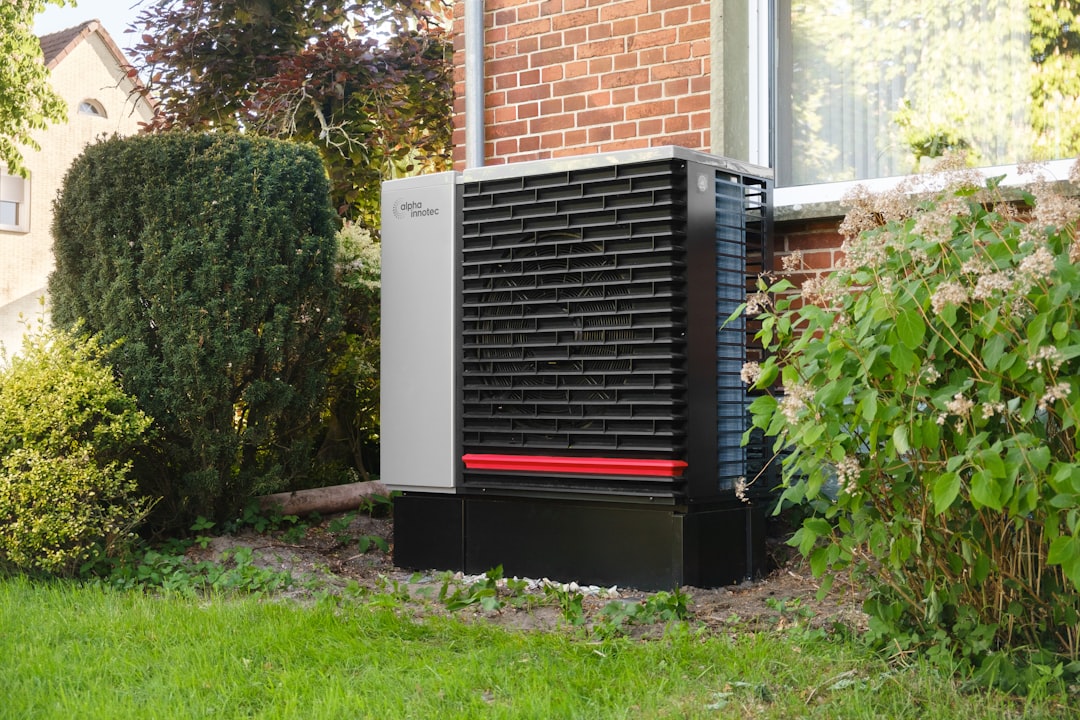
A heat pump, on the other hand, is a single all-electric system that handles both jobs. Mechanically, a heat pump is nearly identical to an air conditioner. It features an outdoor condenser, an indoor air handler, and a compressor. However, it contains one critical component that a standard AC lacks: a reversing valve.
In the summer, a heat pump operates exactly like an air conditioner, extracting indoor heat and dumping it outside. In the winter, the reversing valve flips the flow of refrigerant. Instead of cooling your home, the system extracts thermal energy from the outdoor air and pumps it inside. Because it transfers heat rather than generating it from scratch, a heat pump is incredibly energy efficient.
For a deeper dive into how these configurations compare, take a look at our Central AC vs. Ductless Mini-Split Comparison to see how ducted and ductless designs distribute comfort.
Efficiency, Climate Suitability, and Environmental Impact
In a mild climate like Southern California, efficiency metrics play a massive role in long-term operating costs. When comparing these systems, we look at several industry-standard efficiency ratings:
- SEER2 (Seasonal Energy Efficiency Ratio 2): Measures cooling efficiency. Both standard air conditioners and heat pumps carry SEER2 ratings, typically ranging from 14.3 to over 20.
- HSPF2 (Heating Seasonal Performance Factor 2): Measures the heating efficiency of a heat pump over a typical heating season. Higher numbers mean better performance.
- AFUE (Annual Fuel Utilization Efficiency): Measures gas furnace efficiency. For example, an 80% AFUE furnace converts 80% of the gas it burns into usable heat, while venting the remaining 20% out of the chimney. High-efficiency furnaces can reach up to 96% to 98% AFUE.
- COP (Coefficient of Performance): Measures real-time efficiency. A COP of 1.0 means a system delivers exactly as much heat energy as the electricity it consumes.
Because heat pumps move heat rather than generate it, they routinely achieve a COP of 3.0 to 3.5 in Southern California's mild winter conditions. This means they operate at 300% to 350% efficiency, delivering three to four times more heating energy than the electrical energy they consume. By comparison, even a premium, high-efficiency gas furnace maxes out at 96% to 98% efficiency.
| Metric | Central Heat Pump | Standard AC + Gas Furnace |
|---|---|---|
| Cooling Efficiency | 15.2 to 20+ SEER2 | 14.3 to 20+ SEER2 |
| Heating Efficiency | 7.5 to 10+ HSPF2 (300%+ COP) | 80% to 98% AFUE |
| Energy Source | 100% Electricity | Electric (Cooling) / Gas (Heating) |
| Carbon Footprint | Zero direct emissions | Direct fossil fuel combustion |
| Lifespan | 10 to 15 years | 15 to 20 years (Furnace) / 10 to 15 years (AC) |
From an environmental standpoint, the transition to all-electric heat pumps is a major pillar of California’s decarbonization strategy. The state has set a goal to install 6 million heat pumps by 2030, supported by voluntary building codes and local utility initiatives. Because heat pumps run entirely on electricity, they produce zero direct greenhouse gas emissions. When paired with residential solar panels, they allow you to heat and cool your home with clean, self-generated energy.
Replacing a standard gas furnace and water heater with electric heat pump alternatives can reduce a home's heating emissions by more than 45% over a ten-year period. If you want to learn more about the environmental and operational advantages of going all-electric, read about the Understanding Heat Pump Installation Benefits for SoCal properties.
Key Considerations for Upgrading Your Southern California HVAC System
Before deciding on a heat pump vs separate ac and furnace for a southern california home, we must evaluate your home's existing infrastructure. Transitioning from a gas-and-electric setup to an all-electric heat pump requires checking a few key technical details.
First, we must look at your electrical panel. A standard gas furnace only requires a small amount of electricity to power its blower fan, typically running on a standard 120V circuit. A heat pump, however, requires a dedicated 240V circuit (usually 30 to 50 amps) to power the outdoor compressor in both heating and cooling modes.
Many older homes in the Los Angeles area, built before 1985, have 100-amp electrical panels. If your panel is already crowded with modern appliances like electric vehicle chargers, electric dryers, or induction cooktops, installing a heat pump may require an electrical service upgrade to a 200-amp panel. For homes where a panel upgrade is not immediately feasible, smart load-management devices can sometimes be installed to manage power distribution without replacing the panel.

Second, the condition of your ductwork is critical. Heat pumps typically move a slightly higher volume of air at a lower supply temperature than gas furnaces. To ensure quiet, efficient operation, your ductwork must have low static pressure and minimal leakage. If your ducts are older, undersized, or leaking more than 15% of their air into the attic, we may recommend duct sealing or minor modifications to the return-air vents.
If your existing ductwork is beyond repair or completely non-existent—as is common in many historic coastal or hillside homes—a ductless mini-split heat pump system is often the ideal alternative. To compare these structural choices, check out our guide on Central Air vs. Mini-Split for Southern California Homes.
Finally, for homeowners with rooftop solar, a heat pump is an excellent way to maximize your investment. By shifting your heating load from natural gas to electricity, you can offset your winter heating costs using the solar power you generate during the day.
For homes in areas that experience wider temperature swings, a dual-fuel hybrid system is another excellent option. This setup pairs an electric heat pump with a high-efficiency gas furnace. The heat pump handles all of the cooling and provides highly efficient heating during mild winter days. If temperatures drop below a certain threshold, the system automatically switches over to the gas furnace to deliver fast, intense heat.
When to Choose a Heat Pump vs Separate AC and Furnace for a Southern California Home
An all-electric heat pump is generally the best choice if:
- You are replacing both your AC and furnace at the same time: Consolidating into a single system saves space and prevents you from having to maintain two separate appliances.
- You want to go all-electric or already have solar panels: Running your heating on self-generated solar electricity dramatically reduces your reliance on natural gas.
- You live in a mild coastal or metro area: If you reside in places like Santa Monica, Torrance, Newport Beach, or the South Bay, winter temperatures rarely test the limits of a standard heat pump, allowing the system to run at peak efficiency year-round.
- You want to maximize utility rebates: Local utilities offer substantial incentives for replacing gas heating with electric heat pumps.
To see how these efficiency gains translate to your monthly utility statements, explore our article on How Heat Pumps Lower Energy Bills.
When a Gas Furnace is Better Than a Heat Pump vs Separate AC and Furnace for a Southern California Home
A separate AC and gas furnace setup, or a dual-fuel hybrid system, may be the preferred choice if:
- You live in higher mountain elevations: If your home is located in foothill or mountain communities that experience sustained freezing temperatures, a gas furnace provides incredibly fast, high-temperature heat.
- Your electrical panel has severe limitations: If your home has a 100-amp panel and upgrading to 200-amp service is structurally difficult or outside of your immediate budget, keeping a gas furnace avoids the need for major electrical modifications.
- You recently replaced your air conditioner: If your cooling system is relatively new and only your furnace needs replacement, it is usually more practical to install a new high-efficiency gas furnace rather than converting the entire system to a heat pump.
Frequently Asked Questions about SoCal HVAC Upgrades
Navigating utility programs, incentives, and technical requirements can feel overwhelming. Here are some of the most common questions we hear from homeowners across the Greater Los Angeles and Orange County areas.
To learn more about maximizing your savings, check out our guide on SoCal Gas and SCE Rebates for LA Area Homeowners.
Do heat pumps work well in Southern California winters?
Yes, exceptionally well. In fact, Southern California’s mild climate is the ideal environment for an air-source heat pump. Standard heat pumps operate at peak efficiency down to 35-40°F, which covers nearly all winter nights in coastal and metro LA and Orange County.
During rare cold snaps, a heat pump may occasionally initiate a brief defrost cycle to clear any frost accumulation on the outdoor coils, but this is a standard operating procedure that does not interrupt your indoor comfort. Because our winters are so mild, a heat pump will rarely, if ever, need to rely on auxiliary electric backup heat strips, keeping your energy consumption remarkably low.
Can I use my existing ductwork for a heat pump conversion?
In most cases, yes, provided your existing ducts are in good structural condition. Before installing a heat pump, we always perform a thorough ductwork inspection to measure static pressure and check for air leaks.
Because heat pumps move air at slightly different volumes than older gas furnaces, proper airflow sizing is critical. If your ductwork has high leakage (above 15%), we can perform professional duct sealing. If your ducts are undersized, we can make minor adjustments to your return-air grilles to ensure quiet and balanced airflow throughout your home.
What electrical upgrades are needed for a heat pump?
Unlike a gas furnace that runs on a standard 120V outlet, a heat pump requires a dedicated 240V circuit run to the outdoor unit.
If your home already has a 200-amp electrical panel, adding this circuit is a straightforward process. If your home has an older 100-amp panel, we will perform a panel-load calculation during our initial consultation. Depending on your home's total electrical demand, we can determine whether you need a panel upgrade or if we can utilize smart load-management tools to safely accommodate your new system.
Conclusion
Deciding between a heat pump vs separate ac and furnace for a southern california home is a personal decision that depends on your home’s architecture, your long-term energy goals, and your local microclimate. Whether you are looking to fully electrify your home with a modern heat pump or prefer the fast, reliable warmth of a high-efficiency gas furnace, our team is here to help you find the perfect fit.
At Power Pro Plumbing, Heating & Air, we serve communities across the Greater Los Angeles area, Orange County, and the South Bay. Our fully licensed, highly trained technicians are dedicated to delivering honest guidance, professional installations, and reliable same-day service when you need us most.
Ready to explore your options and find the ultimate comfort solution for your home? Contact us today to schedule a consultation, and read more about the long-term Benefits of Heat Pump Installation to see how we can upgrade your home's climate control.