

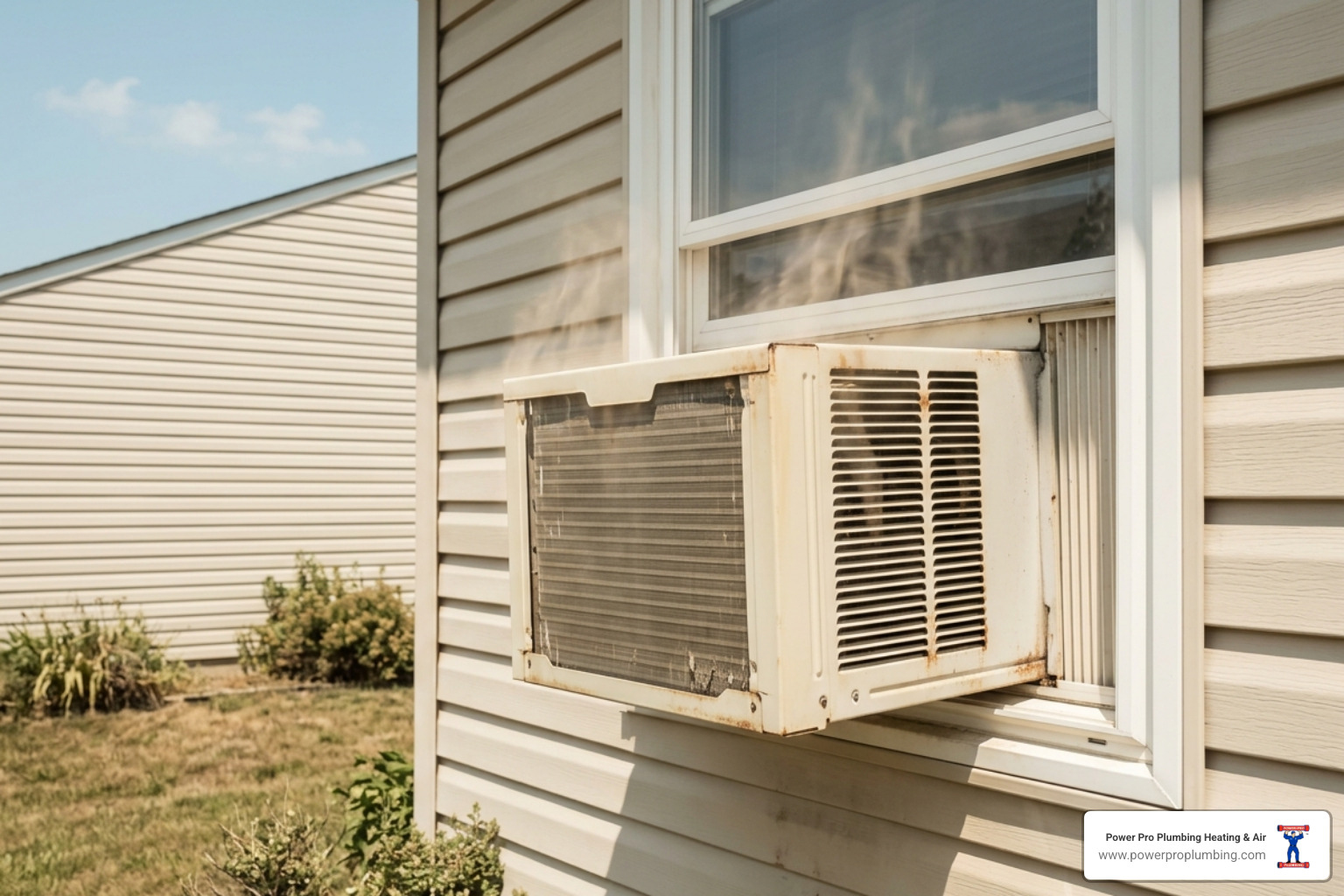
Why Your AC Is Not Cooling Properly and What to Check First
If you're dealing with ac not cooling properly what to check is likely the first thing on your mind — especially during a Southern California heat wave. Before you panic, most cooling problems come down to a handful of common causes that follow a predictable pattern. Here's a quick overview of where to start:
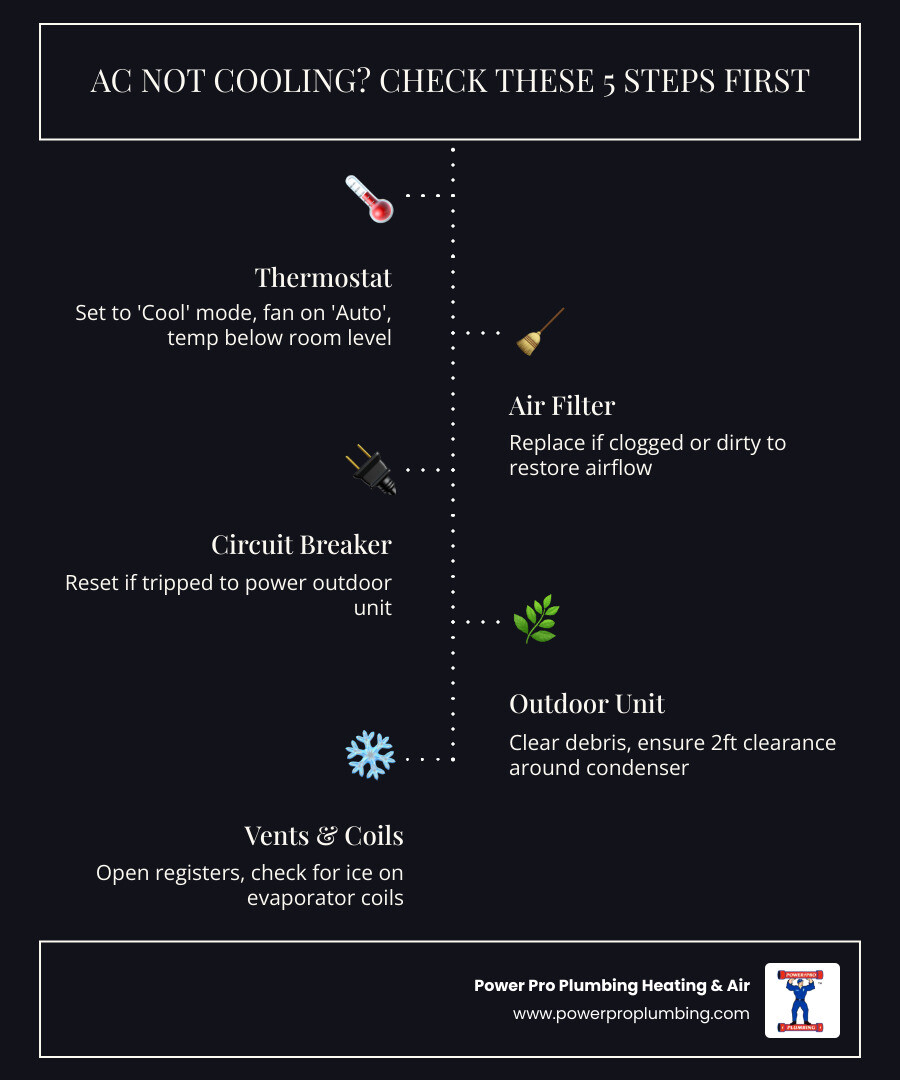
When your AC isn't cooling properly, check these first:
- Thermostat settings - Confirm it's set to "Cool" mode, fan to "Auto," and the temperature is set below the current room temperature
- Air filter - A clogged filter is one of the most common and overlooked causes of poor cooling
- Circuit breaker - A tripped breaker can shut down the outdoor unit while the indoor fan keeps running
- Outdoor condenser unit - Look for debris, blocked airflow, or a unit that isn't running at all
- Supply registers and return grilles - Make sure none are closed, blocked by furniture, or obstructed
- Evaporator coil - Ice buildup on the indoor coil signals an airflow or refrigerant problem
- Refrigerant levels - Warm air from vents, hissing sounds, or ice on copper lines can point to a leak
When temperatures in Los Angeles County and Orange County climb into the triple digits, a struggling AC isn't just uncomfortable — it can be a real health concern for families, seniors, and pets. The good news is that many of the reasons an AC runs without cooling the house are straightforward to identify, and some are even easy to resolve before calling anyone.
I'm Daniel Rodriguez, a licensed HVAC professional (C20) with roots in the trades going back to my family's business, and I've worked through more ac not cooling properly what to check calls than I can count across Southern California. In the sections below, I'll walk you through the same diagnostic path I use on every service call — starting with the simple stuff and working toward the more complex issues that require a professional.
Start with the Basics: AC Not Cooling Properly What to Check First
When it is April 2026 and the first real heat wave hits the South Bay or the San Gabriel Valley, we often see a surge in calls from homeowners who haven't turned their systems on since last year. Before assuming the worst, we always recommend starting with the simplest components.
The thermostat is the "brain" of your HVAC system. Sometimes, a family member might have bumped the settings, or a smart thermostat might have defaulted to a "heat" or "fan only" mode during a power flicker. Ensure the mode is set firmly on "Cool" and the fan is set to "Auto." If the fan is set to "On," it will blow air continuously, even when the outdoor unit isn't cooling, which can make the air coming out of the vents feel lukewarm.
If your thermostat screen is blank or flashing, it might just need a fresh set of batteries. Most modern thermostats require two AA or AAA batteries once a year. If the thermostat isn't communicating with the rest of the system, your AC won't stand a chance. Identifying AC Repair Needs Early can save you from a sweltering night in a hot house.
Troubleshooting an AC Not Cooling Properly What to Check for Airflow Issues
Airflow is the lifeblood of your air conditioner. If the air can't move, the heat can't be removed from your home. The number one culprit for restricted airflow is a dirty air filter. We’ve seen filters so clogged with dust and pet hair that they actually got sucked into the blower motor.
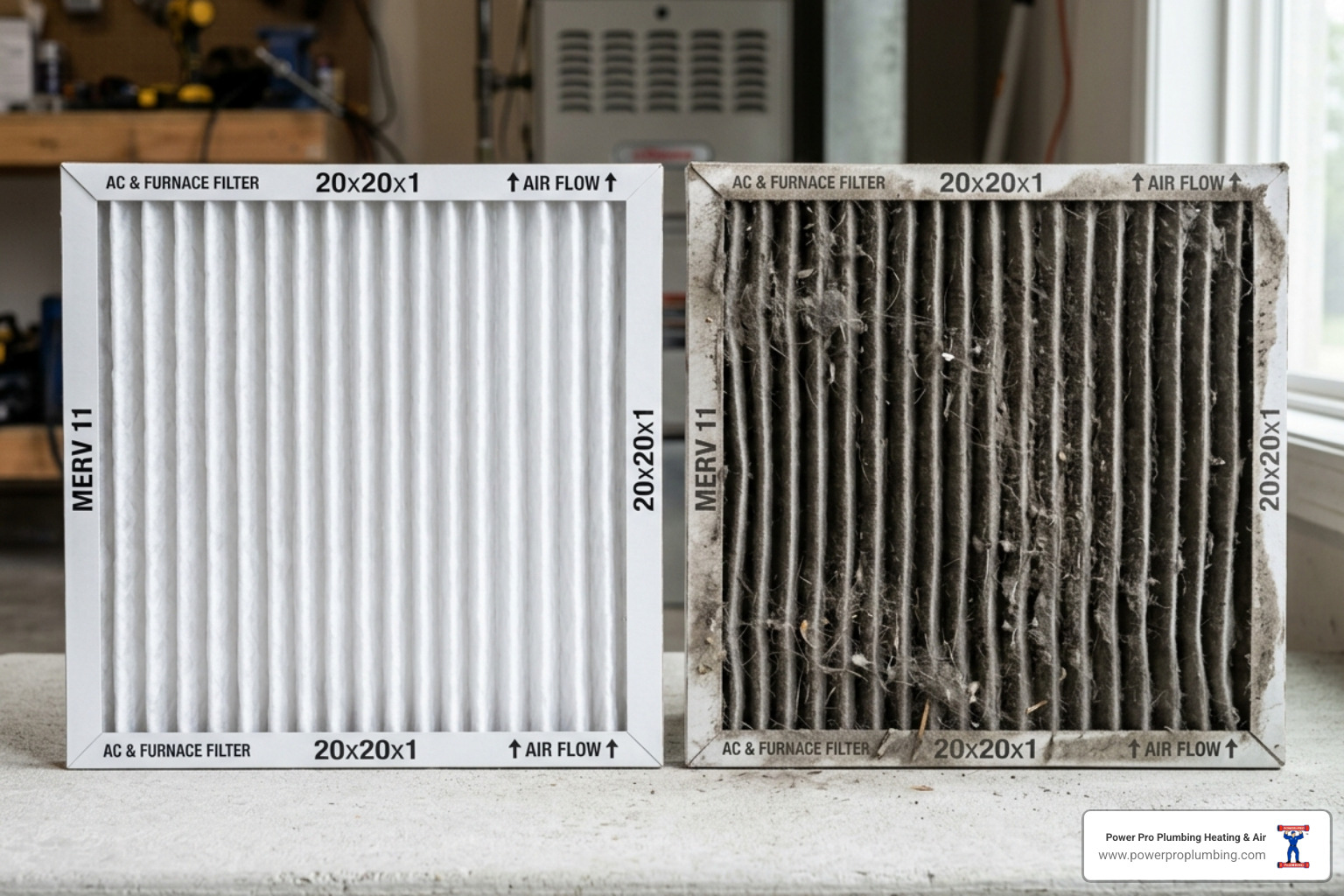
In areas like Artesia or Mission Viejo, where dust and pollen can be high, we recommend checking your filter every 30 days. A standard 1-inch filter should be replaced every 1 to 3 months. If you have pets or live near construction, you’ll likely need to change it more frequently. For a deeper look at local maintenance, check out this AC Repair Artesia CA Complete Guide.
Beyond the filter, walk through your home and check the following:
- Return Grilles: Ensure large intake vents aren't blocked by curtains or area rugs. We once found a dog bed placed directly over the only return vent in a house!
- Supply Registers: Make sure the vents in each room are open. While it’s a common myth that closing vents saves energy, it actually creates pressure imbalances that can cause the system to shut down.
- Furniture Obstructions: Ensure that new sofa or bookshelf isn't sitting right in front of a vent. For more localized advice, see these AC Repair Mission Viejo Tips.
Signs of an AC Not Cooling Properly What to Check for Refrigerant Leaks
Refrigerant is the chemical that travels between your indoor and outdoor units, absorbing heat from your home and releasing it outside. Contrary to popular belief, an AC does not "use up" refrigerant like a car uses gas. It is a closed loop. If the levels are low, you have a leak.
If you are detecting AC refrigerant leak signs in La Mirada, you might notice:
- Hissing or Bubbling Sounds: This is the sound of pressurized gas escaping through a small hole in the copper lines.
- Ice on the Lines: When refrigerant levels drop, the pressure in the system falls, causing the evaporator coil to drop below freezing and turn moisture into ice.
- Lukewarm Air: Without enough refrigerant, the system simply can't absorb enough heat, leading to why AC is blowing warm air in Cerritos.
Learning how to detect air conditioner leak issues early can prevent your compressor from burning out, which is a much more expensive fix.
Troubleshooting the Outdoor Condenser Unit and Coils
The outdoor unit, or condenser, is responsible for dumping the heat collected from inside your home into the outside air. If the condenser is dirty or blocked, that heat has nowhere to go.
We recommend a "2-foot clearance rule." Ensure there are at least two feet of clear space around the entire unit. This means trimming back bushes, removing weeds, and ensuring no trash cans or storage boxes are leaning against it. In coastal areas like Long Beach, salt air can also cause corrosion on the aluminum fins. Regular rinsing with a garden hose (with the power off!) can help, but if the fins are severely bent, they may need a professional "fin comb" treatment. If your unit is struggling near the coast, see our guide on AC Repair Long Beach Cerritos CA.
A dirty condenser coil is a primary reason for an AC blowing hot air. When the thin aluminum fins are packed with dirt, dust, or "cottonwood" fluff, the fan can't pull air through the coil, and the cooling process grinds to a halt.
Electrical Components and Power Supply
Sometimes the problem isn't the cooling cycle at all, but the electricity powering it. If your indoor fan is blowing but the air isn't cold, go outside and listen. If the outdoor unit is silent, you likely have an electrical issue.
- Tripped Breaker: High temperatures cause AC units to work harder, which can sometimes trip a circuit breaker. Reset it once. If it trips again immediately, do not try a third time — call us, as there is likely a short circuit.
- Capacitor Failure: The run capacitor is the most common part failure in residential AC systems. It acts like a battery to give the motor the "push" it needs to run. If you hear a humming or clicking sound from the outdoor unit but the fan isn't spinning, the capacitor has likely failed. This is a common issue we see during AC repair in Ontario, CA.
- Contactor Wear: The contactor is a switch that pulls in to start the unit. Over time, the points can become "pitted" or burnt, especially in the dusty environments of the Inland Empire.
- Blown Fuses: Many outdoor units have a "disconnect box" nearby with fuses that can blow during a power surge.
If your AC fan is not working, it’s often tied to one of these electrical components.
Frozen Evaporator Coils
A frozen evaporator coil is behind roughly 30% of "AC not cooling" calls. It might seem counterintuitive — how can a block of ice make your house hot? — but that ice acts as an insulator, preventing the refrigerant from absorbing heat from your indoor air.
If you see ice on the indoor unit or the copper pipes, follow these steps:
- Turn the AC Off: Switch the thermostat to "Off" to stop the cooling cycle.
- Set Fan to "On": This blows warm indoor air over the ice to melt it. Do not try to scrape the ice off, as you will damage the delicate coils.
- Check the Drain Line: As the ice melts, it will produce a lot of water. If your condensate drain line is clogged, this water could overflow and damage your ceiling or floor.
Icing is usually caused by restricted airflow (dirty filters) or low refrigerant. If you've replaced the filter and it freezes again, it’s one of the signs Cerritos AC needs professional repair. We frequently handle these calls for AC repair in La Mirada, CA, ensuring the root cause is fixed so the ice doesn't return.
When to Call a Professional for Complex Repairs
While changing a filter or resetting a breaker is a great DIY start, there are times when you need the expertise of a licensed technician. Modern HVAC systems are complex and involve high-voltage electricity and pressurized chemicals that can be dangerous if handled incorrectly.
DIY vs. Professional Diagnostics
| Feature | DIY Check | Professional Diagnostic |
|---|---|---|
| Thermostat | Check batteries/settings | Calibrate and check wiring |
| Airflow | Replace air filter | Static pressure testing |
| Refrigerant | Visual check for ice | Pressure and subcooling measurements |
| Electrical | Reset circuit breaker | Amp draw and capacitor testing |
| Coils | Clear debris around unit | Chemical deep cleaning |
If your system is over 10 to 15 years old, you might be facing top AC unit repair issues like a failed compressor. The compressor is the "heart" of the system, and if it fails on an older unit, it is often more cost-effective to replace the entire system rather than just the part. This is especially true for older units using R-22 refrigerant, which is now phased out and very expensive to replace.
Another common issue is "undersizing." If your AC runs all day but the temperature never drops below 80 degrees on a 100-degree day, the unit might be too small for your home’s "heat load." This is a common discovery during AC services in Los Angeles, CA. Our team can perform a "Manual J" calculation to ensure your system is perfectly sized for your square footage. Here are 10 signs your AC needs repair work to help you decide when to pick up the phone.
Frequently Asked Questions about AC Troubleshooting
How long should it take for my AC to cool my house?
A properly functioning AC system should typically lower the temperature in your home by about 1 degree per hour. However, this depends on the outdoor temperature and your home's insulation. If your system has been running for three hours and the thermostat hasn't moved at all, there is likely an underlying issue. On extremely hot days in the Inland Empire or San Fernando Valley, your AC may struggle to keep the house more than 20 degrees cooler than the outside air.
Should I turn off my AC if it isn't blowing cold air?
Yes. If your AC is running but the air is warm, turn it off at the thermostat. Continuing to run a malfunctioning system can cause "slugging" in the compressor or lead to a completely frozen evaporator coil, both of which can turn a simple repair into a major replacement.
Why is my AC running but the temperature isn't dropping?
This is usually a sign of a "partial failure." The indoor fan is working, but either the outdoor compressor isn't running (likely a capacitor or contactor issue) or the system is low on refrigerant. It could also be a severely clogged outdoor condenser coil that is preventing the system from releasing heat.
Conclusion
At Power Pro Plumbing, Heating & Air, we know how stressful a broken air conditioner can be in the middle of a California summer. Whether you are in Beverly Hills, Santa Monica, or Anaheim, our team of licensed technicians is ready to help you get your comfort back on track. We've built our reputation on over 28,500 reviews and a commitment to treating your home with the respect it deserves.
If you’ve gone through our ac not cooling properly what to check list and your home is still too warm, don't sweat it out another night. We offer same-day service and expert diagnostics across Los Angeles and Orange Counties. From AC repair in Norwalk, CA to system replacements in the South Bay, we’re here when you need us.
Schedule your professional AC inspection today and stay cool all season long!