

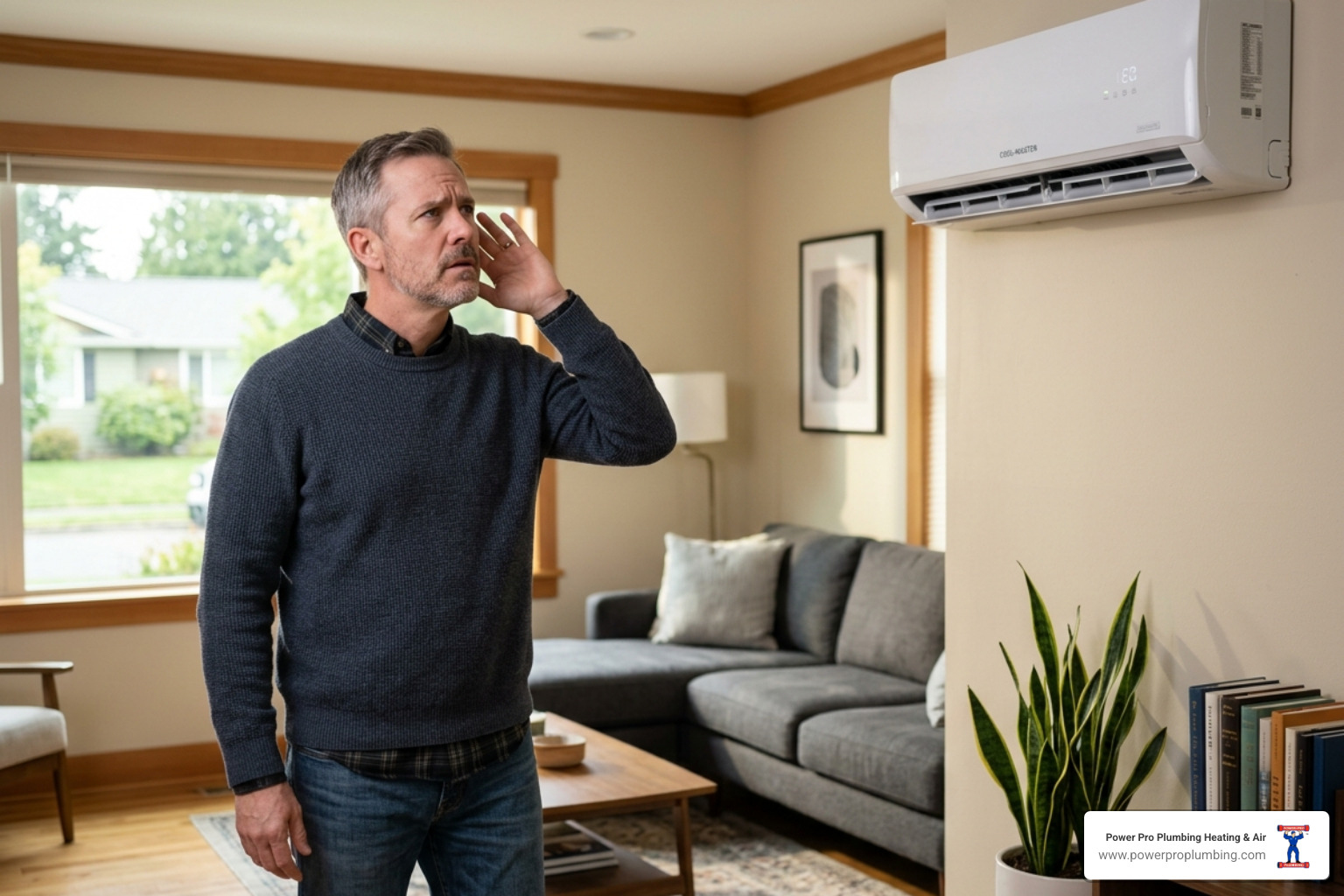
Why AC Making Strange Noises What They Mean Matters Before Summer Hits
If you're hearing strange sounds from your cooling system, ac making strange noises what they mean is exactly what you need to understand — and fast. Here's a quick breakdown before we go deeper:
| Sound | Likely Cause | Urgency |
|---|---|---|
| Banging / Clanking | Loose or broken internal part, compressor issue | High — turn off immediately |
| Hissing / Whistling | Refrigerant leak, clogged filter, ductwork gap | High — shut down, call a pro |
| Squealing / Screeching | Worn motor bearings, slipped belt, high pressure | High — stop running the unit |
| Buzzing / Humming | Electrical fault, failing capacitor, frozen coils | Medium-High — inspect soon |
| Clicking (persistent) | Faulty relay, bad capacitor, failing thermostat | Medium — call a pro |
| Rattling | Loose panels, debris in unit, loose hardware | Low-Medium — check for debris first |
| Gurgling / Bubbling | Clogged condensate drain, refrigerant leak | Medium — schedule an inspection |
| Soft hum / Whoosh | Normal fan motor and airflow operation | None — this is normal |
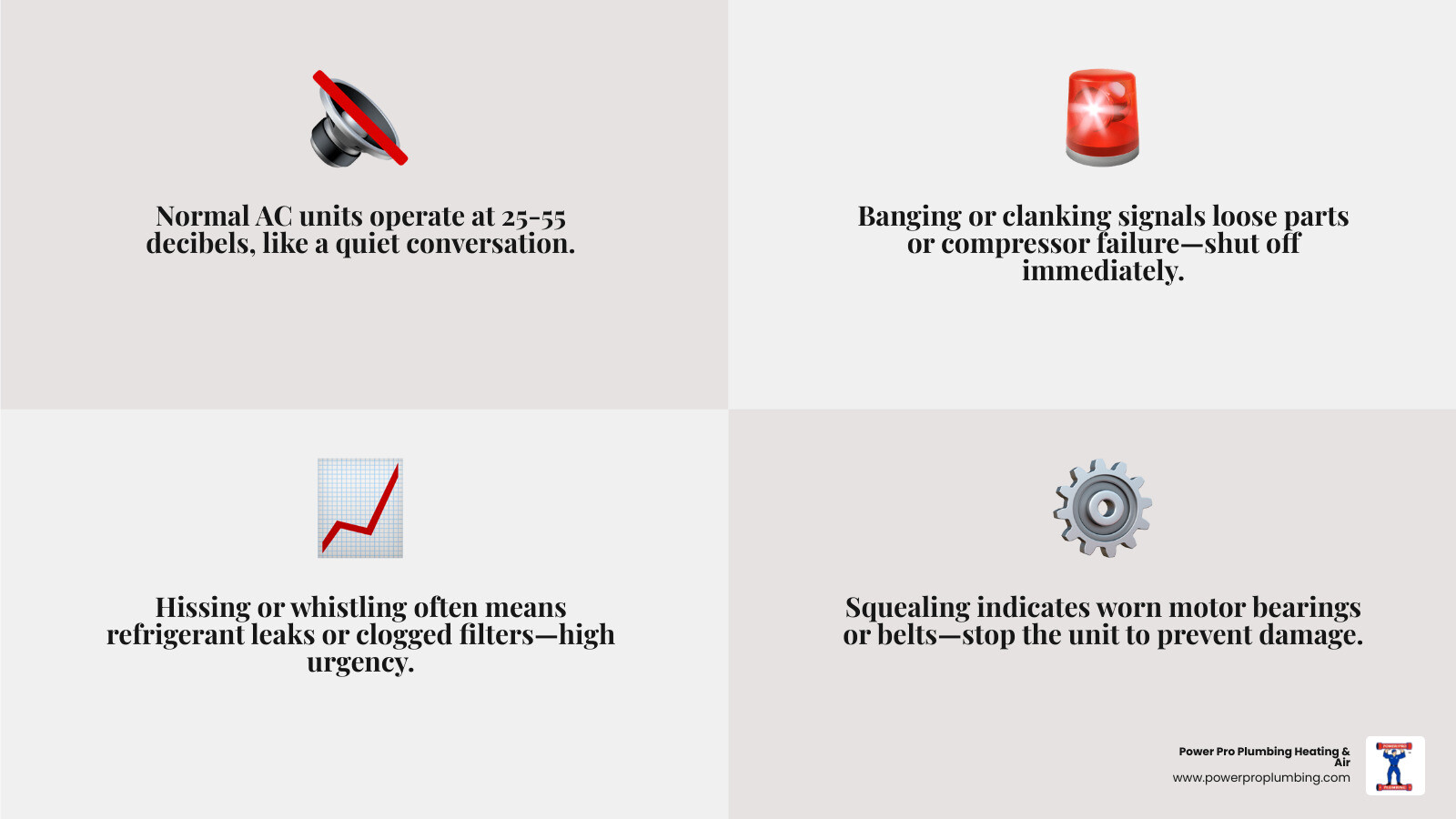
Modern AC systems are engineered to run quietly — typically somewhere between 25 and 55 decibels, roughly the level of a hushed conversation in the next room. Some high-efficiency units run as low as 19 decibels, so quiet you might forget the system is even on. That's exactly why a new or sudden noise stands out. It's not random. Your AC is built to run smoothly, and when something changes in how it sounds, that change almost always points to something mechanical, electrical, or structural that needs attention.
The good news? Most of these noises are warning signs, not death sentences for your system. Catching them early is genuinely one of the best ways to protect your home's comfort and avoid a costly breakdown on the hottest day of the year. Ignore them long enough, though, and a simple fix can quietly snowball into a full system failure.
I'm Daniel Rodriguez, a licensed HVAC technician with hands-on experience diagnosing the full range of issues that cause ac making strange noises what they mean to become a real headache for homeowners. In the sections below, we'll walk through each sound type, what's likely causing it, and exactly what you should do next.
Deciphering the Symphony: AC Making Strange Noises What They Mean
As we head into April 2026, air conditioning technology has reached a point where "silence" is the standard. When that silence is broken by a rhythmic thud or a high-pitched whistle, it’s helpful to establish a diagnostic baseline. Is the sound new? Does it happen only at startup? Or is it a persistent "symphony" that follows the unit throughout its cycle?
Understanding ac making strange noises what they mean starts with differentiating between mechanical wear and airflow restrictions. A mechanical issue usually involves moving parts like motors or compressors, while airflow issues often stem from the "lungs" of your system — the filters and ductwork.
Hissing and Whistling: AC Making Strange Noises What They Mean for Airflow
If your air conditioner sounds like a tea kettle reaching a boil, you are likely dealing with a pressure or airflow issue. Whistling is frequently a "cry for air." When a filter is clogged with dust, pet dander, or debris, the blower motor has to work twice as hard to pull air through the restricted material. This creates a high-pressure environment where air is forced through tiny gaps, resulting in that distinct whistle.
Reasons Your AC is Making a Whistling Sound can also include gaps in your ductwork. If a seal has failed or a duct has pulled away from a register, air escaping at high velocity creates a localized whistling noise.
Hissing, on the other hand, is often more serious. A persistent hiss usually indicates a refrigerant leak. Because refrigerant is kept under high pressure, it makes a hissing sound as it escapes through a tiny hole in the lines or the internal valve. This is not just a performance issue; refrigerant leaks can lead to headaches, nausea, and respiratory problems for those inside the home.
Squealing and Screeching: AC Making Strange Noises What They Mean for Your Motor
Squealing is a sound most common in older units that utilize a belt-driven blower motor. Much like a car's fan belt, these can slip or fray over time, especially during the high-humidity summers we see in the South Bay and Orange County. If you have a newer unit, screeching usually points toward failing motor bearings in the condenser fan or the blower.
When you notice the AC Fan Not Working properly alongside a screeching sound, it’s a sign that the motor is struggling against friction. Without proper lubrication, these bearings wear down, generate heat, and eventually seize. If you hear this sound, turn the system off immediately. Running a motor with bad bearings can cause it to burn out entirely, turning a simple lubrication or part replacement into a full motor swap.
Banging and Clanking: Loose Internal Components
When you hear a heavy metal-on-metal sound, it is rarely good news. Banging or clanking typically means something has come loose or broken inside the "heart" of your AC — the compressor. The compressor contains connecting rods, piston pins, and crankshafts. If one of these components fails, it will thud against the interior housing.
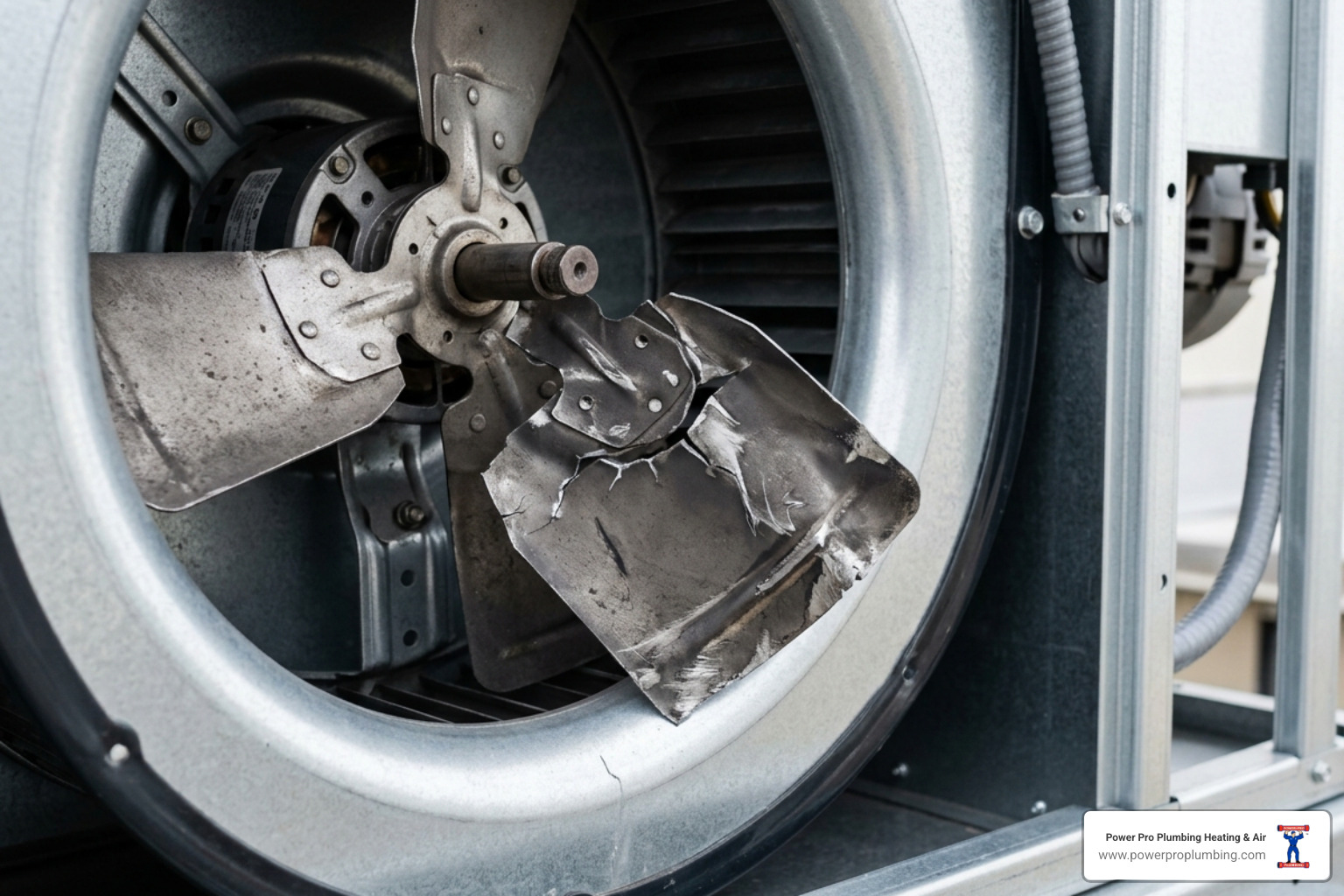
Clanking can also occur in the blower assembly. If a fan blade becomes unbalanced or a mount breaks, the blade will strike other components as it spins. Think of it like shrapnel inside your unit; a loose part can quickly destroy surrounding components if the system isn't shut down.
High-Urgency Sounds: When to Shut Down Your System Immediately
Some noises allow for a "wait and see" approach, but others demand an immediate trip to the thermostat. If you hear a sound that makes you jump, or if you notice that Your AC Smells Like Burning Plastic, you are facing a potential fire risk or catastrophic mechanical failure.
Persistent Buzzing and Humming
While a soft hum is the sound of a healthy unit, a loud, aggressive buzz is a red flag for electrical issues. This often indicates "electrical arcing," where a current is jumping between connections. This can be caused by loose wiring or a failing contactor relay (the switch that tells the outdoor unit to turn on).
How Can a Power Surge Affect My Air Conditioner is a common question we get in Los Angeles after a storm. A surge can damage the capacitor — a component that acts like a small battery to give the motor a "kick" to start. If the capacitor fails, the motor will hum as it tries to start but can't find the power, which can eventually lead to the motor burning out. Buzzing can also be a sign of frozen evaporator coils; if airflow is restricted, ice builds up on the coils, causing the unit to vibrate and buzz.
High-Pitched Screaming
If your outdoor unit starts making a sound like a jet engine or a high-pitched scream, shut it down at the breaker immediately. This sound usually signals dangerously high internal pressure within the compressor. Most modern units have safety sensors designed to shut the system down before an explosion occurs, but if those sensors fail, the "screaming" is your last warning. This is a high-urgency situation that requires professional intervention before the system is ever turned back on.
Indoor vs. Outdoor: Identifying the Source of the Sound
Where the sound is coming from tells us half the story. An indoor noise usually points to the blower, filters, or ductwork, while outdoor noises are centered around the compressor and the condenser fan.
Rattling and Clicking in the Outdoor Unit
If you live in a windier area like Rancho Palos Verdes, your outdoor unit is a magnet for environmental debris. AC Noises in Rancho Palos Verdes often turn out to be simple sticks, stones, or dried leaves that have fallen into the condenser and are being batted around by the fan blades.
Rattling can also be caused by cabinet vibrations. Over time, the screws holding the metal panels together can vibrate loose. If you hear Your AC Makes Buzzing Sounds Fullerton, it might actually be a panel rattling at a high frequency. Tightening a few screws is often the "miracle cure" for a noisy outdoor unit.
Gurgling and Bubbling Near the Evaporator Coil
If your AC sounds like it’s finishing a soda through a straw, the issue is likely in the condensate drain line. As your AC removes moisture from the air, that water needs to go somewhere. If the drain line is partially clogged with algae or debris, air bubbles get trapped, creating a gurgling sound.
Common drainage issues include:
- Algae buildup in the PVC drain pipe.
- A cracked or tilted drain pan.
- A "clucking" sound caused by a trap that has run dry.
- Refrigerant bubbling, which occurs when the refrigerant level is low, allowing air to mix with the liquid.
Troubleshooting and Prevention: Keeping Your Home Quiet in Los Angeles
In the 2026 HVAC landscape, prevention is significantly cheaper than repair. A well-maintained AC can last 15 to 20 years, but that lifespan is cut short when warning signs are ignored. Regular maintenance ensures that your system operates at that desired 19dB to 25dB range, keeping your home a "Symphony of Silence."
DIY Steps Before Calling a Professional
Before you pick up the phone, there are a few safe checks every homeowner in the South Bay or Los Angeles area can perform:
- Check the Filter: If you hear whistling, replace your filter. It should be changed every 1–3 months.
- Clear Debris: Turn off the power and remove any twigs or leaves from the outdoor unit.
- Tighten Panels: Check for loose screws on the exterior housing and tighten them with a screwdriver.
- Inspect Vents: Ensure at least 80% of your home's vents are open and unblocked by furniture or rugs.
- Thermostat Check: Ensure the batteries are fresh and the settings haven't been accidentally changed.
The Role of Professional Maintenance
While DIY checks are great, they don't replace the expert eye of a licensed technician. Professional maintenance involves deep-cleaning the coils, tightening electrical connections to prevent buzzing, and monitoring refrigerant levels to ensure there are no hissing leaks. At Power Pro Plumbing Heating & Air, we follow strict Orange County and Los Angeles service standards to ensure your system is running efficiently and quietly.
Frequently Asked Questions about AC Noises
Is it safe to run my AC if it is making a loud banging noise?
No. A banging noise usually indicates that a internal component has broken or come loose. Running the unit in this state is like driving a car with a broken engine rod — it will only lead to more destruction. Turn the system off immediately to save your compressor.
Why does my air conditioner click repeatedly when it tries to turn on?
If you hear a rapid-fire clicking, it’s usually an electrical communication issue. The thermostat is sending a signal, but the contactor or the capacitor isn't responding correctly. This "electrical stutter" needs to be addressed by a professional to prevent a total system shutdown.
Can a dirty air filter really cause my AC to make whistling sounds?
Absolutely. This is the "tea kettle" effect. When the blower motor tries to pull air through a clogged filter, the air is forced through tiny gaps at high speed, creating a distinct whistling or "screaming" sound from your vents.
Conclusion
Your air conditioner shouldn't be a source of stress. When you understand ac making strange noises what they mean, you can act quickly to protect your investment. Whether you are in the heart of Los Angeles County, the South Bay, or Orange County, our team of licensed technicians is ready to help. We offer same-day service to ensure you never have to spend a night in the heat.
Don't let a small rattle turn into a major breakdown. Schedule your professional air conditioning service today with Power Pro Plumbing Heating & Air and get back to the quiet, cool comfort you deserve.