

How a Heat Pump Handles Both Cooling and the Occasional Cold Spell in SoCal
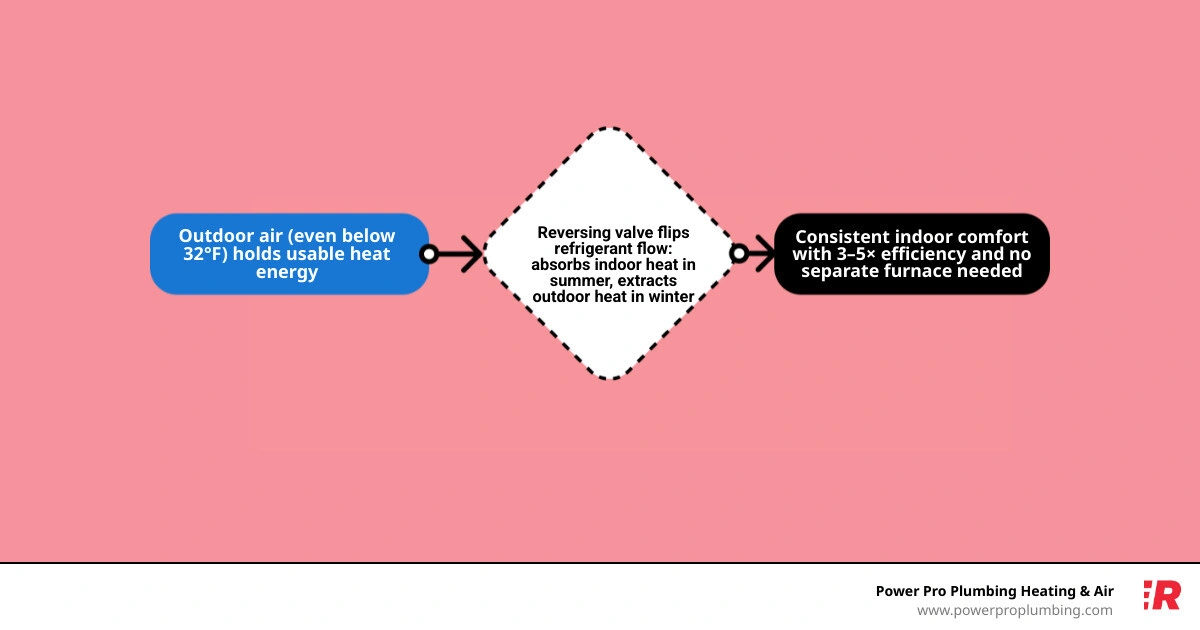
How a heat pump handles both cooling and the occasional cold spell in SoCal comes down to one elegant mechanism: a reversing valve that lets the same system move heat in two directions. In summer, it pulls heat out of your home and sends it outside. On a chilly January night in the San Fernando Valley or along the Orange County coast, it runs in reverse — pulling warmth from the outdoor air and moving it inside.
Here is a quick breakdown of how that works across both seasons:
- Cooling mode: The heat pump operates exactly like a standard air conditioner, absorbing indoor heat through a refrigerant cycle and releasing it outside.
- Heating mode: The reversing valve flips the refrigerant flow. Even when it feels cold outside, there is still usable heat energy in the air — the heat pump extracts it and delivers it indoors.
- Mild SoCal winters: With typical overnight lows in the mid-40s to low-50s°F across most of Los Angeles County and Orange County, a heat pump runs at peak efficiency for heating — delivering 3 to 5 units of heat for every unit of electricity it uses.
- Rare cold snaps: Modern variable-speed and cold-climate heat pumps maintain strong heating capacity well below freezing, covering even high-desert areas like Apple Valley where winter nights can dip into the mid-20s°F.
- One system, two jobs: There is no separate furnace or AC unit to manage — a single heat pump handles year-round comfort.
A lot of Southern California homeowners are surprised to learn their home actually needs a real heating system. It is easy to assume the mild reputation of the region means cold nights are no big deal — until a Claremont homeowner waits two days for furnace repair during a freezing cold snap, or a coastal condo complex discovers its radiant floor system cannot keep up with a rare multi-day cold spell. Those moments make clear why having a reliable, efficient system for both seasons genuinely matters here.
I'm Daniel Rodriguez, a second-generation tradesman with C36 and C20 licenses in plumbing and HVAC, and over the years I've seen what happens when Southern California homes are caught without adequate heating during one of those unexpected cold spells — which is exactly why understanding how a heat pump handles both cooling and the occasional cold spell in SoCal is so valuable for local homeowners. In the sections below, I'll walk you through the science, the performance data, and the practical decisions that matter most for homes across greater Los Angeles and Orange County.
The Science of Dual-Season Comfort: How a Heat Pump Handles Both Cooling and the Occasional Cold Spell in SoCal

To understand how a heat pump manages to keep you comfortable through a scorching July afternoon in Anaheim and a damp, chilly December evening in Redondo Beach, you have to look at the physics of heat transfer. Traditional heating systems, like natural gas furnaces or electric baseboard heaters, create heat. They burn fuel or run electricity through high-resistance coils to generate warmth from scratch.
Heat pumps do not create heat. Instead, they move it.
This process relies on the vapor-compression cycle, which is the exact same technology that keeps your refrigerator cold. The system circulates a chemical refrigerant between two sets of coils: one located inside your home (the indoor air handler) and one located outside (the condenser).
The magic component that makes a heat pump unique is the reversing valve. When you switch your thermostat from cooling to heating, this valve physically alters the flow of the refrigerant:
- In Cooling Mode: The indoor coil acts as an evaporator. Cold, liquid refrigerant absorbs heat from your indoor air, turning into a gas. This gas travels to the outdoor compressor, which squeezes it, raising its temperature. The outdoor coil then acts as a condenser, releasing that heat into the warm outside air. The refrigerant cools back down, passes through an expansion valve, and resets the cycle.
- In Heating Mode: The reversing valve flips. The outdoor coil now acts as the evaporator, absorbing whatever heat energy is present in the outdoor air—even on a 40°F night. The compressor squeezes the refrigerant gas, raising its temperature significantly. This hot gas is then pumped to the indoor coil, which now acts as a condenser, releasing comfortable warmth directly into your living spaces.
As we navigate the year 2026, the industry has transitioned toward modern, low-GWP (Global Warming Potential) refrigerants like R-32 and R-454B. These advanced refrigerants are not only better for the environment, but they also possess superior thermodynamic properties, allowing modern Heat Pumps to transfer heat more efficiently at extreme temperatures.
Understanding this cycle helps homeowners manage the Spring HVAC Transition from Heating to Cooling safely. Because the system utilizes the same compressor and refrigerant lines for both modes, letting the system complete its cycle and resting it briefly between mode switches protects the compressor from locking up or short-cycling.
Why Southern California Homes Need Reliable Heating
When people think of Southern California, they picture endless sunshine, sandy beaches, and palm trees. But locals know that our Mediterranean climate is defined by unique microclimates and significant daily temperature swings.
Our region is heavily influenced by the marine layer—a cool, damp mass of air that pushes inland from the Pacific Ocean. While summer days can easily reach the 90s or 100s in inland valleys, the lack of cloud cover at night allows heat to escape rapidly into the atmosphere. This results in daily temperature drops of 20°F to 30°F.
During the winter months, these drops become even more pronounced. Overnight temperatures regularly fall into the 40s, and occasionally into the 30s, across coastal and basin communities. Without a reliable heating system, indoor temperatures can quickly drop to uncomfortable and unhealthy levels. This makes scheduling a Winter Heat Pump Installation Benefits check a smart move for homeowners looking to secure year-round comfort before the coldest months arrive.
Understanding How a Heat Pump Handles Both Cooling and the Occasional Cold Spell in SoCal in Coastal vs. Inland Zones
The performance demands on an HVAC system vary dramatically depending on where your home sits within Los Angeles County, Orange County, or the South Bay:
- Coastal Zones (e.g., Santa Monica, Manhattan Beach, Newport Beach): These areas experience a heavy marine layer, moderate summer temperatures, and damp, cool winters. Heating loads are relatively small, but humidity is consistently higher. Heat pumps excel here because they provide mild, steady warmth that cuts through the damp coastal chill without dry-air discomfort.
- Inland Valley Zones (e.g., Pasadena, West Covina, Fullerton): These areas face intense summer heat waves and colder, drier winter nights. Daily temperature swings are dramatic. A heat pump operating in these zones must transition seamlessly from heavy cooling during the day to steady heating at night.
Because coastal air contains corrosive salt spray, outdoor units are highly susceptible to coil corrosion. If you live within a few miles of the ocean, regular maintenance is critical. If your system begins struggling to transition between modes or fails to keep up with sudden temperature shifts, seeking professional Heat Pump Repair Orange County ensures that minor coil or valve issues do not escalate into complete system failures.
High-Desert and Mountain Microclimates: How a Heat Pump Handles Both Cooling and the Occasional Cold Spell in SoCal
For homeowners residing in our high-desert or mountain microclimates—such as Apple Valley or the areas leading up toward Big Bear—winter temperatures present a much tougher challenge. Overnight lows in these regions routinely drop below freezing, sometimes dipping into the 20s or teens.
Standard, entry-level heat pumps are optimized for milder climates. When temperatures drop below 30°F, standard models can lose up to 40% to 50% of their rated heating capacity. To compensate, they rely on expensive, energy-intensive auxiliary electric resistance heat strips to keep the home warm.
Fortunately, modern cold-climate heat pumps are engineered specifically for these conditions. Utilizing variable-speed inverter compressors and flash-injection technology, these advanced systems can maintain 90% to 100% of their heating capacity down to 5°F, and continue operating efficiently at sub-zero temperatures.
If you live in an area prone to freezing temperatures, Considering Heat Pump Replacement with a cold-climate-rated model or a dual-fuel hybrid system ensures your home remains perfectly warm without causing your winter electric bills to skyrocket.
Efficiency and Performance: Heat Pumps vs. Traditional Systems
To understand why heat pumps have surged in popularity across California, we have to look at the numbers. The efficiency of a heating system is measured by how much usable thermal energy it delivers compared to the energy it consumes.
For gas furnaces, this is measured by AFUE (Annual Fuel Utilization Efficiency). A standard furnace has an AFUE of 80%, meaning 20% of the energy is lost through the exhaust flue. High-efficiency condensing furnaces can reach up to 96% to 98% AFUE.
For heat pumps, heating efficiency is measured by the Coefficient of Performance (COP) and HSPF2 (Heating Seasonal Performance Factor). Because heat pumps transfer existing heat rather than generating it, they can achieve efficiencies far exceeding 100%. In mild Southern California winter conditions (mid-40s to low-50s°F), a modern heat pump operates at a COP of 3.0 to 5.0—meaning it delivers 300% to 500% efficiency.
| System Type | Heating Efficiency Metric | Average SoCal Operating Efficiency | Cooling Efficiency (SEER2) |
|---|---|---|---|
| Standard Gas Furnace | 80% - 90% AFUE | 80% - 90% | N/A (Requires separate AC) |
| High-Efficiency Condensing Furnace | 95% - 98% AFUE | 95% - 98% | N/A (Requires separate AC) |
| Standard Heat Pump | 8.1 - 9.0 HSPF2 | 250% - 350% (COP 2.5 - 3.5) | 14.3 - 16.0 SEER2 |
| Variable-Speed / Cold-Climate Heat Pump | 10.0+ HSPF2 | 300% - 500% (COP 3.0 - 5.0) | 18.0 - 24.0+ SEER2 |
These efficiency gains translate directly into lower utility bills. By moving heat rather than burning fossil fuels, Heat Pumps Lower Energy Bills significantly over their lifespan. When paired with solar panels, which are incredibly common across Los Angeles and Orange County, a heat pump allows you to run your entire heating and cooling system off clean, self-generated electricity, virtually eliminating winter heating bill anxiety. The long-term environmental and financial Benefits of Heat Pump Installation make it one of the most impactful home upgrades available today.
System Design: Ducted vs. Ductless Mini-Split Heat Pumps
When upgrading to a heat pump, homeowners must choose between two primary system configurations: ducted central systems or ductless mini-splits. Both leverage the same highly efficient thermodynamic cycle, but they distribute air differently.
- Central Ducted Heat Pumps: These systems connect directly to your home’s existing ductwork, utilizing a central air handler to distribute conditioned air through floor or ceiling registers. This is often the most straightforward choice if your home has intact, well-designed ductwork that was previously used for a central AC and furnace.
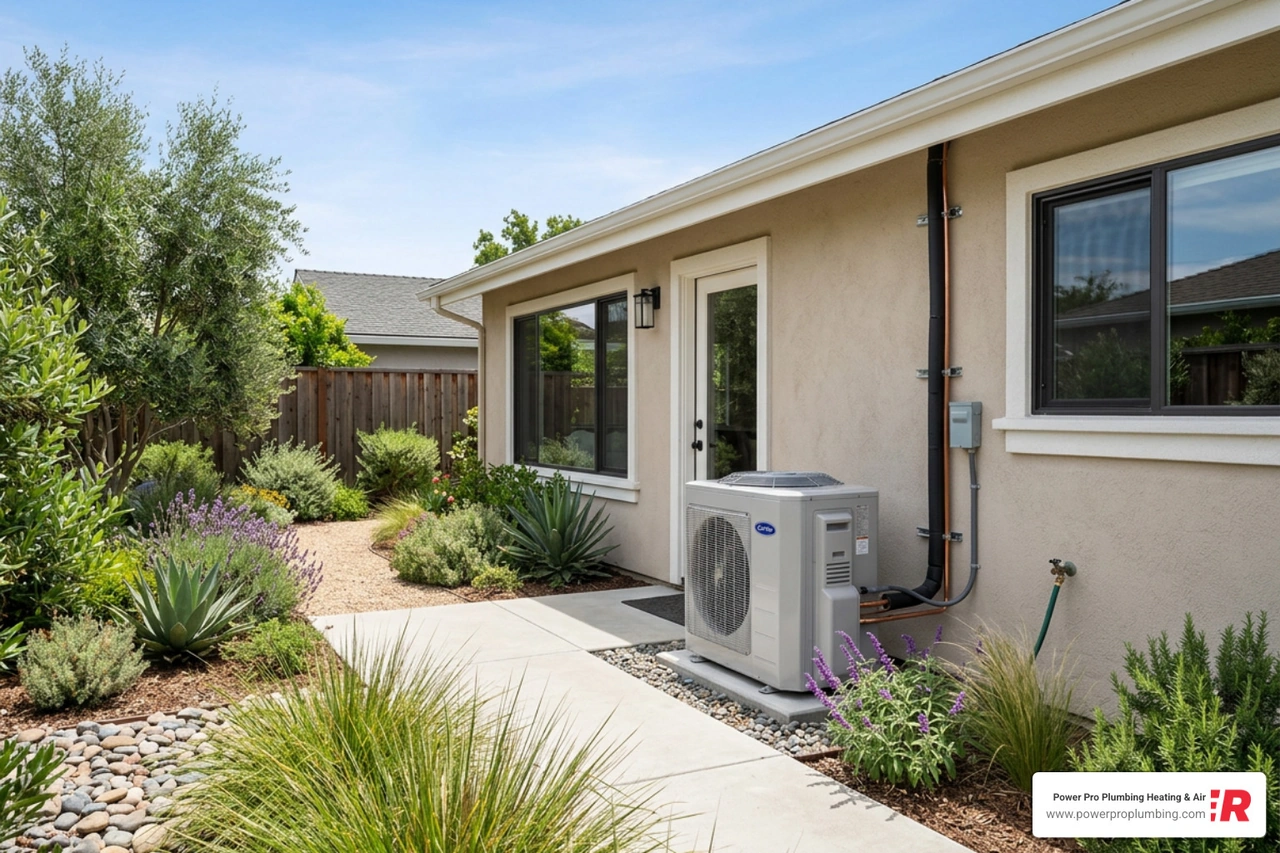
- Ductless Mini-Split Heat Pumps: These systems completely bypass the need for ductwork. Instead, an outdoor condenser connects via small refrigerant lines to individual indoor air handlers mounted directly on the walls or ceilings of specific rooms.
Ductless systems offer incredible flexibility, especially for older mid-century homes in neighborhoods like Pasadena or historic bungalows in Long Beach that were built without central duct systems. By eliminating ductwork, you also eliminate duct loss—which can account for 20% to 30% of a central system's total energy loss.
Mini-splits allow for true zoned comfort. Each indoor unit operates independently with its own thermostat. If you spend most of your evening in the living room and only want to heat or cool that specific area, you can turn down the units in empty bedrooms, maximizing your monthly savings. Understanding the Mini Split Heat Pumps Benefits helps homeowners design a tailored comfort system that fits their lifestyle perfectly. From improved indoor air quality to whisper-quiet operation, the Benefits of Mini Split Heat Pumps are particularly compelling for room additions, converted garages, or homes with stubborn hot or cold spots.
Frequently Asked Questions About SoCal Heat Pumps
Do heat pumps work efficiently when temperatures drop below freezing?
Yes, modern heat pumps operate exceptionally well in freezing temperatures. While older models from decades ago struggled once temperatures dipped below 40°F, modern variable-speed inverter compressors modulate their output to match the heating demand precisely.
Advanced cold-climate models utilize flash-injection technology to maintain full capacity even when outdoor temperatures drop well below freezing. However, because freezing air contains moisture, frost can accumulate on the outdoor coils. When this happens, the system automatically enters a brief defrost cycle, temporarily reversing the flow to warm the outdoor coils and melt the frost before returning to heating mode. Understanding the mechanical demands of cold-weather operation is important, as neglecting regular maintenance can lead to common Causes of Heat Pump Failures, such as blocked airflow from dirt accumulation or failed defrost sensors.
Do I need a backup gas furnace or hybrid system in Los Angeles?
For the vast majority of homeowners in the Los Angeles basin, the South Bay, and coastal Orange County, a backup gas furnace is completely unnecessary. Our winter design temperatures rarely drop low enough to stress a standard variable-speed heat pump.
However, if you live in high-elevation mountain communities or deep inland valley pockets where overnight freezes are common, a dual-fuel (hybrid) system—which pairs a heat pump with a gas furnace—can be beneficial. In a hybrid setup, the heat pump handles all the cooling and the majority of the heating. If a severe cold snap hits and temperatures drop below a designated setpoint (typically around 35°F), the system automatically switches over to the gas furnace to provide rapid, high-temperature heat. Working with experienced technicians ensures your system is configured correctly, helping you avoid common Heat Pump Repair Problems associated with incorrect thermostat wiring or poorly calibrated crossover setpoints.
What rebates and incentives are available for SoCal homeowners in 2026?
The transition to energy-efficient, all-electric heat pumps is heavily supported by local, state, and federal programs. In 2026, Southern California homeowners can stack multiple financial incentives to significantly reduce the upfront cost of installation:
- Federal Tax Credits: Under the Inflation Reduction Act, homeowners can claim a 30% federal tax credit on qualifying heat pump installations.
- Local Utility Rebates: Major local utility providers, including LADWP and Southern California Edison (SCE), offer substantial rebates for upgrading from traditional gas and AC systems to high-efficiency heat pumps.
- State Programs: Programs like TECH Clean California offer additional incentives that can be processed directly through licensed, enrolled contractors.
Navigating these programs can be complex, but staying informed on the latest California Rebates for Home Plumbing and HVAC Upgrades ensures you do not leave money on the table. Maximizing the Inflation Reduction Act Benefits for California Homeowners requires selecting qualifying equipment and working with a certified contractor who can provide the necessary AHRI certificates and permit closures.
Conclusion
Whether you are looking to survive a scorching inland summer or keep your family cozy during an unexpected coastal cold snap, a modern heat pump is the ultimate all-in-one comfort solution for Southern California. By shifting heat rather than creating it, these systems deliver unmatched efficiency, lower your monthly energy bills, and future-proof your home against rising natural gas costs.
At Power Pro Plumbing, Heating & Air, we are proud to be a Daikin Comfort Pro. This elite designation means our NATE-certified technicians are trained to the absolute highest industry standards to design, install, and maintain advanced Daikin Heat Pumps with industry-leading warranties.
We serve communities across the greater Los Angeles area, Orange County, and the South Bay with a commitment to fast, reliable, and honest service. Through our Power Pro Club, we offer comprehensive annual maintenance to keep your system running at peak performance year-round, protecting your investment and preventing unexpected breakdowns.
If you are ready to experience the quiet, efficient comfort of a dual-season system, upgrading to a Heat Pump Installation Is Best for your home's energy future. For more tips on maximizing your system's lifespan, check out our guide on All About Residential Heat Pumps Operation Maintenance and Repair.
Ready to make the switch? Schedule your professional consultation with Power Pro Plumbing Heating & Air today and let our family take care of yours.