

Why adding cooling without ductwork options compared Matters for Los Angeles Homeowners
Adding cooling without ductwork options compared side by side is the fastest way to find the right fit for your home. Here's a quick look at the top choices available in 2026:
| Cooling Option | SEER Rating | Best For | Noise Level |
|---|---|---|---|
| Ductless Mini-Split | 16-28+ | Whole-home zoned cooling | 19-32 dB (whisper quiet) |
| High-Velocity Small-Duct | 14-18 | Historic homes, hidden install | Moderate |
| Window AC Unit | 10-15 | Single rooms, budget fix | 50-60 dB |
| Portable AC | 8-12 | Temporary or rental use | 52-60 dB |
| Through-the-Wall (PTAC) | 12-16 | Permanent single-room cooling | Moderate |
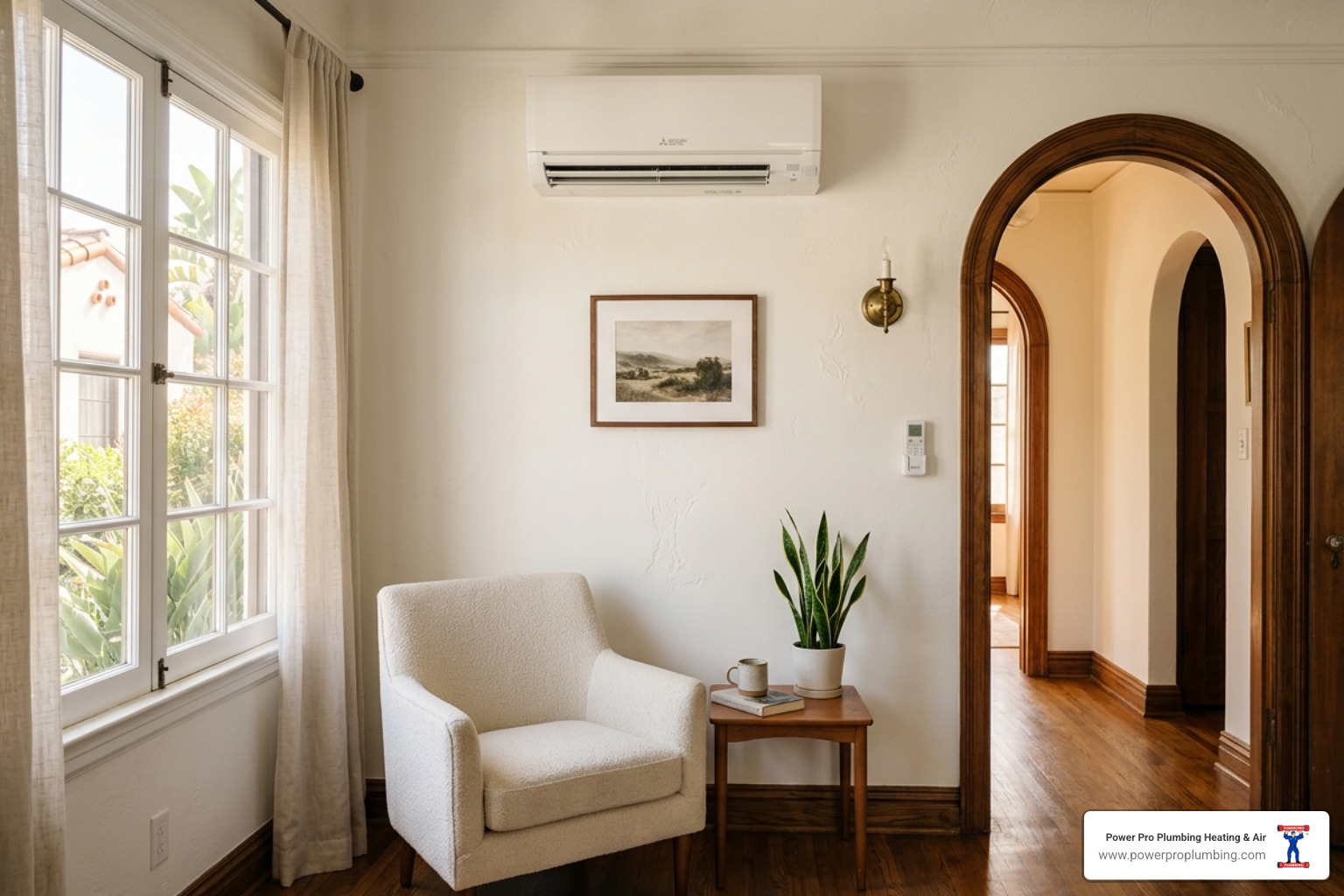
Millions of older homes across Los Angeles and Orange County were built long before central air conditioning became standard. Many of these properties were designed around radiators or natural ventilation — not ductwork. Adding traditional ducts to a craftsman bungalow or a multi-story historic property often means opened ceilings, bulky soffits, and a renovation that feels bigger than the problem it was meant to solve. The good news? You have real, proven alternatives that are efficient, quiet, and far less disruptive than tearing into your walls.
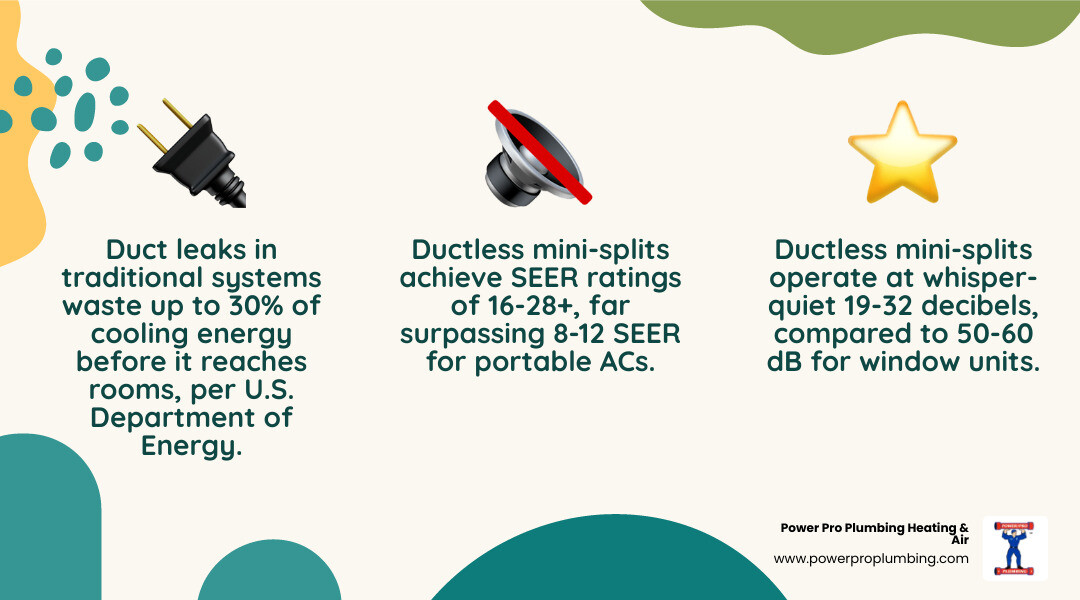
Traditional ducted systems also come with a hidden cost: the U.S. Department of Energy notes that duct leaks alone can waste up to 30% of a system's cooling power before the air even reaches a room. For homeowners in Southern California — where summer temperatures demand reliable, efficient cooling — that kind of energy loss adds up fast.
I'm Daniel Rodriguez, a second-generation tradesman with C36 and C20 licenses in plumbing and HVAC, and I've helped countless homeowners navigate the exact challenge of adding cooling without ductwork options compared — from single-zone installs in century-old bungalows to full multi-zone systems in sprawling historic properties. In the sections ahead, we'll walk through every option in plain language so you can make the right call for your home.
Top Solutions for Adding Cooling Without Ductwork Options Compared
When we evaluate how to bring modern comfort into a home without existing vents, we aren't just looking for a "fan in a box." We are looking for a permanent solution that increases your home's value and slashes your utility bills. In the current 2026 landscape, the clear frontrunner for most Los Angeles residents is the ductless mini-split system.
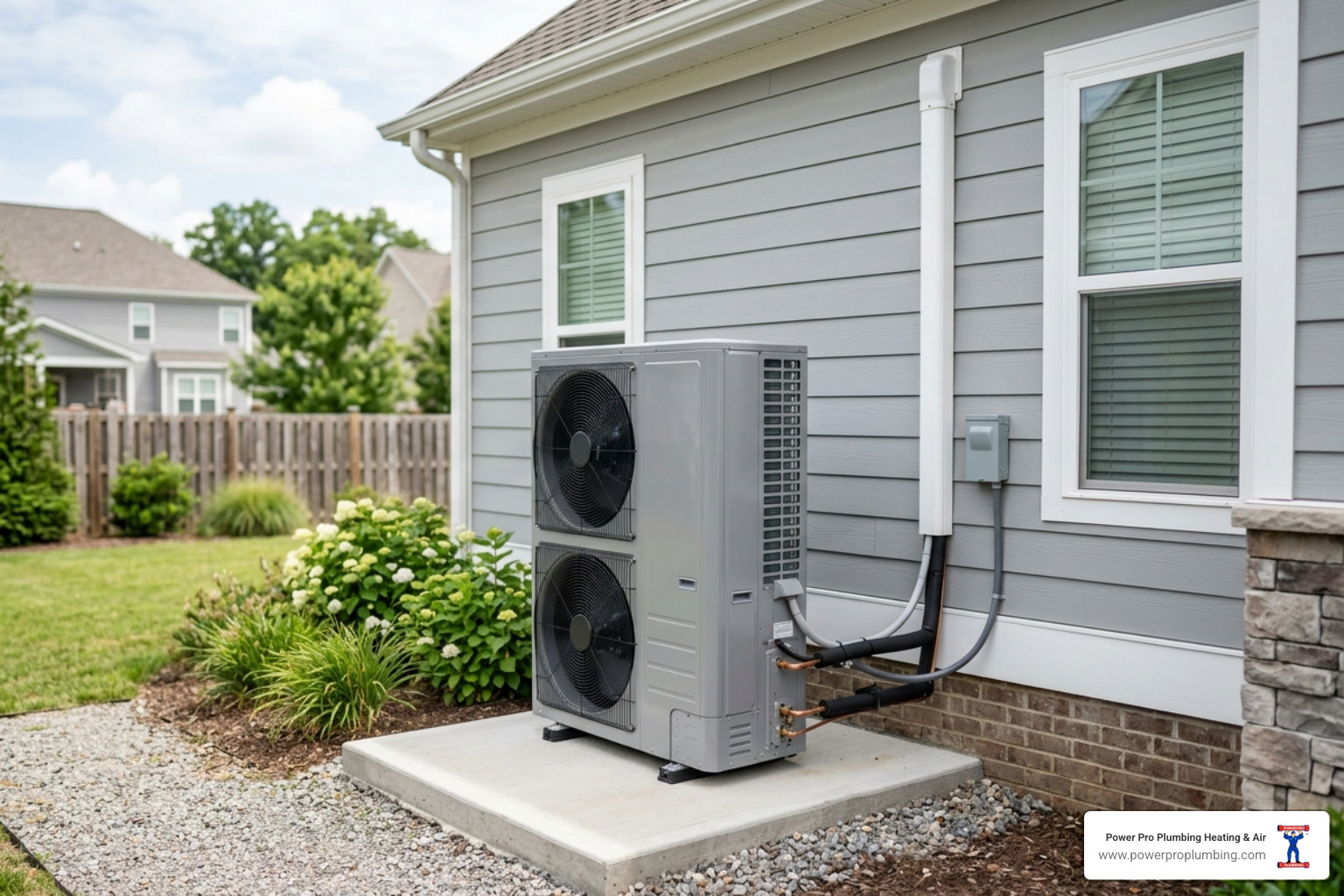
A ductless mini-split consists of two primary components: an outdoor compressor/condenser and one or more indoor air-handling units. These are connected by a small conduit housing the power cable, refrigerant tubing, and a suction line. This setup allows for incredible flexibility. You can cool a single "problem room" or network several indoor units together to cover your entire house.
According to our Ductless Mini Splits Ultimate Guide, one of the biggest advantages is "zoned comfort." In a traditional home, a single thermostat in the hallway tries to tell the whole house what to do. This leads to the classic "upstairs is a sauna, downstairs is a fridge" scenario. With ductless systems, every room with an indoor unit has its own remote or smart control. If you aren't using the guest room, you don't have to cool it. This precision is a major reason why ductless systems can save homeowners up to $1,000 to $2,000 annually in running costs compared to a ducted system.
Why Mini-Splits Lead the Way When Adding Cooling Without Ductwork Options Compared
The secret to the mini-split’s success is inverter technology. Think of a traditional AC like a light switch — it’s either 100% on or 100% off. This constant cycling is noisy and eats up electricity. Modern mini-splits work more like a dimmer switch. The compressor speeds up or slows down smoothly to maintain a constant temperature.
Beyond efficiency, the Benefits of Mini Split Heat Pumps extend to year-round comfort. These systems are heat pumps, meaning they can reverse the cooling process to provide highly efficient heat during our cooler Southern California nights. In fact, ENERGY STAR certified mini-splits use up to 60% less energy than standard heating and cooling systems.
Noise is another area where mini-splits dominate. Indoor units operate at a whisper-quiet 19 to 32 decibels. For context, a quiet library is about 30 decibels. You can easily watch television or sleep without the disruptive roar common to older window units. Because there are no ducts, you also avoid "duct loss," which ensures that 100% of the air you pay to cool actually stays in the room. This is one of the primary Advantages of Ductless AC Systems for those living in older, pre-1940 homes which typically use 40% more energy per square foot.
High-Velocity Systems vs. Ductless Units
If you love the idea of central air but have a historic home in San Marino or Pasadena where you don't want visible units on the walls, a Small-Duct High-Velocity (SDHV) system might be your answer. These systems use a specialized outdoor unit and a high-pressure indoor blower, but instead of large metal ducts, they use 2-inch flexible tubing.
This tubing is small enough to be snaked through existing wall cavities, over ceilings, and under floors with minimal disruption to your home's original plaster or woodwork. While mini-splits are more efficient (often reaching 28+ SEER), high-velocity systems are famous for their dehumidification. They typically remove 30% more moisture than conventional systems because the air spends more time in contact with the colder cooling coils.
The trade-off? SDHV systems are generally more expensive to install than mini-splits and can be slightly noisier due to the high-pressure air moving through the small vents. However, for a homeowner looking to preserve the "invisible" look of central air in a historic property, they remain a top-tier option.
Room-Specific and Temporary Cooling Alternatives
Not every situation requires a whole-home overhaul. Sometimes you just need to cool a garage workshop in Torrance or a sunroom in Huntington Beach. In these cases, we look at room-specific units like window ACs, portable units, and through-the-wall systems.
Window units are the "budget champions." They are inexpensive upfront and can be installed by a handy homeowner. However, they come with significant downsides: they block your view, reduce natural light, and create a major security risk. A window unit can often be pushed in from the outside, providing an easy entry point for intruders.
Portable ACs are often the "choice of last resort." They are useful for renters or for rooms without standard windows, but they are generally the least efficient option. Most portable units use a single hose to exhaust hot air. This creates "negative pressure," which actually sucks hot outdoor air back into your home through cracks under doors and around windows, reducing their effective cooling power by up to 40%.
Through-the-wall units, or PTACs (Packaged Terminal Air Conditioners), are the sturdy units you often see in hotel rooms. They require cutting a permanent hole in an exterior wall and installing a sleeve. While more secure and permanent than window units, they still lack the high-end efficiency and quiet operation of a Ductless Mini-Split Systems Los Angeles CA setup.
Comparing Efficiency and Performance for Adding Cooling Without Ductwork Options Compared
When we look at adding cooling without ductwork options compared by the numbers, the gap in performance is staggering.
- Mini-Splits: 16–28+ SEER. These are the undisputed champions of efficiency.
- High-Velocity: 14–18 SEER. Good, but the high-pressure blower uses more energy.
- Window Units: 10–15 SEER. These have improved over the years but still lag behind.
- Portable ACs: 8–12 SEER. The lowest efficiency, often struggling to keep up with intense heatwaves.
Noise levels also vary wildly. A window unit or portable unit typically roars at 50 to 60 decibels — about the volume of a normal conversation. If you’re trying to sleep or work from home in a quiet neighborhood like La Habra Heights or Rancho Palos Verdes, that constant hum can become a major annoyance. In contrast, the 19-32 decibels of a mini-split is often so quiet that our customers have to check the indicator lights to see if the unit is even running.
Maximizing Efficiency in Older Los Angeles Homes
Before you commit to a new system, you have to ensure your home is ready to handle it. The biggest mistake a homeowner can make is "eyeballing" the size of the unit. At Power Pro Plumbing Heating & Air, we always perform a Manual J load calculation. This isn't just about square footage; it accounts for your home's age, the number of windows, ceiling height, and local climate.
Oversizing a system is just as bad as undersizing it. An oversized AC will "short-cycle," turning on and off too quickly. This prevents the system from properly dehumidifying the air, leaving you with a room that is cold but "clammy." Achieving an Efficient Ductless AC Installation requires this level of precision.
We also recommend addressing the "building envelope" first. Improving insulation and sealing air leaks around windows and doors can reduce your cooling costs by 15 to 30%. This often allows you to install a smaller, less expensive cooling system. For those with existing radiators or boilers, a "hybrid approach" is fantastic. You keep your cozy radiator heat for the winter and use ductless mini-splits for summer cooling and "shoulder season" heating.
If you have an older home that does have some ductwork (perhaps for an old floor furnace), we also suggest looking into Duct Cleaning Los Angeles CA to ensure your indoor air quality is at its peak before you modernize your system.
Installation, Maintenance, and 2026 Incentives
One of the best things about ductless technology is the speed of installation. While a full central air retrofit in an older home could take a week or more of messy construction, a typical multi-zone mini-split system can usually be installed in just 1 to 2 days. The process only requires a small 3-inch hole in the wall for the line set, preserving your home's structural integrity. For a deeper look at the process, check out our Ductless Mini Split Installation Guide Cypress CA.
2026 Tax Credits and Rebates
As of April 2026, federal tax credits under the Inflation Reduction Act remain a massive benefit for Southern California homeowners. You can claim a federal tax credit of 30% of the project cost, up to a maximum of $2,000 annually, for qualifying high-efficiency heat pump installations. When you combine this with local utility rebates in areas like Anaheim or Long Beach, the long-term ROI of a ductless system becomes even more compelling.
Maintenance for Longevity
To keep your system running for its full 15-20 year lifespan, maintenance is key.
- Filter Cleaning: You should wash the reusable filters in your indoor units every 4 to 6 weeks during the summer.
- Clear the Outdoor Unit: Keep the outdoor compressor clear of "Texas snow" (cottonwood seeds), grass clippings, and leaves.
- Professional Tune-Ups: Schedule an annual professional inspection. We check refrigerant levels, clear condensate drains, and ensure electrical connections are tight.
If you ever notice a drop in performance, it's important to seek Ductless AC Repair Cerritos CA immediately to prevent small issues from becoming major failures. Not sure if your old unit is worth fixing? Our guide on whether to Repair or Replace Ductless AC can help you weigh the costs.
Frequently Asked Questions about Ductless Cooling
Can a mini-split cool my entire home?
Absolutely. While many people think of mini-splits for single rooms, "multi-zone" systems are designed for whole-home coverage. A single outdoor condenser can power up to eight indoor air handlers. This allows you to have independent temperature control in every major room of your house without a single foot of ductwork.
How long do ductless systems last?
With proper professional maintenance and regular filter cleanings, a high-quality ductless mini-split system can last 15 to 20 years. This is significantly longer than the 7 to 12-year lifespan typical of window or portable units. Because the noisy, vibrating parts are located outside, the indoor components face less wear and tear.
Are there tax credits available in 2026?
Yes! Under the Inflation Reduction Act, homeowners can claim a federal tax credit of 30% of the equipment and installation costs for qualifying heat pumps, up to a maximum of $2,000 per year. This credit is currently available through 2032, making 2026 an ideal time to upgrade. Many local utility providers in Los Angeles and Orange County also offer additional rebates ranging from $500 to $2,000.
Conclusion
When adding cooling without ductwork options compared, the right choice depends on your specific home layout, budget, and long-term goals. For most homeowners in the Greater Los Angeles and Orange County areas, the ductless mini-split offers the best balance of efficiency, quiet operation, and architectural preservation.
At Power Pro Plumbing Heating & Air, we are proud to be a Daikin Comfort Pro with over 28,573 online reviews from your neighbors in the South Bay, Long Beach, and beyond. Our licensed technicians are experts in navigating the unique challenges of Southern California’s historic and modern homes alike. Whether you need a simple single-zone install or a complex multi-zone system, we offer same-day service and the peace of mind that comes with the Power Pro Club maintenance program.
Ready to reclaim your comfort? Explore our Ductless Mini Split Systems and see how we can transform your home into a cool, energy-efficient sanctuary. Give us a call today — we're here when you need us!