

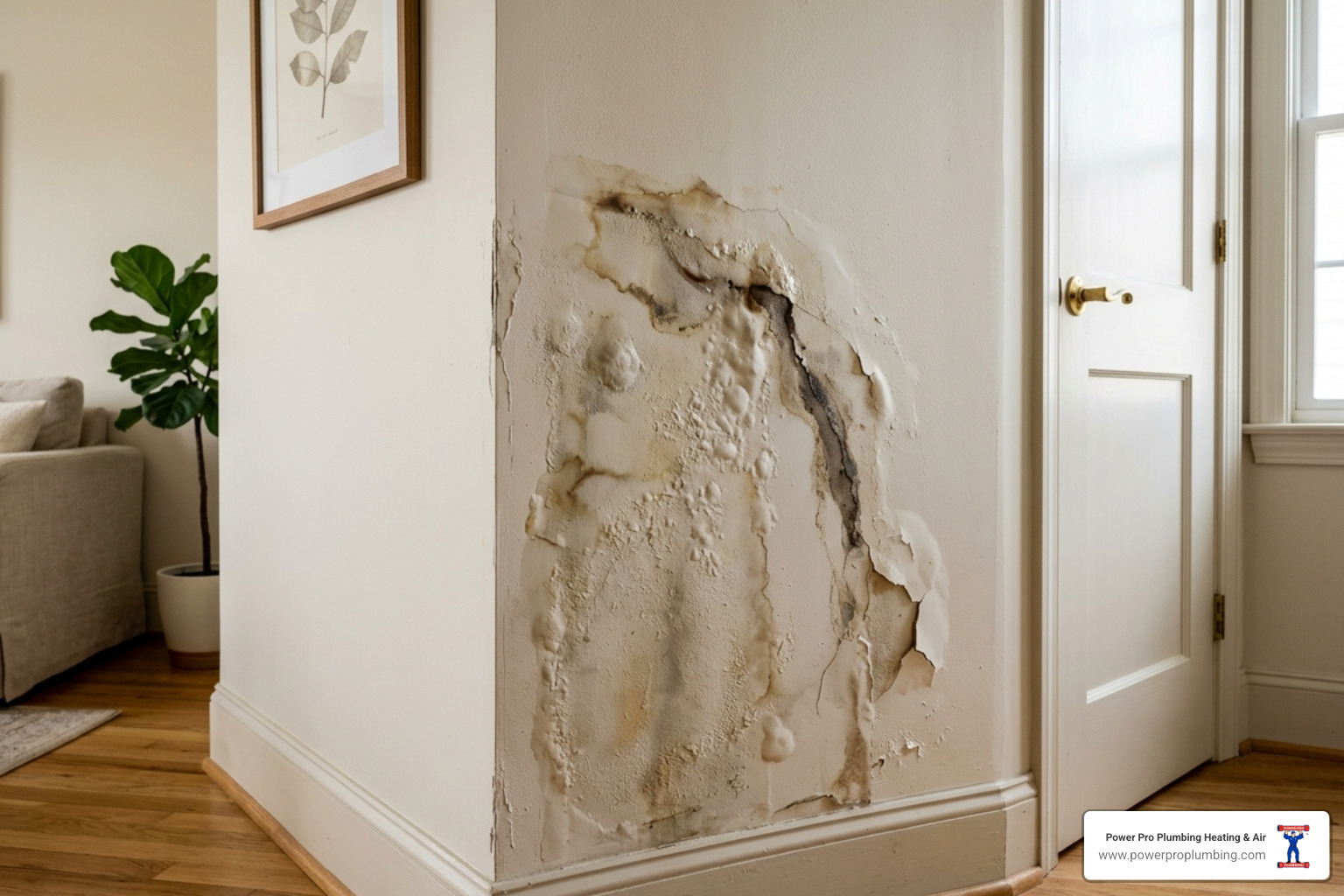
Why Knowing How to Detect a Water Leak Behind Walls Can Save Your Home
Knowing how to detect a water leak behind walls is one of the most valuable skills a homeowner can have — and here's a quick answer if you need it now:
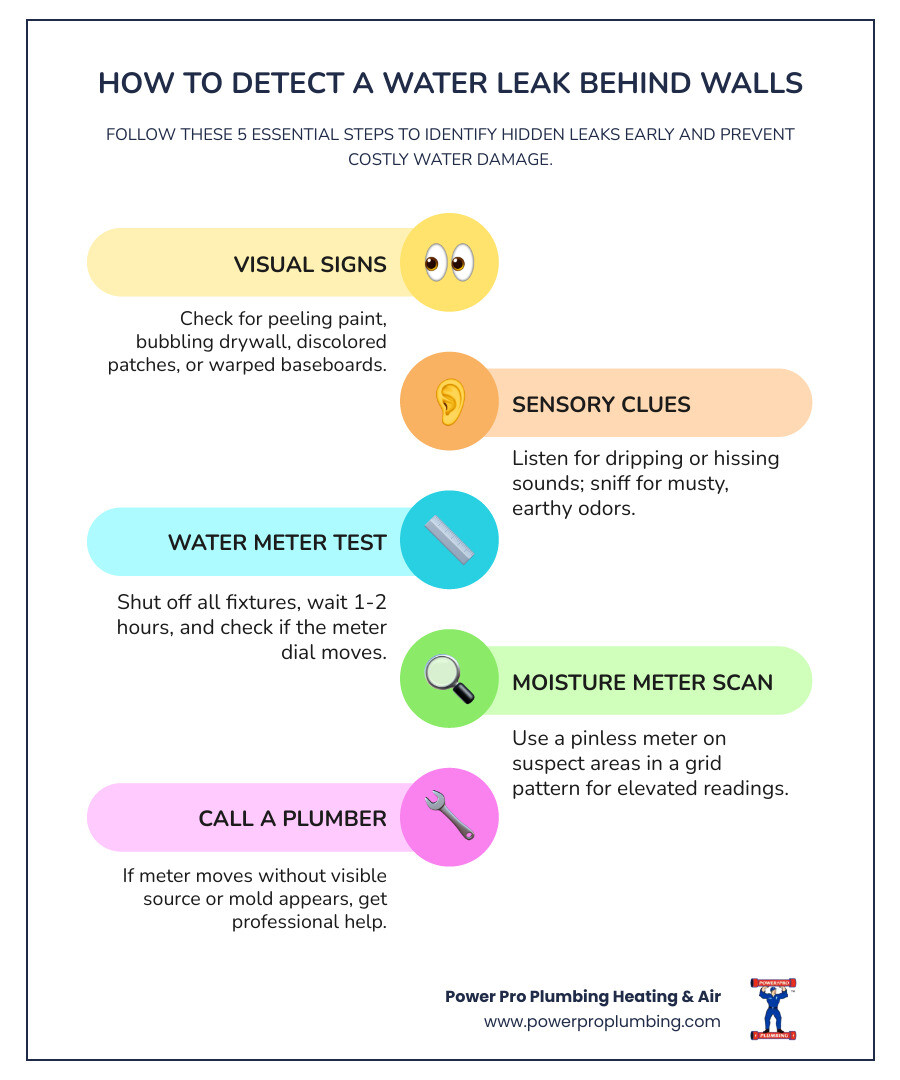
How to detect a water leak behind walls (5 steps):
- Look for visual signs — peeling paint, bubbling drywall, discolored patches, or warped baseboards
- Use your senses — listen for dripping or hissing; smell for musty, earthy odors
- Run a water meter test — shut off all fixtures, wait 1–2 hours, and check if the meter has moved
- Scan with a moisture meter — press a pinless meter against suspect wall areas in a grid pattern
- Call a licensed plumber — if the meter moves but you can't find the source, or if mold is present
Water damage doesn't always announce itself with a dramatic burst pipe or a ceiling collapse. More often, it starts quietly — a faint musty smell, a patch of paint that looks slightly off, or a water bill that crept up for no clear reason. By the time visible damage appears on your drywall, a leak may have already been running for days or even weeks. According to the EPA, household leaks across the country waste as much as 1 trillion gallons of water every year, and the average home loses over 10,000 gallons annually to leaks alone. For Southern California homeowners in Los Angeles County and Orange County, that kind of hidden waste adds up fast — in both water costs and structural damage.
The tricky part is that water travels. A leak originating from a bathroom supply line can show up as a stain on a first-floor ceiling or a warped baseboard in a completely different room. That distance between source and symptom is exactly what makes wall leaks so frustrating — and so important to catch early.
I'm Daniel Rodriguez, a licensed plumber with C36 and C20 certifications and a background built through years of hands-on work in the field. I've seen how knowing how to detect a water leak behind walls early — before mold sets in or framing begins to rot — can mean the difference between a simple repair and a full-blown restoration. In the sections ahead, we'll walk through everything you need to know, from the earliest warning signs to the tools and techniques that locate leaks without tearing your home apart.
Recognizing the Early Warning Signs and Causes of Hidden Leaks
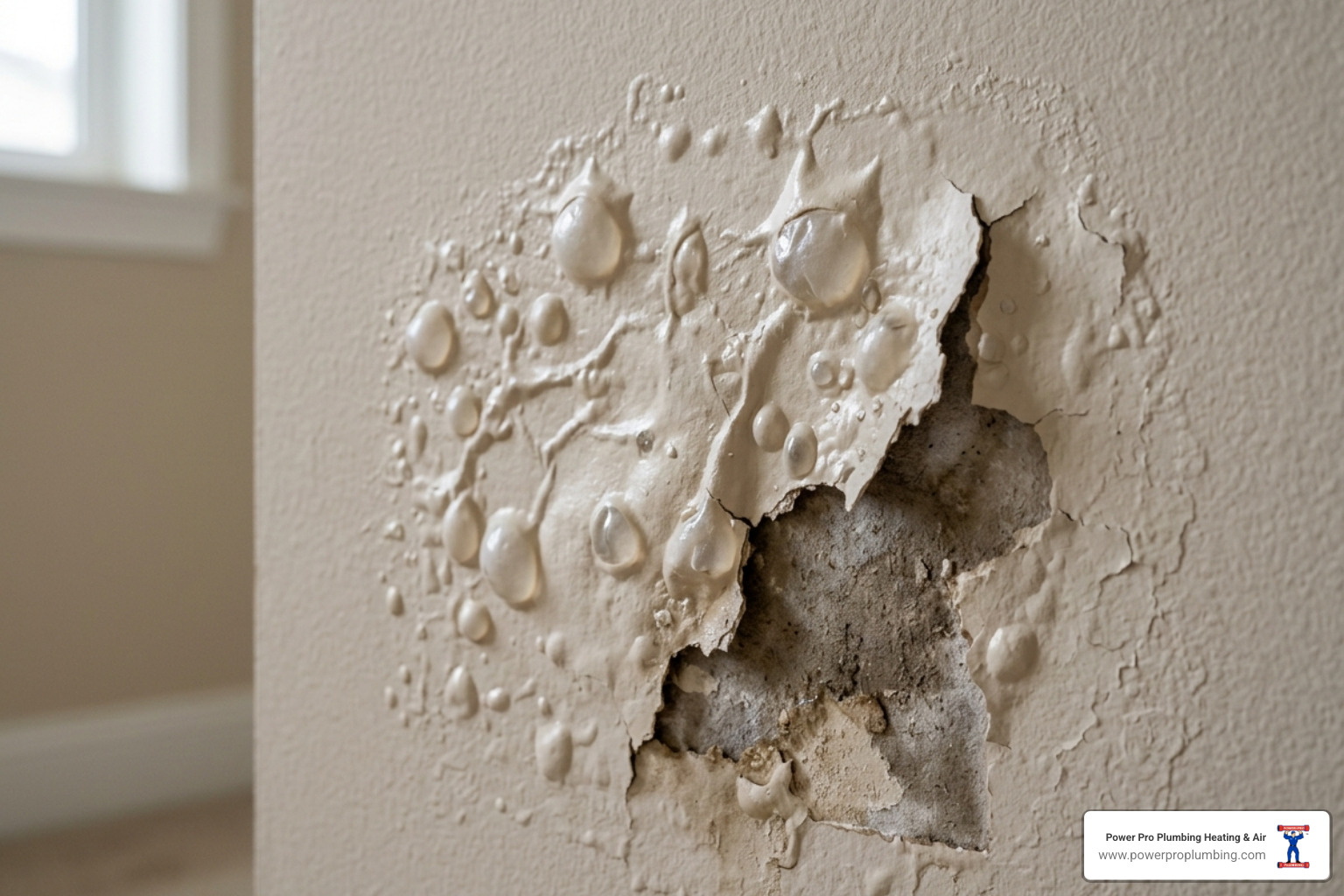
Before you start worrying about the plumbing inside your walls, your house will usually try to tell you something is wrong. The signs are often subtle at first. You might notice bubbling paint or peeling wallpaper that looks like it’s losing its grip on the drywall. This happens because moisture is trapped between the wall material and the finish, causing the adhesive to fail.
Another classic red flag is a musty, earthy odor. If a room in your Santa Monica or Beverly Hills home smells like a damp basement even after a deep clean, it’s a strong indicator that mold is thriving in the dark, moist cavity behind your drywall. You should also keep an eye on your warped baseboards. When wood or MDF baseboards absorb water, they swell and pull away from the wall, often looking "puffy" or discolored.
Common culprits for these issues include:
- Pipe Corrosion: Older homes in areas like Long Beach or Pasadena often have aging copper or galvanized pipes that eventually develop pinhole leaks.
- Loose Fittings: A compression fitting under a sink or behind a shower can vibrate loose over time, creating a slow, steady drip.
- Exterior Failures: Sometimes the leak isn't a pipe at all. Faulty window flashing, clogged gutters, or deteriorated caulking can allow rainwater to seep into your wall framing.
Understanding these signs is vital because a Dripping Faucet Why You Should Fix A Leak isn't the only way water is wasted; hidden wall leaks are far more destructive. Many Hidden Water Leaks In Cerritos Homes go unnoticed until they cause significant structural harm. Furthermore, it's important to distinguish between a standard wall leak and more complex issues, such as when you need to Identify A Slab Leak In Your Cerritos Home, which involves pipes running under your foundation.
How to Detect a Water Leak Behind Walls Using Your Water Meter
One of the most reliable DIY methods for confirming an active leak is the water meter test. Your water meter acts as the "truth-teller" for your home's plumbing system. If water is moving through the pipes when everything is turned off, you have a leak.
Here is the step-by-step process to perform this test in April 2026:
- Shut off all water: Ensure every faucet, shower, dishwasher, and washing machine is off. Don't forget to disable automatic ice makers and irrigation systems.
- Locate your meter: In Southern California, these are usually found in a concrete box near the sidewalk or at the side of the house.
- Check the low-flow indicator: Many modern meters have a small triangular dial or a digital display that spins even with a tiny amount of water flow. If it’s moving, you have an active leak.
- The 2-hour wait: If the indicator isn't moving but you still suspect a leak, record the exact reading on the meter. Leave the water off for at least two hours (don't flush any toilets!), then check the reading again. Any change in the numbers confirms a leak.
Why does this matter? Leak Detection Prevents Damages by catching problems before they escalate. Industry data suggests that a 20% sudden increase in your water bill is a classic sign of a hidden leak. Furthermore, the EPA notes that a household of four using more than 12,000 gallons per month during cooler seasons is a "sure-fire" sign of serious plumbing issues. By establishing baseline readings of your April 2026 usage patterns, you can spot these spikes early.
DIY Tools and Professional Detection Techniques
Once you've confirmed a leak exists via the meter, the next challenge is finding its exact location. You don't want to start swinging a hammer at every damp-looking spot. Modern technology allows us to "see" through walls without causing damage.
| Tool Type | Best For | How it Works |
|---|---|---|
| Moisture Meter | Pinpointing wet drywall | Measures electrical resistance or signals in materials |
| Thermal Camera | Finding temperature shifts | Detects evaporative cooling from moisture |
| Acoustic Sensor | Hearing pressurized leaks | Amplifies the sound of hissing or dripping |
| Borescope | Visual confirmation | Small camera fed through a tiny hole in the wall |
For homeowners looking for Anaheim Affordable Leak Detection Tips, starting with a basic moisture meter is often the most cost-effective first step.
How to detect a water leak behind walls with moisture meters
A moisture meter is a handheld device that tells you exactly how much water is inside your drywall. We recommend using pinless sensors because they scan up to 3/4" deep without leaving holes in your beautiful paint job.
To use one effectively, first establish a baseline dry reading on a wall you know is dry. Then, move to the suspect area and scan in a grid pattern. By mapping out the moisture levels, you can follow the "trail" to the highest concentration, which is usually where the leak source is located.
How to detect a water leak behind walls using professional technology
While DIY tools are great, they have limits. This is Why Hire Professional Leak Detection Specialists For Plumbing Leaks. Professionals use electronic amplification and acoustic sensors to hear the specific frequency of a pressurized leak, even through concrete or thick drywall.
In areas like Long Beach, we often deploy Leak Detection Solutions In Long Beach that include infrared thermography. This technology identifies "cool plumes" on a wall surface. Because water cools as it evaporates, it appears as a different color on a thermal map. Combined with pressure testing and borescope cameras, we can find the exact pipe fitting that failed with surgical precision.
Immediate Actions, Risks, and Long-Term Prevention
If you find a leak, the clock is ticking. Mold can begin to grow on the cellulose backing of drywall within just 24 to 48 hours of water exposure. This isn't just a cosmetic issue; it can severely impact your indoor air quality and lead to respiratory issues.
Immediate Steps to Take:
- Shut off the main water valve: This stops the "fuel" to the leak.
- Turn off electricity: If the leak is near outlets or light fixtures, shut off the breakers to prevent electrical fires or shocks.
- Document everything: Take photos of the damage, the meter readings, and any moisture meter results. This is crucial for insurance documentation.
- Dry the area: Use high-powered fans and dehumidifiers to pull moisture out of the air and materials.
Long-Term Prevention:To avoid future headaches in your Glendale or Torrance home, consider these strategies:
- Smart Water Monitors: Devices like Flume or Bluebot can alert your phone the second they detect abnormal flow patterns.
- Annual Inspections: Having a licensed plumber check your exposed pipes and water pressure can catch "pinhole" risks before they burst.
- Pressure Regulators: High water pressure (above 80 PSI) stresses your pipe joints. Installing a regulator can extend the life of your plumbing.
- Replace Old Hoses: Swap out rubber washing machine and dishwasher hoses for braided stainless steel every 5–7 years.
Frequently Asked Questions about Hidden Wall Leaks
Can homeowners insurance cover water damage from hidden leaks?
Generally, homeowners insurance covers sudden and accidental events, like a pipe that bursts overnight. However, "gradual damage" caused by a leak that has been seeping for months due to lack of maintenance is often excluded. Providing moisture mapping and professional reports from your plumber can help prove the timeline of the event during a claim.
How quickly does mold grow behind a wet wall?
As mentioned, the 24–48 hour window is critical. Mold loves the dark, stagnant air inside a wall cavity and the "food" provided by drywall paper. If you don't dry the wall quickly, professional remediation may be required to safely remove the spores.
When should I call a professional instead of attempting DIY detection?
You should stop the DIY approach and call us immediately if:
- The leak is near electrical wiring or causing breakers to trip.
- You see structural sagging in the ceiling or walls.
- The mold growth covers an area larger than 10 square feet.
- Your water meter is spinning, but your DIY moisture tests are inconclusive.
Conclusion
Finding a mystery puddle or smelling a musty odor in your home can be stressful, but you don't have to face it alone. Knowing how to detect a water leak behind walls is the first step in protecting your property and your family's health. Whether you are in Los Angeles County, Orange County, or the South Bay, acting quickly is the best way to keep repair costs down and prevent long-term damage like wood rot and mold.
At Power Pro Plumbing Heating & Air, our licensed technicians are equipped with the latest electronic leak detection technology to find and fix your hidden plumbing issues with minimal disruption to your home. We're proud to serve our local communities with the same-day service and expertise that has earned us over 28,000 positive reviews.
If you suspect a leak but can't find the source, don't wait for the damage to spread. Request professional leak detection services from our team today and let us help you stop the drip for good.