

What Every Southern California Homeowner Should Know About Heat Pumps
How does a heat pump work for both heating and cooling in southern california is one of the most common questions homeowners ask when their aging furnace or AC finally gives out — and the answer is simpler than most people expect.
Quick Answer: How a Heat Pump Heats and Cools Your Home
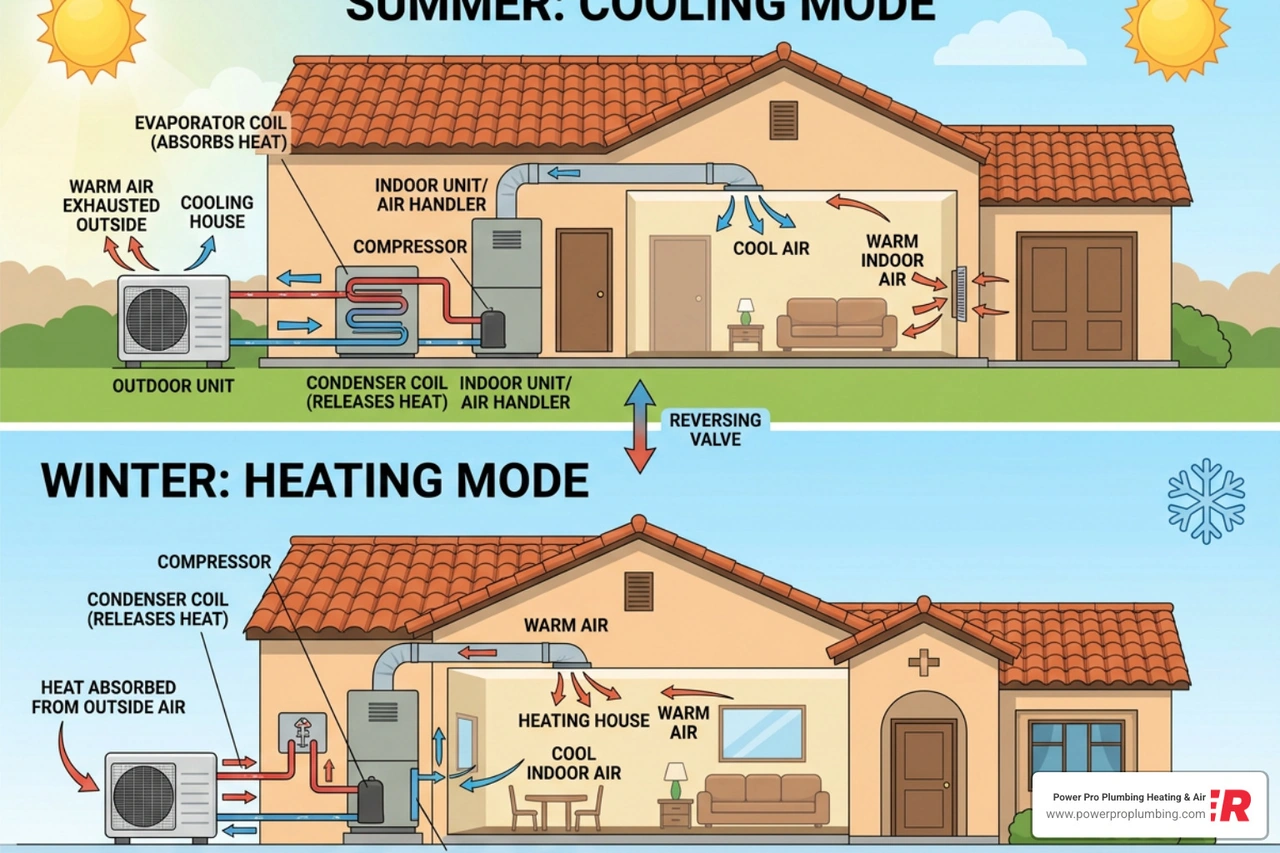
- In cooling mode: The heat pump pulls warm air from inside your home, moves the heat outdoors through a refrigerant cycle, and returns cool, dehumidified air back inside — exactly like a standard air conditioner.
- In heating mode: The cycle reverses. The system extracts heat energy from the outdoor air (even on cool winter nights) and transfers it inside to warm your home.
- The key component: A reversing valve switches the direction of refrigerant flow, letting one system handle both jobs year-round.
- Why it matters in SoCal: Southern California winters rarely drop below 35–40°F in most areas, which is the ideal operating range for heat pumps. This means the system runs at peak efficiency for nearly every heating hour of the year.
- Efficiency advantage: Because a heat pump moves heat rather than generates it, it can deliver 3 to 4 units of heating or cooling energy for every 1 unit of electricity it uses — far more efficient than a gas furnace or electric resistance heater.
Whether you live near the coast in Long Beach, inland in the San Fernando Valley, or anywhere across Los Angeles County or Orange County, a modern heat pump is designed to handle Southern California's climate with ease. You get reliable cooling through hot summers and gentle, efficient warmth on those cooler winter mornings — all from a single system.
I'm Daniel Rodriguez, a licensed HVAC professional (C20) with hands-on experience helping homeowners across Greater Los Angeles and Orange County understand how a heat pump work for both heating and cooling in southern california and whether it's the right fit for their home. In the sections below, I'll walk you through exactly how the technology works, why it performs so well in our local climate, and what to consider before installation.
How Does a Heat Pump Work for Both Heating and Cooling in Southern California?
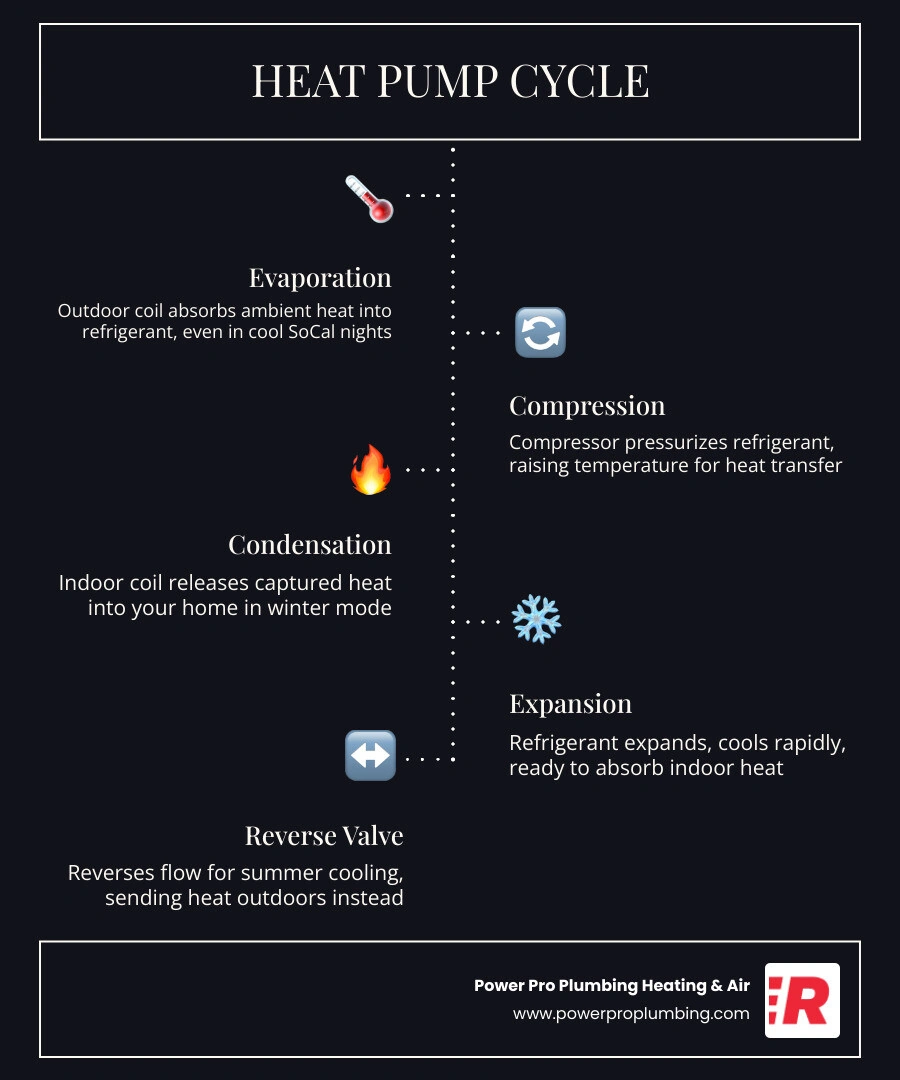
To understand how a heat pump manages to keep your home comfortable in both July and January, it helps to realize that heat is not actually created by the system. Instead, a heat pump acts like a thermal conveyor belt, shifting existing heat from one location to another.
At the center of this process is the refrigerant cycle, which relies on four main components:
- The Compressor: The "heart" of the system, which circulates the refrigerant and increases its pressure and temperature.
- The Evaporator Coil: Where the refrigerant absorbs heat from the surrounding air.
- The Condenser Coil: Where the refrigerant releases its heat.
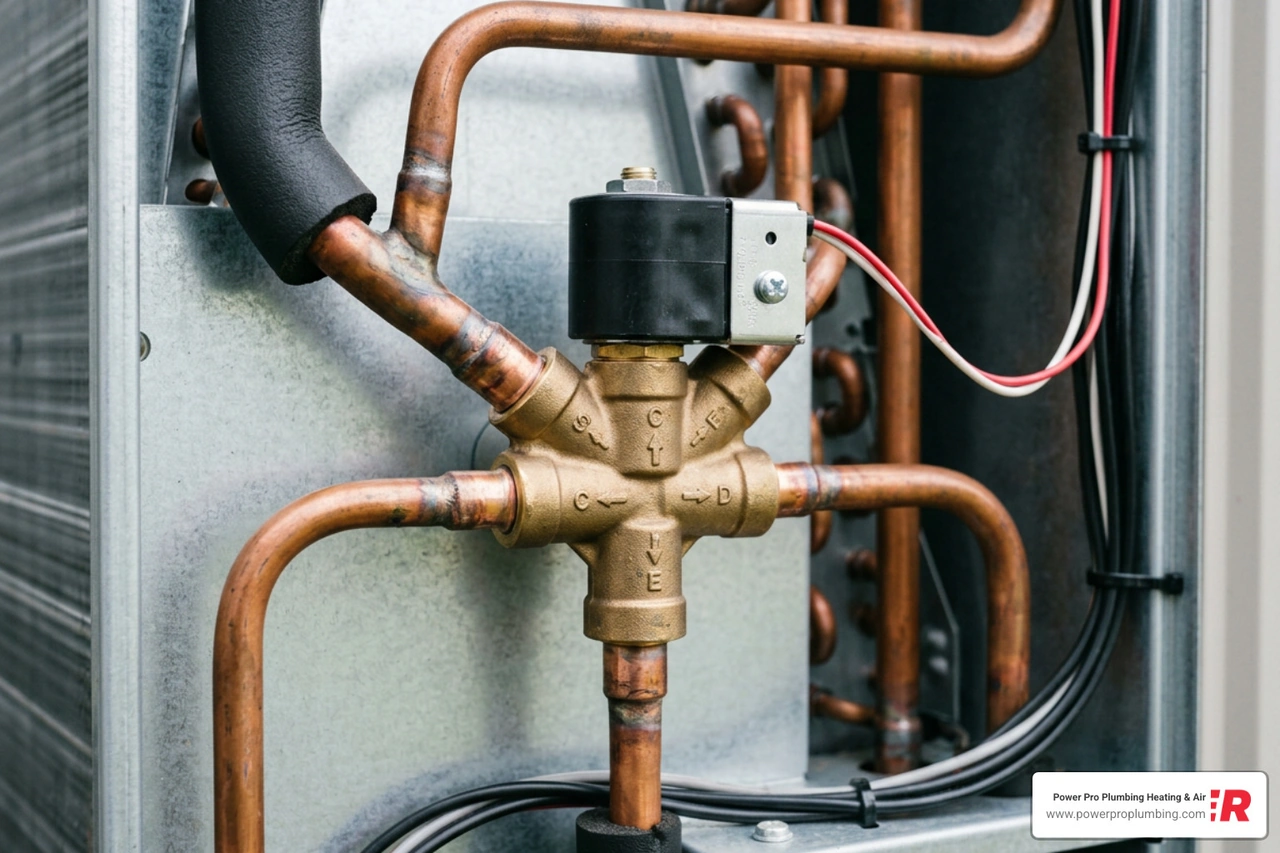
- The Reversing Valve: The crucial component that changes the direction of the refrigerant flow, allowing the system to switch between heating and cooling modes.
By utilizing these components, the heat pump can easily transition from cooling your home on a hot afternoon in Anaheim to warming it up during a chilly evening in Pasadena. Because the system moves heat rather than creating it through combustion (like a gas furnace) or electrical resistance, it is incredibly efficient.
In fact, an air-source heat pump can provide up to three times more heat energy to a home than the electrical energy it consumes. When you choose to upgrade, the long-term Benefits of Heat Pump Installation quickly become apparent on your monthly utility bills.
The Science Behind the System: Heating vs. Cooling Modes
The ability of a heat pump to perform double duty comes down to basic thermodynamic principles: heat naturally moves from a warmer area to a cooler area. By manipulating the pressure and state of the refrigerant (from liquid to gas and back), the system can absorb heat from a cooler space and reject it into a warmer space.
The reversing valve is the mechanical brain behind this transition. When you adjust your thermostat from "cool" to "heat," an electrical signal slides the reversing valve into a different position, instantly altering the path of the high-pressure refrigerant gas.
How Does a Heat Pump Work for Both Heating and Cooling in Southern California During the Winter?
When winter arrives in Southern California, temperatures can feel surprisingly brisk in the early mornings, especially in inland areas like Cerritos or the foothills of Glendale.
During the winter, the heat pump operates in heating mode:
- Heat Extraction: The outdoor unit's coil acts as an evaporator. The liquid refrigerant inside the coil is kept at an extremely low temperature, allowing it to absorb ambient heat from the outdoor air—even when it feels cold outside.
- Compression: The compressor pressurizes the warmed refrigerant gas, raising its temperature significantly.
- Heat Delivery: The hot gas is pumped indoors to the air handler. As indoor air passes over the indoor coil (now acting as a condenser), it absorbs the heat from the refrigerant, and the blower pushes this warm air through your ductwork.
- The Cycle Repeats: The refrigerant cools, condenses back into a liquid, passes through an expansion valve to lower its temperature further, and heads back outside to collect more heat.
Because our local winters are so mild, heat pumps run at their absolute highest efficiency during these months, offering substantial Winter Heat Pump Installation Benefits compared to traditional fossil-fuel heating.
How Does a Heat Pump Work for Both Heating and Cooling in Southern California During the Summer?
When summer heat waves strike the San Fernando Valley or Orange County, the heat pump reverses this entire process to act exactly like a standard air conditioner:
- Indoor Heat Absorption: The indoor coil becomes the evaporator. Warm indoor air is blown across the cold coil, and the refrigerant absorbs the heat, leaving the air cool and refreshed.
- Dehumidification: As warm air hits the cold indoor coil, moisture condenses out of the air and drains away, lowering the humidity inside your home for enhanced comfort.
- Outdoor Heat Rejection: The compressor pumps the hot refrigerant gas to the outdoor unit (now acting as the condenser). A fan blows outdoor air across the coil, releasing the heat into the atmosphere.
Mechanically, there is no difference in cooling performance or efficiency between a heat pump in cooling mode and a dedicated central air conditioner.
Why Heat Pumps Are Perfect for the Southern California Climate
Southern California boasts a unique climate. While coastal communities like Santa Monica and Huntington Beach experience mild, temperate weather year-round, inland locations like Covina, Pomona, and the Inland Empire can see summer temperatures soar past 100°F.
Because heat pumps are most efficient when the temperature difference between the indoors and outdoors is moderate, the Southern California climate is the absolute global sweet spot for this technology.
To evaluate a system's efficiency, we look at two main standards:
- SEER2 (Seasonal Energy Efficiency Ratio 2): Measures cooling efficiency. Modern systems typically range from 15 to 24 SEER2.
- HSPF2 (Heating Seasonal Performance Factor 2): Measures heating efficiency. Most high-efficiency systems range from 8 to 12 HSPF2.
| HVAC System Type | Heating Efficiency | Cooling Efficiency | Ideal SoCal Location |
|---|---|---|---|
| Standard Heat Pump | 300% – 400% (COP 3.0–4.0) | 15 – 24 SEER2 | Coastal & Mid-Basin (Long Beach, Torrance) |
| Variable-Speed Heat Pump | Up to 450% (COP 4.5) | Up to 24+ SEER2 | Inland Valley & Foothills (Glendale, Covina) |
| Standard AC + Gas Furnace | 80% – 98% AFUE | 14 – 16 SEER2 | Extreme High Desert or Mountain Areas |
By moving heat instead of burning natural gas, heat pumps deliver incredible efficiency. Upgrading to one of these systems allows you to capitalize on all the Heat Pump Systems Benefits, including zero local greenhouse emissions and reduced monthly energy consumption.
Choosing the Right Heat Pump Configuration for Your Home
Every home in the Greater Los Angeles and Orange County area is built differently. A mid-century ranch home in Lakewood has different heating and cooling needs than a historic Spanish bungalow in Beverly Hills or a modern townhome in Irvine.
Depending on your home's layout and existing infrastructure, we generally recommend one of three primary configurations:
- Central Ducted Heat Pumps: If your home already has a functional duct system from an older furnace and air conditioner, a central ducted heat pump is a seamless replacement. It utilizes your existing vents to distribute comfortable air evenly throughout your home.
- Ductless Mini-Splits: Perfect for older homes without existing ductwork, home additions, or converted garages (ADUs). These systems use small, whisper-quiet indoor units mounted directly on the wall or ceiling, connected to an outdoor condenser by a small conduit.
- Variable-Speed Inverter Systems: Unlike traditional single-stage systems that turn completely on or off, variable-speed inverter compressors modulate their output continuously between 25% and 100%. This allows them to maintain a perfectly steady temperature while using a fraction of the energy.
If your existing HVAC equipment is more than 10 to 15 years old, or if you are facing frequent breakdowns, Considering Heat Pump Replacement is a smart step toward modernizing your home's comfort and preparing for future energy standards.
Key Installation and Maintenance Considerations
Installing a heat pump is not a simple "plug-and-play" job. To ensure your new system operates at its peak rated efficiency and complies with all local regulations, several critical steps must be taken:
- Manual J Load Calculations: We never guess the size of your system. A precise Manual J calculation takes into account your home's square footage, insulation quality, window types, and regional climate zone to determine the exact heating and cooling capacity required.
- Electrical Panel Capacity: Because heat pumps run entirely on electricity, we must evaluate your home's electrical panel. While many modern homes have 200-amp service, older homes with 100-amp panels may require an electrical upgrade to support the new equipment.
- Title 24 and HERS Testing: In California, all new HVAC installations require a city permit and Title 24 compliance, which includes independent Home Energy Rating System (HERS) duct leakage testing to ensure your ductwork isn't wasting conditioned air.
- Refrigerant Standards: As of June 2026, new environmental regulations require the use of low-GWP (Global Warming Potential) A2L refrigerants, such as R-454B, which are safer for the planet and highly efficient.
Once installed, keeping your system in top shape is easy but essential. Reviewing a Heat Pump Maintenance Long Beach Guide can help you keep your air filters clean and outdoor coils clear of debris. Additionally, knowing the Signs You Need Heat Pump Repair—such as unusual noises or sudden spikes in your electric bill—ensures you can catch minor issues before they turn into major problems.
Frequently Asked Questions About Southern California Heat Pumps
Do heat pumps work efficiently when Southern California temperatures drop?
Yes, exceptionally well. While older heat pump models from decades ago struggled when temperatures dipped near freezing, modern variable-speed inverter systems can maintain full or near-full heating capacity down to 5°F to 17°F.
Because winter temperatures in the Los Angeles Basin and Orange County rarely drop below 35°F, your heat pump will operate in its peak efficiency sweet spot all winter long without ever needing to rely on expensive auxiliary electric heat strips. If you ever notice frost on the outdoor unit during a rare chilly night, don't panic—the system has an automatic defrost cycle designed to melt ice away quickly. If the system continues to struggle or run constantly, check out our guide on Common Heat Pump Problems and Repairs to troubleshoot the issue.
Can I replace my existing gas furnace with a heat pump?
Absolutely. Converting from a gas-burning furnace to an all-electric heat pump is one of the most popular home upgrades in California today. This transition eliminates gas lines from your heating system, helping you reduce your home's carbon footprint and prepare for the state's upcoming transition toward all-electric appliances.
During a conversion, we will carefully inspect your existing ductwork to ensure it is properly sealed and sized to handle the airflow requirements of a heat pump. For homeowners in the Mid-Cities area, scheduling a professional Heat Pump Installation Cerritos CA ensures your conversion is handled safely, is fully permitted, and meets all local building codes.
How do heat pumps improve indoor air quality and safety?
Because heat pumps do not burn fossil fuels to generate heat, they completely eliminate the risk of carbon monoxide leaks or gas line issues in your home. This makes them inherently safer than traditional gas furnaces.
Additionally, because heat pumps run on longer, gentler cycles rather than short blasts of hot air, they keep air circulating continuously through your home's filtration system. This constant circulation, paired with advanced media filters, helps capture dust, pollen, and pet dander more effectively. If you want to optimize your home's air quality and comfort, exploring professional Heat Pump Services Cerritos CA is an excellent way to keep your indoor air clean and healthy year-round.
Conclusion
Understanding how does a heat pump work for both heating and cooling in southern california reveals why this technology is rapidly becoming the standard for home comfort. By moving heat rather than creating it, a heat pump delivers unparalleled energy efficiency, quiet operation, and reliable comfort through every season.
At Power Pro Plumbing Heating & Air, we are proud to be a Daikin Comfort Pro, serving homeowners across Greater Los Angeles, Orange County, and the South Bay. Our team of licensed, highly trained technicians is here to help you find the perfect heating and cooling solution for your home, backed by industry-leading warranties and our commitment to exceptional service.
If you are ready to experience the year-round comfort and energy savings of a modern heat pump, we invite you to learn more about the incredible Benefits of Heat Pump Installation. Contact our friendly team today to schedule your consultation!