

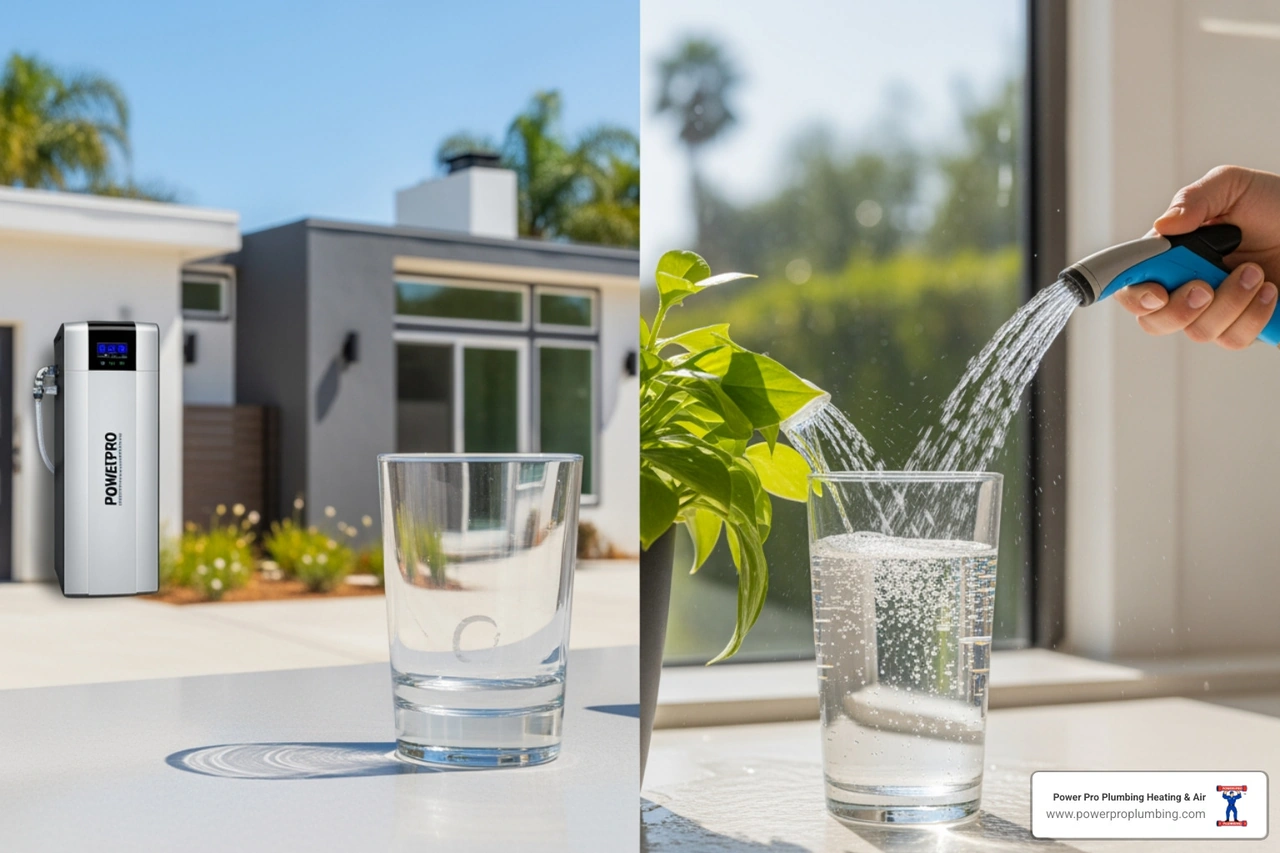
Why Southern California Homeowners Ask About Water Treatment Benefits
Understanding the water treatment benefits for Southern California homes starts with knowing what is actually flowing through your pipes - and for many homeowners in Los Angeles County, Orange County, and the South Bay, the answer is more complicated than expected.
Here is a quick look at the key benefits local homeowners gain from treating their water:
| Benefit | What It Solves |
|---|---|
| Hard water softening | Scale buildup on pipes, fixtures, and appliances |
| Carbon filtration | Chlorine/chloramine taste and odor |
| Whole-house filtration | Sediment, heavy metals, VOCs, and PFAS |
| Reverse osmosis (drinking) | Dissolved solids, arsenic, nitrates, fluoride |
| Appliance protection | Extended lifespan of water heaters, washers, dishwashers |
| Skin and hair comfort | Dryness and irritation from hard or chlorinated water |
| Bottled water replacement | Reduced plastic waste and ongoing bottle use |
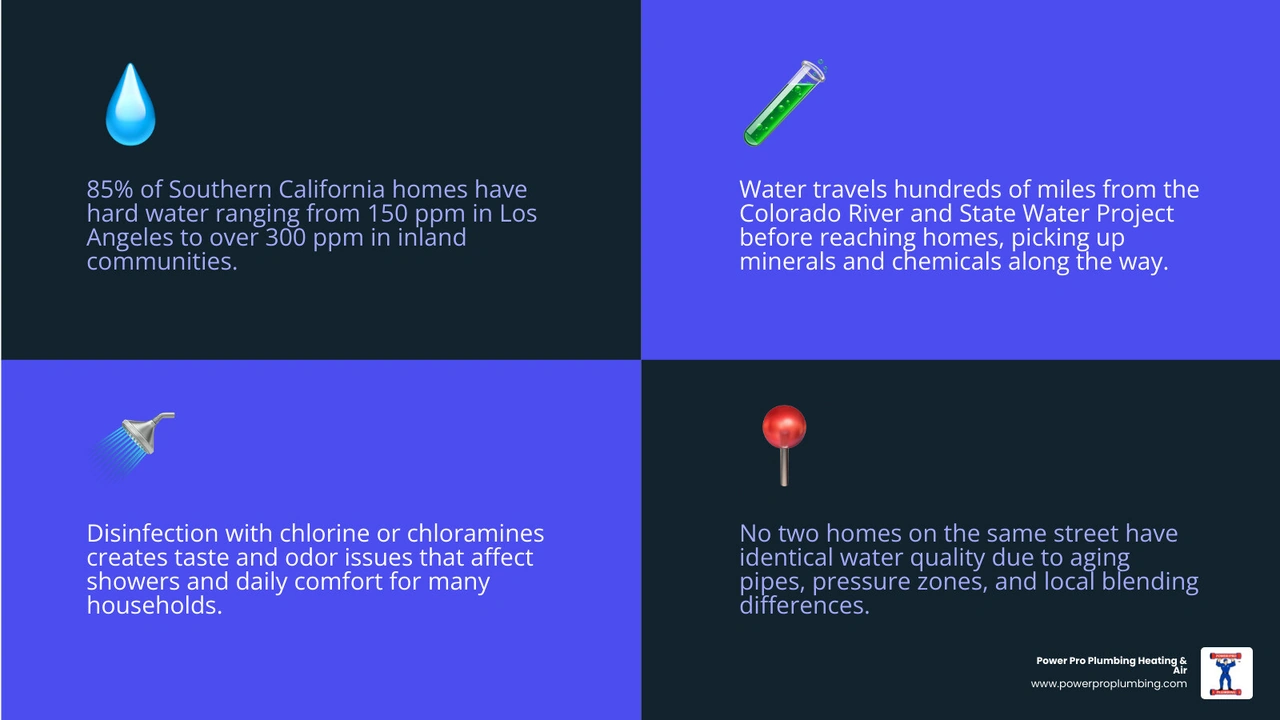
Southern California draws its water supply from distant sources - including the Colorado River and the State Water Project - and blends that imported water with local groundwater before it travels through miles of infrastructure to reach your tap. By the time it arrives, it often carries hard minerals, disinfection chemicals like chloramines, and in some areas, trace contaminants such as PFAS or arsenic. More than 85% of Southern California homes deal with hard water, and regional hardness levels range from around 150 ppm in parts of Los Angeles to over 300 ppm in inland desert communities like Indio. That is not a minor inconvenience - it can affect your plumbing, appliances, and even your skin and hair every day.
What makes this especially tricky is that no two homes experience the same water quality, even on the same street. Older service lines, different pressure zones, and the way water gets blended across the regional network all play a role. That is why understanding your specific water profile is the real starting point - not just picking a system off a shelf.
At Power Pro Plumbing Heating & Air, our licensed technicians help homeowners make sense of local water issues and choose practical solutions that protect plumbing and improve everyday comfort. In this guide, we will walk through the key water treatment benefits for Southern California homes - from hard water impacts to whole-house filtration, reverse osmosis, and how to match the right solution to your home's actual water conditions.
Water Treatment Benefits for Southern California Homes: Why Local Water Needs Extra Attention
Southern California water has to do a lot before it reaches your home. It may start as imported water, groundwater, or a blend of both. Then it moves through treatment plants, distribution systems, neighborhood mains, and your own home plumbing. Along the way, water can pick up characteristics that affect taste, smell, comfort, and your plumbing system.
Utilities disinfect water for safety, often with chlorine or chloramines. That is important for public health, but it can also leave behind a noticeable taste or smell. Add in drought pressures, mineral-heavy water sources, and older infrastructure in many Los Angeles and Orange County neighborhoods, and it becomes easier to understand why so many homeowners start asking, "Why does my water feel so rough on everything?"
The most common water quality issues in Southern California homes
The biggest concerns we see in our service area include:
- Hard water from calcium and magnesium
- Chlorine and chloramine taste and odor
- Sediment and rust from aging pipes or disturbed water mains
- PFAS in some regional supplies
- Heavy metals such as lead or arsenic in certain situations
- Elevated total dissolved solids that affect taste
- VOCs or pesticide-related concerns in some areas
Hard water is the most common issue by far. Much of the region exceeds 180 mg/L of hardness, and some Southern California communities are much higher. That means more scale, more spotting, and more wear on anything that heats or moves water.
Why one home’s water can feel different from another on the same street
This is one of the most frustrating parts of water treatment: neighbors can compare notes and both be right.
One house may have older galvanized lines while the next has newer copper or PEX. One side of the street may receive a different blend of water at certain times of year. Pressure zones, service line condition, plumbing age, and even whether the home sits at the end of a line can all affect what comes out of the tap.
That is why a city water report is helpful, but it is not the whole story. It tells you about the broader supply, not necessarily what your showerhead, water heater, and kitchen sink are experiencing right now.
Why local water testing matters before choosing any system
Water testing helps us match the equipment to the actual problem instead of guessing. That matters because:
- Hardness is measured in ppm or grains per gallon
- TDS affects taste and often points to whether RO is worth considering
- Arsenic, nitrates, and PFAS cannot be detected by taste or smell
- Sediment, chlorine, and pH can influence system design and maintenance needs
In most homes, we recommend starting with a local test and your household symptoms:
- White crust on fixtures
- Spotty dishes
- Dry skin after showers
- Water that tastes chemical or flat
- Low flow at fixtures
- Frequent water heater servicing
That combination usually tells the real story.
How Hard Water Affects Daily Life in Southern California
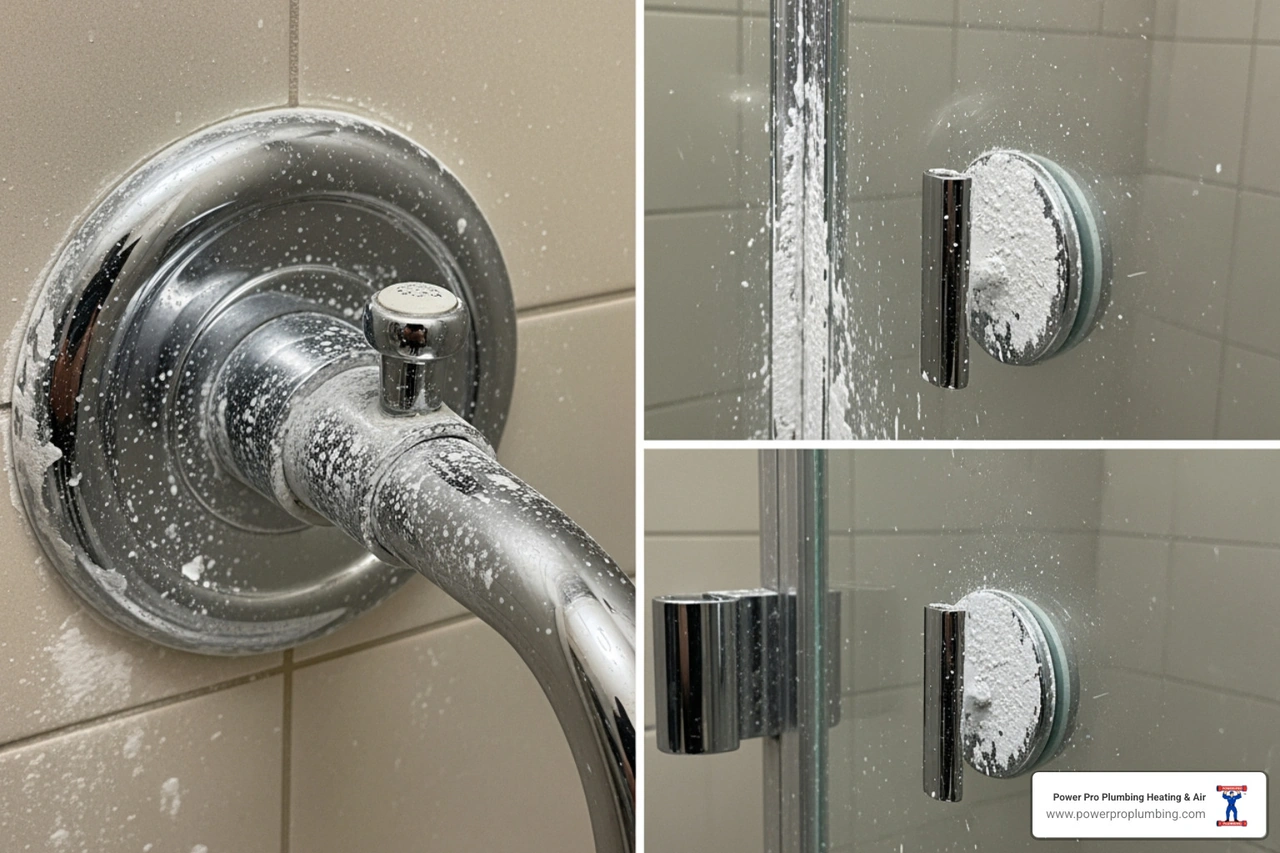
Hard water is not usually dangerous to drink, but it is absolutely hard on a house. Southern California water often carries enough dissolved calcium and magnesium to leave scale on faucets, heating elements, pipes, and shower glass. Think of it as your plumbing slowly collecting tiny rock deposits. Charming? Not exactly.
How water treatment benefits for Southern California homes show up in plumbing and appliances
This is where the benefits become very practical.
Hard water can:
- Build scale inside pipes and reduce flow
- Coat water heater heating elements and heat exchangers
- Reduce tankless water heater performance
- Make dishwashers and washing machines work harder
- Increase maintenance needs for coffee makers, ice makers, and humidifiers
- Shorten appliance lifespan
Research tied to hard water in the 15 to 22 grains per gallon range shows that water heater efficiency can drop significantly as scale builds up. In a Southern California home, that means wasted energy every day your heater fights through mineral buildup.
Conditioned or softened water helps by reducing scale formation, keeping flow more consistent, and lowering the stress on plumbing fixtures and appliances.
Hard water’s effect on skin, hair, laundry, and cleaning results
Many homeowners first notice water problems in the bathroom, not the utility room.
Hard or highly chlorinated water can contribute to:
- Dry, tight-feeling skin after showering
- Brittle or dull hair
- Stiff towels
- Dingy laundry
- Soap that does not lather well
- White spots on dishes and glassware
- More soap and detergent use
When minerals interfere with soap, you end up using more product and getting worse results. That is the kind of daily annoyance that sneaks up on people. If your dishes come out looking like they survived a dust storm, your water may be the culprit.
Salt-based softeners vs salt-free conditioners for SoCal households
Both have a place, but they do different jobs.
Salt-based water softeners:
- Use ion exchange to remove calcium and magnesium
- Provide the most complete hardness reduction
- Are best when you want true soft water
- Help most with severe scaling and soap performance
Salt-free conditioners:
- Do not remove hardness minerals
- Help reduce scale formation by changing how minerals behave
- Usually require less ongoing attention
- Appeal to homeowners looking for a lower-maintenance or more eco-conscious option
For homes with very hard water, a traditional softener is often the stronger solution for scale control. For homeowners focused on salt reduction, lower discharge, or simpler upkeep, a salt-free conditioner may be worth considering. The right fit depends on your local water chemistry and household goals.
Eco-friendly water treatment options for California households
Because water efficiency matters in California, many homeowners want treatment options that are easier on the environment.
Good options can include:
- Salt-free conditioning systems
- High-efficiency softeners designed to reduce waste
- Catalytic carbon media for chlorine and odor reduction
- Right-sized systems that avoid unnecessary backwashing
- Point-of-use RO only where high-purity drinking water is needed
The key is thoughtful system design. Bigger is not always better, and one-size-fits-all usually means one-size-fits-none.
Whole House Filtration vs Point-of-Use Filters: Which Solves More Problems?
Whole-house filtration and point-of-use filters are not enemies. They are tools for different jobs.
A whole-house system treats water where it enters the home. That means showers, sinks, appliances, and laundry all benefit. Point-of-use systems, such as under-sink filters or countertop units, only treat one outlet.
What a whole house water filter improves throughout the home
A whole-house filter can help reduce:
- Chlorine and chloramine taste and odor
- Sediment and rust
- Some VOCs
- Certain heavy metals, depending on media
- PFAS in systems specifically designed and certified for that purpose
Benefits throughout the home often include:
- Better-tasting water
- Less chemical smell in showers
- More comfortable skin and hair
- Less buildup on fixtures
- Longer appliance life
- Cleaner laundry and fewer odors
| Feature | Whole-House Filtration | Point-of-Use Filters |
|---|---|---|
| Treats all taps | Yes | No |
| Helps showers and baths | Yes | No |
| Protects appliances | Yes | No |
| Improves one drinking tap | Yes, indirectly | Yes, directly |
| Good for renters | Usually no | Often yes |
| Handles house-wide chlorine issues | Yes | Limited |
When under-sink and countertop filters still make sense
These options still have a role, especially when:
- You want better drinking and cooking water at one sink
- You live in a condo or rental
- You do not need whole-home treatment
- You are targeting a specific kitchen taste issue
They are useful, but they are limited. A pitcher or under-sink filter cannot protect your water heater, improve shower comfort, or stop scale from building up inside your pipes.
The best results often come from combining technologies
In many Southern California homes, the smartest setup is layered:
- Sediment prefilter for dirt and rust
- Whole-house carbon filtration for chlorine and odor
- Softener or conditioner for hardness
- Reverse osmosis at the kitchen sink for drinking water
That approach separates house-wide comfort issues from high-purity drinking-water needs. It is usually much more effective than expecting one device to do everything.
Water treatment benefits for Southern California homes for taste, odor, and bathing comfort
This is where homeowners often notice the difference fastest.
Filtered water can mean:
- Less chlorine smell in the shower
- Water that tastes cleaner at the tap
- Fewer musty or stale odors
- Less dry feeling after bathing
- Hair that feels less brittle
- A better overall "water feel"
And yes, if your shower no longer smells like a public pool, that counts as a quality-of-life upgrade.
When Reverse Osmosis Makes Sense for Drinking Water
Reverse osmosis, or RO, is usually a point-of-use system installed under the kitchen sink. It is one of the most effective options for improving drinking and cooking water because it targets dissolved contaminants that whole-house systems often do not fully remove.
What reverse osmosis can reduce effectively
A properly selected and maintained RO system can reduce:
- Lead
- Arsenic
- PFAS
- Nitrate and nitrite
- Fluoride
- Sodium
- Many dissolved solids
- Some heavy metals
This is why RO is often recommended when homeowners are concerned about drinking water purity rather than just taste and odor.
When homeowners should add RO even if they already have whole-house filtration
Whole-house filtration and RO often work well together, not instead of each other.
You may want RO if:
- Your water has high TDS
- You want cleaner water for drinking and cooking
- You make baby formula
- You want clearer ice
- Coffee and tea taste off
- You want an extra barrier for contaminants like arsenic, nitrate, or PFAS
Whole-house filtration improves the water you bathe in and use throughout the home. RO focuses on the water you actually consume most directly.
Maintenance and lifespan for RO and whole-home systems
Maintenance matters more than marketing.
Typical upkeep includes:
- Sediment prefilters changed on schedule
- Carbon media replaced based on use and water quality
- RO prefilters often replaced every 6 to 12 months
- RO membranes commonly replaced every 2 to 3 years
- Annual inspections for flow rate, pressure, and performance
Many whole-home systems can last 10 to 15 years or longer with proper maintenance and timely media replacement. If water pressure drops, chlorine smell returns, or taste changes, those are signs your system may need service.
Water treatment benefits for Southern California homes when replacing bottled water
One of the simplest long-term benefits is using your tap again with confidence.
Switching to filtered tap water can:
- Cut down on bottled water purchases
- Reduce plastic waste
- Eliminate the hassle of hauling cases home
- Make reusable bottles easier to stick with
- Improve convenience for families
Using filtered tap water instead of relying on bottled water can greatly reduce everyday plastic waste. That is good for the home and easier on the landfill.
Long-Term Home Benefits: Comfort, Efficiency, and Smarter System Selection
Water treatment is not just about cleaner water in a glass. It can affect maintenance, comfort, appliance life, and how efficiently your home runs.
How filtered and conditioned water can support efficiency and lower waste
Treated water can help your home by:
- Reducing scale that restricts flow
- Improving water heater efficiency
- Lowering soap and detergent use
- Cutting down on descaling cycles
- Reducing premature appliance wear
- Supporting less bottled water use
In hard water homes, even small efficiency losses add up over time. Keeping mineral buildup under control is one of the clearest practical benefits.
How to choose the right setup for your home’s specific water profile
We recommend looking at four things:
- Your water test results
- Your day-to-day symptoms
- Your household size and water use
- Your priorities
Ask questions like:
- Are we mainly fighting scale?
- Is chlorine smell the biggest complaint?
- Do we want better drinking water only, or full-home treatment?
- How many bathrooms and people are in the home?
- Do we have a tankless water heater that needs protection?
A home with severe hardness may need a softener plus carbon filtration. Another home may need whole-house filtration and RO. The right answer depends on the job the system needs to do.
Related home wellness upgrades homeowners often consider
Water quality is one part of a healthier, more comfortable home. Many homeowners who improve their water also start looking at indoor air and HVAC maintenance, especially if they are focused on overall home wellness.
You may also find these resources helpful:
- Indoor Air Quality Solutions
- Benefits of Regular HVAC Maintenance
- HVAC Services Improve IAQ
- Air Scrubber Installation Los Angeles
- Aerus Air Scrubber
Frequently Asked Questions About Water Treatment Benefits for Southern California Homes
Do whole house filters remove hard water minerals?
Usually, no. Whole-house filters are great for chlorine, sediment, odor, and some contaminants, but hard water minerals like calcium and magnesium typically require a water softener or conditioner. If scale is one of your biggest problems, filtration alone is usually not enough.
How often should Southern California homeowners test their water?
A good rule of thumb is every 1 to 2 years, or sooner if:
- Water taste changes
- Odors show up
- You see new staining or buildup
- You remodel plumbing
- You install a tankless water heater or new appliances
- Your neighborhood experiences water main work
Testing is especially important before choosing treatment equipment.
Is filtered tap water a better choice than bottled water for most homes?
For many homes, yes. Filtered tap water is more convenient, creates less plastic waste, and supports everyday use beyond drinking, including cooking, ice, and coffee. Bottled water does nothing for your shower, laundry, pipes, or appliances. It also does not fix the reason your tap water tastes bad in the first place.
Conclusion
The biggest water treatment benefits for Southern California homes come down to protection, comfort, and confidence. The right setup can help reduce scale, improve taste and odor, support healthier-feeling skin and hair, protect plumbing, and make everyday water use a lot less frustrating.
At Power Pro Plumbing Heating & Air, we help homeowners across Los Angeles County, Orange County, and the South Bay make sense of local water conditions and choose practical solutions based on what their homes actually need. Our licensed technicians focus on customized recommendations, reliable service, and straightforward guidance, whether you are dealing with hard water, chlorine taste, sediment, or drinking-water concerns. We offer same-day service availability, free estimates, and the kind of warm, honest support homeowners count on when water issues start affecting daily life.
If you are ready to learn more about treatment options for your home, explore our plumbing services. We are here when you need us.