

Why Maintaining Your Ductless Mini Split in Southern California's Heat and Dust Is Different
Knowing how to maintain a ductless mini split in a hot dusty Southern California climate can mean the difference between a system that lasts 15+ years and one that gives out before its time. In Los Angeles County, Orange County, and the South Bay, mini splits face conditions that most HVAC systems never encounter — triple-digit heat waves, Santa Ana wind-driven dust, wildfire ash, and urban smog all stacking up against your equipment at once.
Here is a quick overview of the core maintenance steps Southern California homeowners should follow:
- Clean indoor filters every 2–4 weeks during peak dust and heat seasons (more often near desert areas or during wildfire events)
- Inspect outdoor condenser coils monthly and rinse gently with a garden hose after dust storms
- Keep a 2-foot clearance around the outdoor unit at all times
- Check the condensate drain line monthly to prevent clogs and mold growth
- Wipe down the indoor cabinet monthly to stop smog and dust from recirculating into your living space
- Schedule professional tune-ups twice a year — once in spring before peak cooling season, and once in fall before switching to heating mode
- Inspect or replace filters immediately after nearby wildfires or heavy Santa Ana wind events
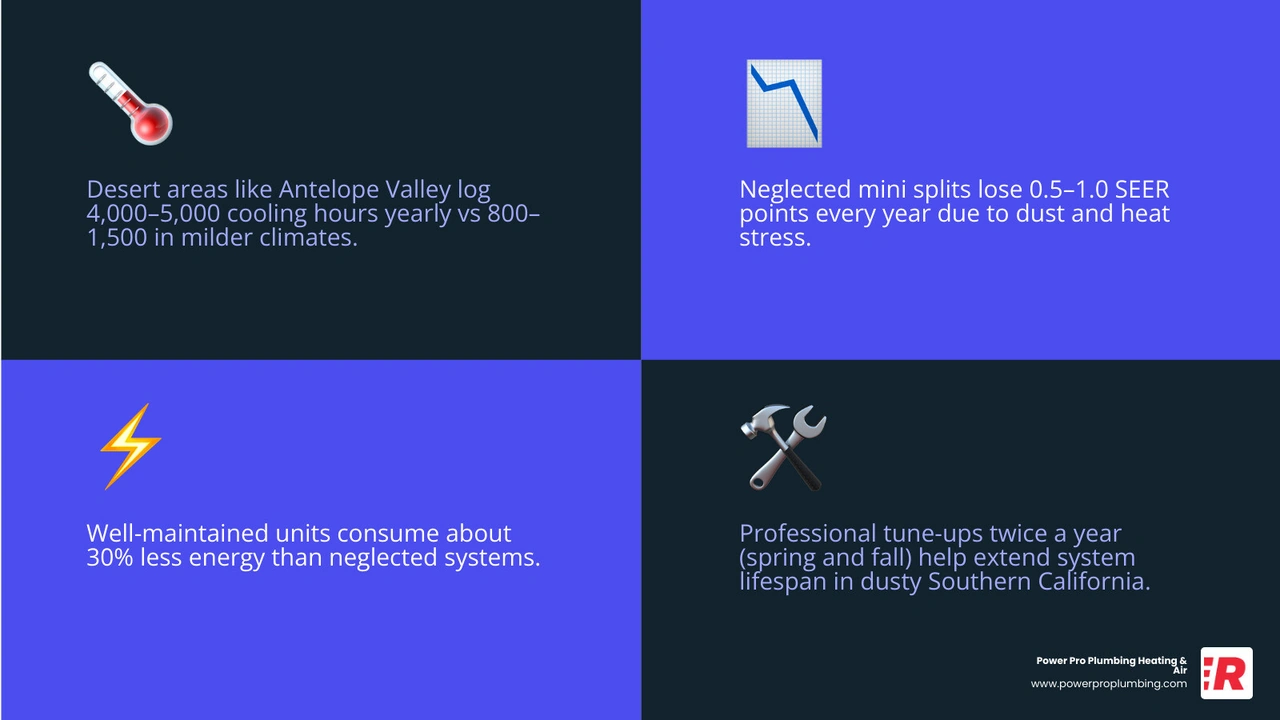
The stakes are real. Systems in high-desert areas like the Antelope Valley log roughly 4,000 to 5,000 cooling hours per year — compared to just 800 to 1,500 hours in milder climates. A neglected unit can lose 0.5 to 1.0 SEER points every single year, and well-maintained mini splits consume about 30% less energy than units that go without regular care.
I'm Daniel Rodriguez, a second-generation tradesman with C36 and C20 licenses in plumbing and HVAC, and I've seen how Southern California's climate accelerates wear on ductless systems. Understanding how to maintain a ductless mini split in a hot dusty Southern California climate is something I've worked through with homeowners across Los Angeles and Orange County, and I'll walk you through everything you need to keep your system running strong.
How to Maintain a Ductless Mini Split in a Hot Dusty Southern California Climate
Southern California is famous for its gorgeous weather, but our microclimates present unique challenges for home comfort. Whether you are dealing with the dry, sweeping Santa Ana winds in the Inland Empire, coastal humidity in the South Bay, or intense valley heat in the San Fernando Valley, your ductless mini split is working overtime to keep you comfortable.
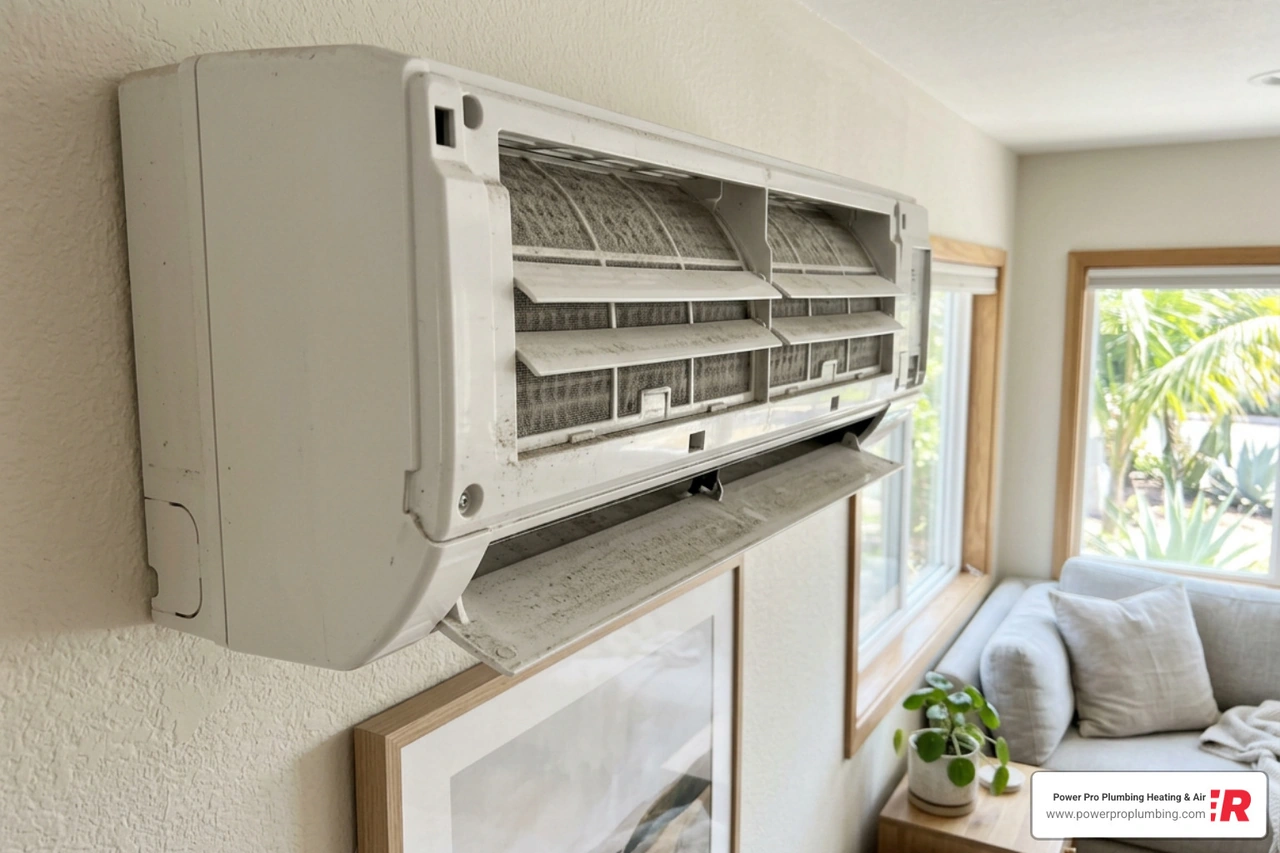
Unlike traditional central HVAC setups that lose up to 30% of their energy through leaky ductwork, ductless systems deliver conditioned air directly into your rooms. However, because they lack large, centralized duct systems to hide behind, mini split indoor air handlers draw room air directly through small, specialized filters. If your home is located near busy roads, active construction zones, or dry desert landscapes, airborne dust and debris will settle on these components quickly.
When dust accumulates on the indoor evaporator coils and fan blades, it acts like an insulating blanket. This makes it incredibly difficult for the system to absorb heat from your home, forcing the compressor to run longer and hotter. To keep your home running efficiently, following consistent Maintenance Tips for Ductless Mini Splits is essential. By taking an active role in caring for your Ductless Mini Split Systems, you will keep utility bills low and prevent unexpected breakdowns when temperatures soar.
How to Maintain a Ductless Mini Split in a Hot Dusty Southern California Climate: Step-by-Step Filter Cleaning
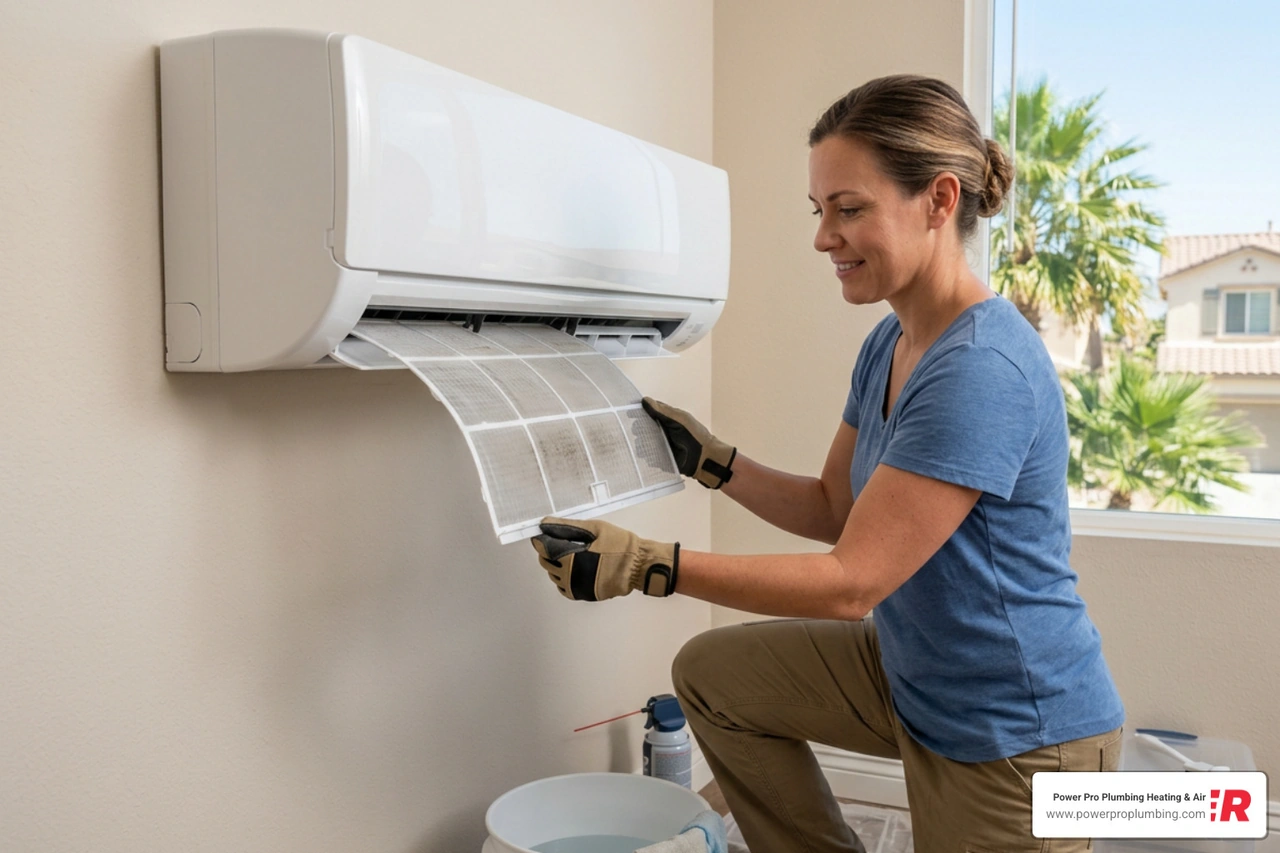
Cleaning your indoor unit's air filters is the single most important task you can perform. In a mild climate, you might get away with checking these filters every few months. But in Southern California, we recommend a bi-weekly inspection during the dusty summer and fall seasons. Fine desert dust, pet dander, and urban smog can coat the mesh screens surprisingly fast, choking off your system's airflow.
Follow this simple, step-by-step guide to clean your filters safely:
- Turn off the system: Always use the remote or wall controller to power down the unit completely before opening the cabinet.
- Open the front panel: Gently lift the front plastic cover of the indoor air handler until it clicks into its open position.
- Remove the filters: Locate the mesh filter screens, slide them slightly upward to release them from their tabs, and pull them down and out.
- Vacuum the loose dust: Using a vacuum cleaner with a soft brush attachment, gently sweep away the loose layers of dust and pet hair.
- Rinse with cool water: Take the filters to a sink or use a garden hose outside. Rinse them from the clean side outward so the water pushes the dust out of the mesh rather than deeper into it. Do not use harsh chemical cleaners or hot water.
- Let them dry completely: Shake off excess water and place the filters in a shaded spot to air dry. Never reinstall damp filters, as this can trap moisture and trigger mold growth inside the dark interior of the unit.
- Reinstall and close up: Slide the dry filters back into their tracks, secure them under the tabs, and gently snap the front cover closed.
To make sure you are choosing the right approach for your home's air quality, take a look at our Choosing Right HVAC Filters Guide and check out our tailored HVAC Filter Tips for Residents to keep your breathing air fresh and clean.
How to Maintain a Ductless Mini Split in a Hot Dusty Southern California Climate: Protecting the Outdoor Condenser
While the indoor unit keeps you cool, the outdoor condenser does the heavy lifting of releasing that captured heat into the outside air. In Southern California, outdoor units are subjected to blowing sand, dry dirt, and falling leaves. If the condenser coils become caked in grime, the system cannot shed heat efficiently, causing your electricity bills to spike.
To protect your outdoor unit:
- Maintain a 2-foot clearance: Ensure there is at least a 24-inch buffer zone around the entire condenser cabinet. Trim back dry desert landscaping, ornamental grasses, and shrubs. Keep patio furniture, storage bins, and firewood away from the unit to allow unrestricted airflow.
- Trim nearby trees and plants: Trim back any low-hanging branches or climbing vines that could drop leaves, seeds, or twigs directly into the top fan grill.
- Gently rinse the coils: After a heavy windstorm or a dusty Santa Ana event, turn off the outdoor circuit breaker. Grab your garden hose and gently spray down the outdoor coils from top to bottom. Never use a pressure washer, as the high-pressure stream will easily bend the delicate aluminum fins, permanently restricting airflow.
- Keep the base clear: Sweep away accumulated dirt, gravel, or dried leaves from the concrete pad supporting the unit to keep pests and moisture from building up around the bottom of the cabinet.
Taking these steps ensures your system doesn't have to work twice as hard just to breathe. For a deeper look at how routine care protects your wallet, read about the Benefits of Regular HVAC Maintenance.
The Impact of Extreme Heat and Dust on System Lifespan
Operating a mini split in Southern California's hottest pockets — like the Antelope Valley or the Coachella Valley — is the mechanical equivalent of running a marathon every single day. The combination of intense heat and microscopic silica dust acts like sandpaper on moving parts, wearing down motor bearings, eroding fan blades, and stressing electrical components.
Additionally, the sharp temperature swings of 30 to 40 degrees between blistering afternoons and cool desert nights cause the metal copper refrigerant lines to expand and contract rapidly. This thermal cycling can lead to tiny refrigerant leaks over time. A system that is just 10% low on refrigerant can lose up to 20% of its cooling capacity, forcing it to run continuously and driving up wear and tear.
Without consistent care, a mini split in these harsh conditions might only survive 8 to 12 years while suffering from severe SEER (Seasonal Energy Efficiency Ratio) degradation along the way. In fact, a neglected AC in the desert can lose 0.5 to 1.0 SEER points every single year, quietly raising your energy costs by 20% by year five. However, with proper bi-annual maintenance, those same systems can easily reach a lifespan of 12 to 16 years — and sometimes up to 20 years.
Understanding how AC Tuneups Extend System Life is the key to protecting your investment. Let's look at how regular maintenance directly impacts the lifespan and efficiency of your system:
| System Status | Average Lifespan in SoCal | Energy Efficiency Retention | Average Annual Repair Costs |
|---|---|---|---|
| Neglected / No Maintenance | 8 to 12 Years | Loses 0.5 - 1.0 SEER points annually | High (Frequent emergency breakdowns) |
| Well-Maintained (Bi-Annual Care) | 12 to 16+ Years | Retains original SEER rating and efficiency | Low (Preventative, minor adjustments) |
Managing Seasonal Transitions and Shoulder Seasons
Southern California shoulder seasons can be unpredictable. You might wake up needing the heater to ward off a chilly 50-degree morning, only to require the air conditioner by 2:00 PM when the thermometer climbs past 85.
Ductless mini splits are heat pumps, meaning they are designed to handle both heating and cooling seamlessly. However, they require manual mode switching on your remote or thermostat. Frequently switching back and forth without giving the system a moment to rest can strain the compressor. When transitioning between modes:
- Turn the unit off.
- Wait 3 to 5 minutes to allow the refrigerant pressures to equalize.
- Switch the system to the new mode (heating or cooling) and set your desired temperature.
Before we transition fully into the cooler winter months or the scorching summer heat, it's wise to run through a quick home checkup. Discover our helpful 9 Fall HVAC Tips for Easy Seasonal Maintenance and read All About Residential Heat Pumps Operation Maintenance and Repair to keep your system running smoothly year-round.
Enhancing Indoor Air Quality Amid Smog, Pollen, and Wildfire Ash
Your mini split does more than control the temperature; it is also the primary filter for the air you breathe inside your home. In Southern California, our outdoor air is often filled with urban smog, seasonal pollen, and fine wildfire ash. Because mini splits recirculate indoor air, any dust or soot that settles on your furniture or floors will eventually find its way into the air handler.
To keep your indoor air clean and healthy:
- Wipe the cabinet weekly: Use a dry microfiber cloth to wipe down the exterior plastic casing of your indoor units to prevent dust and smog particles from being drawn back into the system.
- Leverage multi-stage filtration: Many modern mini splits feature advanced enzyme or carbon filters designed to trap microscopic allergens and neutralize odors. Replace or clean these specialty filters according to the manufacturer's guidelines.
- Consider auxiliary air systems: If you suffer from asthma or allergies, pairing your mini split with advanced home solutions can make a massive difference. Read about Air Purifiers for Enhanced Indoor Air Quality and learn the Science Behind Air Scrubbers Indoor Air Quality to see how these systems work together to sanitize your living space.
- Bring nature indoors: For a natural way to keep your home feeling fresh, check out our guide on Enhancing Indoor Air Quality with Plants.
DIY Maintenance vs. Professional HVAC Service
As a homeowner, you can easily handle basic tasks like rinsing the mesh filters, keeping the outdoor area clear of leaves, and wiping down the indoor covers. These simple habits keep the system breathing. However, deep maintenance requires specialized tools and technical expertise.
A professional bi-annual tune-up goes far beneath the surface. Experienced technicians will:
- Check refrigerant charges: Measuring pressures with digital gauges to ensure there are no slow leaks.
- Inspect electrical connections: Tightening loose wires and checking capacitors. In desert climates, loose electrical connections are responsible for nearly 60% of all compressor failures.
- Deep-clean the coils: Using specialized, self-rinsing chemical coil cleaners to dissolve stubborn, baked-on grime without damaging the aluminum fins.
- Flush the condensate lines: Clearing out algae, dust, and mold to prevent water from backing up and leaking down your drywall.
Investing in professional care ensures your system remains under warranty and runs at peak performance. After all, a proper Heat Pump Installation is Best protected when backed by professional maintenance.
Signs Your Mini Split is Struggling and Needs Expert Care
Don't wait for your system to stop working entirely before you call for help. Your mini split will usually give you several warning signs when it is struggling under the weight of dust or heat stress:
- Weak or reduced airflow: If you feel only a faint breeze even when the fan is set to high, your blower wheel or filters are likely clogged with dust.
- Musty or vinegar-like odors: This indicates that dust and moisture have combined inside the dark drain pan, creating a breeding ground for mold and algae.
- Ice or frost on the coils: If you see ice forming on the indoor evaporator coils or the outdoor brass valves, your system has restricted airflow or low refrigerant, both of which require immediate professional attention.
- Frequent short-cycling: If the unit turns on and off every few minutes without cooling the room, the compressor may be overheating or struggling with electrical issues.
If you are experiencing these issues, it is time to call in the pros. Learn more about the Benefits of Heat Pump Installation and how a professional diagnostic visit can save your system from catastrophic failure.
Protecting Your System During Wildfire Season
Wildfire season in Southern California can choke the air with heavy, oily soot and fine ash. This ash is highly abrasive and can quickly clog your mini split filters, forcing the system to work under extreme stress.
During active wildfire events, inspect your filters weekly. If they are coated in gray ash, clean them immediately or replace them if they are disposable. Once the fires are contained and the air clears, schedule a professional deep-cleaning to wash away any corrosive soot that has settled deep within the outdoor condenser coils.
To learn more about keeping your air clean during these challenging times, read about the Benefits of Air Filter Replacement and uncover the Truth About UV Air Purifiers to see if they are a good fit for your home.
Frequently Asked Questions About Southern California Mini Split Care
How often should I clean my mini split filters in the desert?
In high-dust, desert-like environments, you should inspect and clean your indoor mini split filters every 2 to 4 weeks. During heavy windstorms, Santa Ana events, or periods of high pollen, checking them weekly is the best way to prevent performance drops.
Can I use a pressure washer to clean my outdoor condenser coils?
No. Never use a pressure washer on your outdoor unit. The high-pressure water will easily bend and crush the delicate aluminum fins on the condenser coils, permanently blocking airflow and causing the system to overheat. Always use a gentle spray from a standard garden hose.
Why does my mini split smell musty when it starts up?
A musty smell usually indicates that dust, organic debris, and standing water have accumulated in the condensate drain pan or on the blower wheel, leading to mold or algae growth. Cleaning the filters, flushing the drain line with a mixture of warm water and vinegar, or scheduling a professional deep-clean will resolve the issue.
Conclusion
Caring for your ductless mini split in Southern California's demanding climate doesn't have to be overwhelming. By keeping up with simple DIY tasks like regular filter cleaning and keeping your outdoor unit clear of debris, you can protect your system from the worst of our local dust and heat.
When it's time for deeper care, the team at Power Pro Plumbing Heating & Air is here to help. Serving homeowners across the Greater Los Angeles area, Orange County, and the South Bay, we are proud to be a Daikin Comfort Pro with over 28,573 online reviews reflecting our commitment to honest, reliable service.
Our exclusive Power Pro Club offers regular, worry-free maintenance to keep your system running at peak efficiency, saving you up to 30% on your energy bills and extending your equipment's life by up to seven years. Whether you need a seasonal tune-up, quick diagnostics, or are looking to install new Ductless Mini Split Systems in Hawaiian Gardens, our licensed technicians are ready to help. Contact us today to schedule your maintenance visit and keep your home a comfortable oasis all year long!