

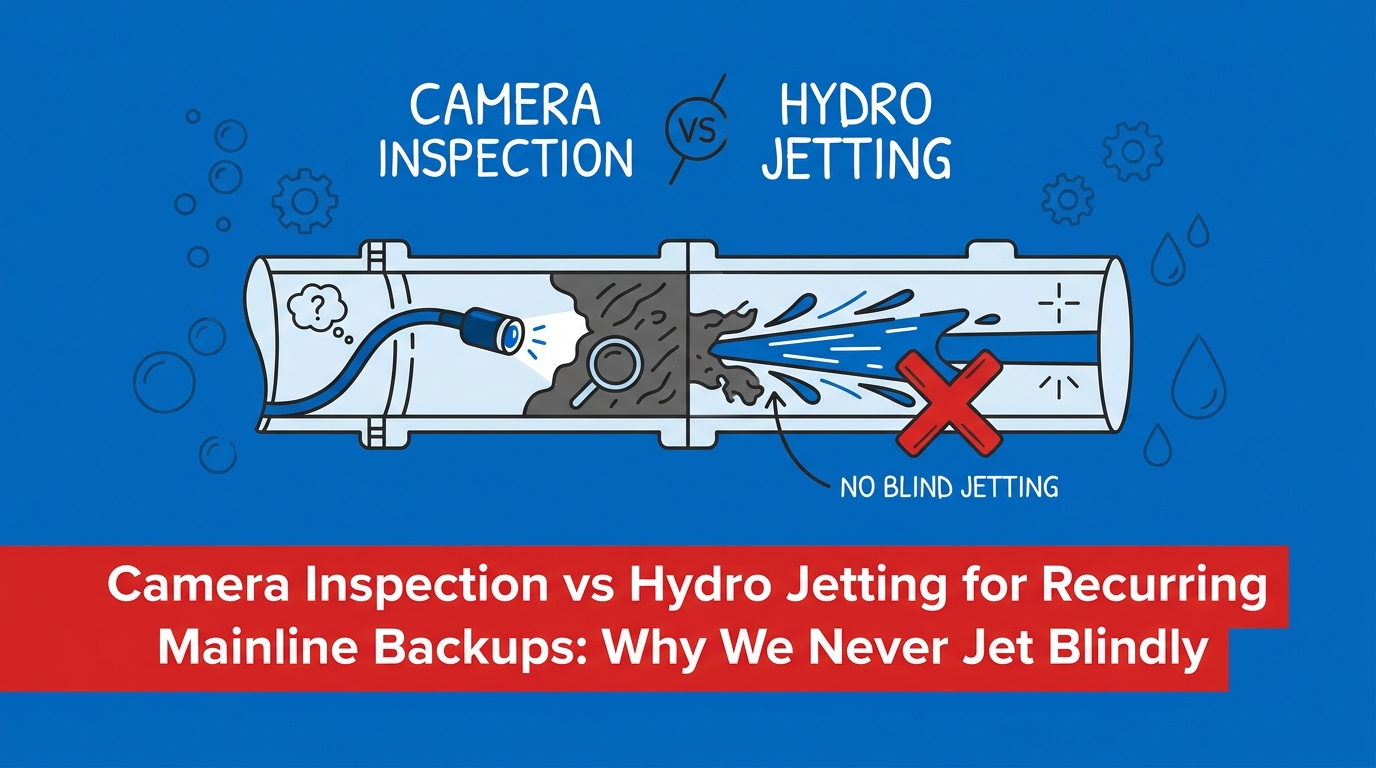
The Myth of the Quick Fix for Recurring Mainline Backups
When you are weighing a camera inspection vs hydro jetting for recurring mainline backups, the most common myth is that high-pressure water is the ultimate quick fix for any stubborn clog. A severe, repeating blockage doesn't just need more pressure—it needs a proper, verified diagnosis. Many homeowners instinctively demand immediate hydro-jetting the moment their drains slow down or raw sewage begins backing up into their bathtubs. The logic seems sound on the surface: if there is a massive blockage deep underground, blasting it with thousands of pounds of water pressure should obliterate the problem and restore the flow.
However, treating the symptom without diagnosing the underlying cause can turn a manageable plumbing clog into a catastrophic infrastructure failure. This is a critical decision point for any homeowner. You are choosing between a quick, blind jetting service that might destroy your pipes, or a mandatory visual verification that ensures the line can actually handle the cleaning process. Our company takes a firm, uncompromising stance on this issue: we mandate visual proof before applying high-pressure water to any plumbing system. If you need comprehensive drain and sewer services, our team is ready to help you navigate this process safely.
Throughout Cerritos CA older properties with aging sewer lines, we see the consequences of blind jetting all too often. Decades-old pipes simply do not have the structural integrity to withstand immense internal forces. By insisting on a visual inspection first, we map out the exact nature of the blockage, identify the material of the pipe, and verify that a high-pressure cleaning will solve the problem rather than creating a much more expensive one.
Why High-Pressure Cleaning is a Danger to Compromised Pipes
To understand why we refuse to blindly clean a sewer line, you have to understand the sheer power of commercial hydro-jetting equipment. These machines are not like the pressure washers you buy at a local hardware store to clean your driveway. They are highly specialized, heavy-duty tools designed to scour the inside walls of plumbing infrastructure, and in the wrong hands, they pose a severe risk to weakened pipes.
The Force of 4,000 PSI
Commercial hydro-jetters operate at pressures up to 4,000 PSI (pounds per square inch). In practical terms, this level of pressure is strong enough to slice through solid tree roots, obliterate calcified grease blockages, and strip away years of hardened scale buildup. The nozzle is designed to propel the hose forward while simultaneously blasting the pipe walls with razor-sharp streams of water. When applied to a structurally sound, modern pipe, this force is incredibly effective. It restores the pipe to its original interior diameter, leaving it looking brand new. However, that same 4,000 PSI can easily blow apart a pipe that is already fractured, heavily corroded, or structurally compromised.
The Vulnerability of Aging Materials
Modern PVC pipes are designed to flex and withstand significant internal pressure, but the materials used in older neighborhoods tell a very different story. Throughout Cerritos CA older properties with aging sewer lines, the subterranean infrastructure often consists of early cast-iron or vitrified clay pipes. Over decades of use, cast iron suffers from channeling and severe corrosion, thinning the bottom of the pipe until it is paper-thin. Clay pipes suffer from structural fatigue, developing micro-fractures as the ground shifts around them.
• Modern PVC — Structural Characteristics: Flexible, smooth interior, highly durable joints. — Reaction to 4,000 PSI Hydro-Jetting: Safely withstands high pressure; cleans effectively.
• Aging Cast Iron — Structural Characteristics: Corroded, flaking interior, thinned walls from channeling. — Reaction to 4,000 PSI Hydro-Jetting: High risk of blowing out the bottom of the pipe entirely.
• Vitrified Clay — Structural Characteristics: Brittle, heavy, prone to joint separation and cracking. — Reaction to 4,000 PSI Hydro-Jetting: High risk of shattering or collapsing at weakened joints.
When you introduce 4,000 PSI of water into a cast-iron pipe that has a paper-thin bottom, the water pressure will simply blow the bottom of the pipe out, washing away the supporting soil and causing a total collapse. This is precisely why hydro-jetting is never a standalone, first-step solution. If you need a professional sewer line inspection, our team utilizes advanced camera technology to ensure your aging pipes are safe to clean.
The August Trigger: How Dry Climates Drive Aggressive Root Intrusion
Recurring mainline backups rarely happen in a vacuum; they are heavily influenced by environmental factors. In Southern California, the climate plays a massive role in the health of your underground plumbing. The specific dry, hot summer context of the Cerritos area explains why these severe blockages tend to spike at a very specific time of the year.
The Search for Subterranean Moisture
By the time the peak heat of summer arrives, the soil conditions in Southern California are exceptionally dry. Mature trees and large shrubs become desperate for hydration to survive the prolonged dry spells. These plants possess a biological drive to seek out moisture, and their root systems can detect even the most microscopic vapor leaks escaping from subterranean plumbing joints. This leads to a massive spike in late-summer root intrusion (August). The roots aggressively grow toward the moisture-rich environment inside your sewer line, infiltrating loose joints, tiny cracks, and corroded sections of pipe. If you are already experiencing drainage issues indoors, you might want to review the common reasons your bathtub won't drain, as a mainline root blockage will eventually back up into your lowest fixtures.
From Intrusion to Structural Failure
The progression of root intrusion is relentless. It begins with a single, hair-thin root finding its way into a joint. Once inside the nutrient-rich, constantly hydrated environment of the sewer line, that single root rapidly multiplies into a massive, dense root ball. As the roots expand, they exert immense external pressure on the pipe. This expanding organic matter literally crushes the pipe from the outside in, widening existing cracks and causing partial collapses.
When a homeowner experiences a sudden onset of recurring clogs in August or September, it is almost always because a root ball has grown large enough to catch solid waste and toilet paper, creating an impenetrable dam. Blasting this dam blindly with high pressure without knowing the pipe is crushed will only flood the surrounding soil and finalize the collapse.
Our Strict Diagnostic Standard: Visual Verification First
Because the risks to your property are so high, we refuse to perform blind hydro-jetting jobs. Our operational methodology is built entirely around protecting your home's infrastructure. We frame the camera inspection not as an optional add-on or a luxury service, but as a mandatory safety protocol. Walking away from a quick, unsafe job is a hallmark of our commitment to quality and integrity, because doing otherwise on a compromised pipe can cause catastrophic property damage.
Protecting Your Property Above All
Our diagnostic rigor applies to every call and every type of plumbing system we service. For example, during a recent fall season, our technician Rickey responded to a main water line leaking on a front lawn. Instead of just patching the visible leak quickly and moving on, he diagnosed the root cause, providing a short-term fix to stop the immediate flooding and implementing a comprehensive long-term solution to ensure the underlying issue was permanently resolved. We bring that exact same problem-solving mindset and diagnostic standard to mainline sewer backups.
A professional diagnosis dictates the exact repair plan, preventing unnecessary or destructive work. If a pipe is partially collapsed under your driveway or mature landscaping, blasting it with water will destroy the remaining structure, forcing an emergency excavation that could cost thousands of dollars in property restoration. By visually verifying the line first, we protect you from these financial and structural consequences. We prioritize the long-term health of your plumbing system over a quick, temporary symptom relief. If you are dealing with persistent clogs, scheduling professional drain cleaning that begins with a camera inspection is the only responsible choice.
Camera Inspection vs Hydro Jetting: The Mandatory Sequence
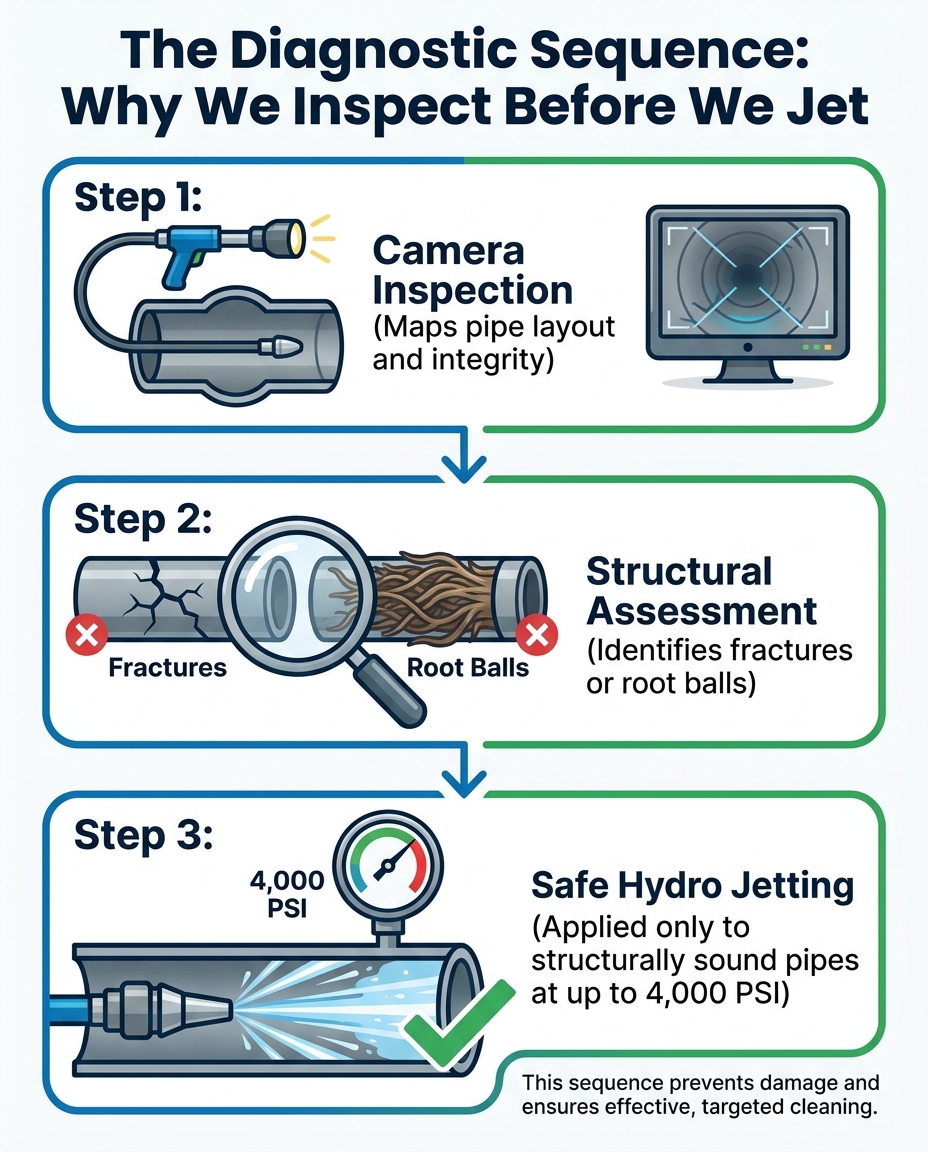
It is time to reframe how we think about plumbing solutions. These two services do not compete with one another; they are not an "either/or" choice for a homeowner to make. Instead, they are highly dependent, sequential steps in a comprehensive solution. Skipping the first step makes the second step incredibly dangerous. If you are trying to fix your slow drain permanently, you must follow the correct operational sequence.
1. Step 1: The Camera Inspection. Before any cleaning equipment is deployed, a high-definition, self-leveling sewer camera is fed into the mainline. This step maps the exact layout of the pipe, identifies the material (clay, cast iron, PVC), and pinpoints the exact location and nature of the blockage. More importantly, it reveals the structural integrity of the pipe walls.
2. Step 2: The Structural Assessment. Once the footage is captured, we analyze the data to determine the safest course of action. If the pipe is heavily fractured, crushed by roots, or suffering from severe bottom-channeling, it cannot safely handle high pressure. In these cases, a spot repair or line replacement is required first.
3. Step 3: Safe Hydro Jetting. If the assessment confirms the pipe is structurally sound and simply suffering from a severe soft blockage or manageable late-summer root intrusion (August), we proceed with the hydro-jetting process. The high-pressure water is calibrated to the specific pipe material, clearing the line completely and restoring it to its original flow capacity without risking a collapse.

Comparing the Outcomes: Blind Jetting vs. Verified Cleaning
To truly understand the value of this diagnostic sequence, it helps to look at the stark differences in outcomes. When a plumber guesses at the cause of a blockage, the homeowner assumes all the risk. When a professional visually verifies the blockage, the risk is eliminated, and the solution is guaranteed to be appropriate for the specific situation.
• Immediate Action — Blind Hydro-Jetting (Without Camera): Guessing the blockage type based on symptoms alone. — Verified Cleaning (Camera First): Visually confirming the exact nature and location of the clog.
• Safety Risks — Blind Hydro-Jetting (Without Camera): High chance of destroying weakened or collapsed pipes. — Verified Cleaning (Camera First): Verified structural readiness; zero risk of pressure-induced collapse.
• Long-Term Results — Blind Hydro-Jetting (Without Camera): Recurring issues due to hidden structural damage left behind. — Verified Cleaning (Camera First): A fully restored, documented, and structurally sound sewer line.
• Financial Impact — Blind Hydro-Jetting (Without Camera): Potential for catastrophic excavation costs if the pipe bursts. — Verified Cleaning (Camera First): Predictable, controlled costs based on a factual diagnosis.
As the table illustrates, the verified approach ultimately saves the homeowner from preventable plumbing disasters. Throughout Cerritos CA older properties with aging sewer lines, skipping the verification step is a gamble that rarely pays off. By taking the time to look before we leap, we ensure that every action taken improves the health of your home's infrastructure rather than threatening it.
Frequently Asked Questions About Mainline Sewer Maintenance
Can hydro jetting damage old pipes?
Yes, hydro jetting can absolutely damage older pipes if they are already structurally compromised. Commercial jetters operate at up to 4,000 PSI, which is powerful enough to blow apart aging cast iron that has thinned from corrosion, or shatter brittle clay pipes that have micro-fractures. This is why a thorough visual inspection is required to confirm the pipe's integrity before any high-pressure equipment is used.
Do I need a camera inspection before hydro jetting?
A camera inspection is strictly necessary before hydro jetting to ensure the safety of your plumbing system. Without visually verifying the inside of the pipe, a technician cannot know if the line is crushed, disconnected, or heavily cracked. Applying high-pressure water to a broken pipe will cause a total collapse and flood the surrounding soil, turning a simple cleaning job into a massive excavation project.
Why does my main sewer line keep backing up in late summer?
Main sewer lines tend to back up heavily in late summer due to aggressive root intrusion driven by dry climate conditions. By August, the soil is incredibly dry, prompting thirsty tree roots to seek out the moisture-rich environment inside your sewer pipes. These roots infiltrate tiny cracks and joints, rapidly expanding into massive root balls that catch debris and completely block the flow of wastewater.
Is hydro jetting better than snaking for tree roots?
Hydro jetting is generally far superior to traditional snaking when dealing with heavy tree root intrusion, provided the pipe is structurally sound. While a mechanical snake simply punches a hole through the center of a root ball to restore temporary flow, hydro jetting utilizes specialized cutting nozzles and high pressure to completely scour the roots away from the pipe walls, delaying their inevitable return for much longer.
How can I tell if my sewer line has collapsed?
The most definitive way to tell if your sewer line has collapsed is through a professional camera inspection. However, common symptoms of a collapsed line include recurring backups in multiple lower-level fixtures simultaneously, lush patches of unusually green grass in your yard, indentations or sinkholes forming over the sewer line path, and a persistent odor of raw sewage around your property.
Secure Your Property with a Professional Sewer Assessment
A clear, logical diagnostic approach is the only way to protect your home from catastrophic and preventable plumbing damage. When you are facing a severe, repeating blockage, the instinct to ask for an immediate, aggressive quick fix is understandable, but it is a risk you do not need to take. We mandate visual verification because we respect your property too much to gamble with its structural integrity.
Instead of hoping a blind jetting service will solve the problem, we encourage you to schedule a comprehensive visual inspection. Our team will map your lines, assess their true condition, and provide a verified, safe sewer assessment that guarantees the right solution for your specific home. Reach out to our team today to secure your plumbing system the right way.