

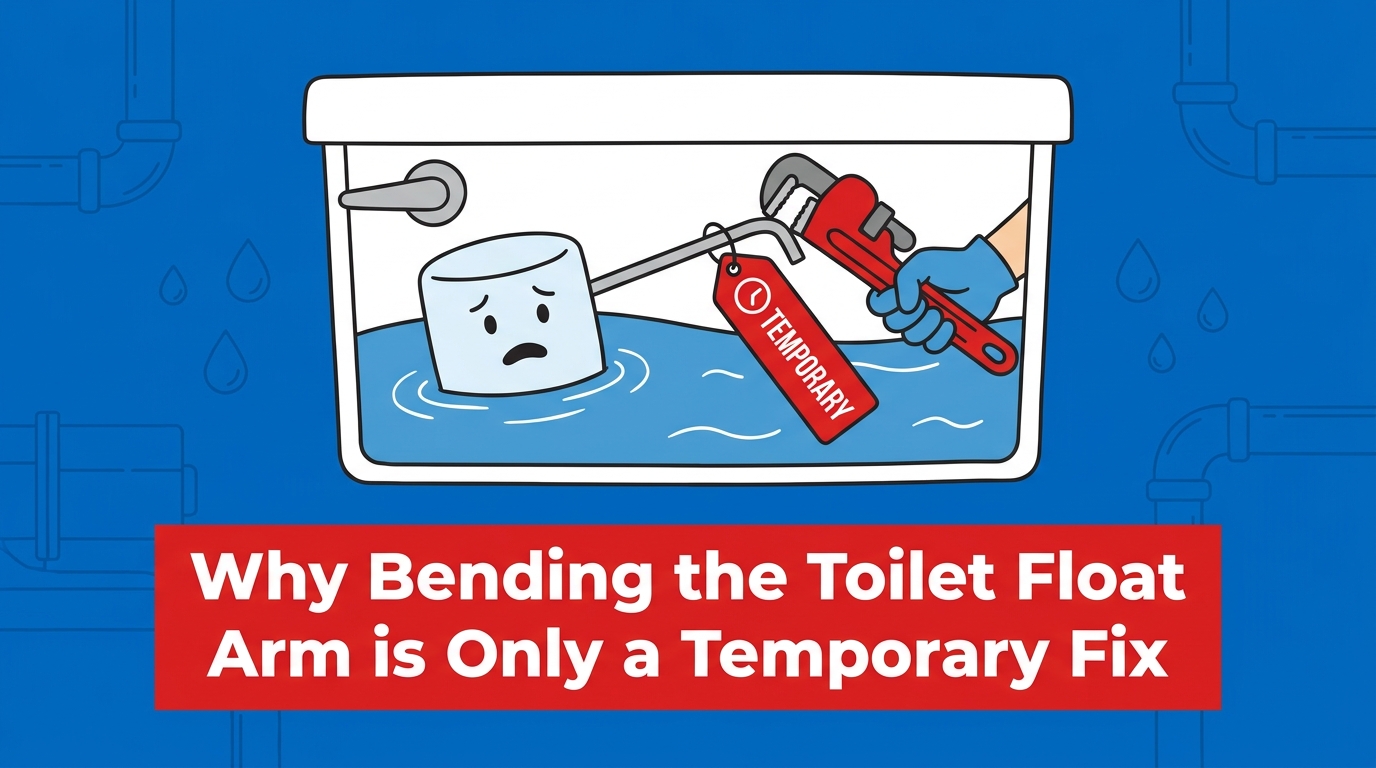
The Hidden Cost of a Quick Fix for a Running Toilet
If you are dealing with a constantly running tank and wondering why bending the toilet float arm is only a temporary fix, you are certainly not alone. A running toilet is a common household nuisance that prompts many homeowners to seek a quick, do-it-yourself solution. For decades, the standard advice passed down from older generations was simple: just pop the lid off the tank and bend the metal rod downward to force the water to shut off sooner. While this advice worked perfectly well in the mid-twentieth century, our team at Power Pro Plumbing, Heating & Air frequently sees how applying this outdated trick to modern fixtures causes hidden damage rather than solving the underlying water level issue.
Today, there is a massive difference between modern plastic dial-adjustable fill valves vs. traditional brass float arms. Homeowners must decide whether to risk permanently damaging their internal tank components with a forceful hack or take a few extra minutes to properly adjust the existing assembly as the manufacturer intended. Before attempting a physical manipulation that could snap a critical valve, it helps to understand how your system is built. For comprehensive plumbing services, relying on a professional evaluation from our experienced Cerritos technicians is always the safest route to ensure your fixtures operate flawlessly.
The Evolution of Toilet Mechanics: Brass Rods vs. Rigid Thermoplastics
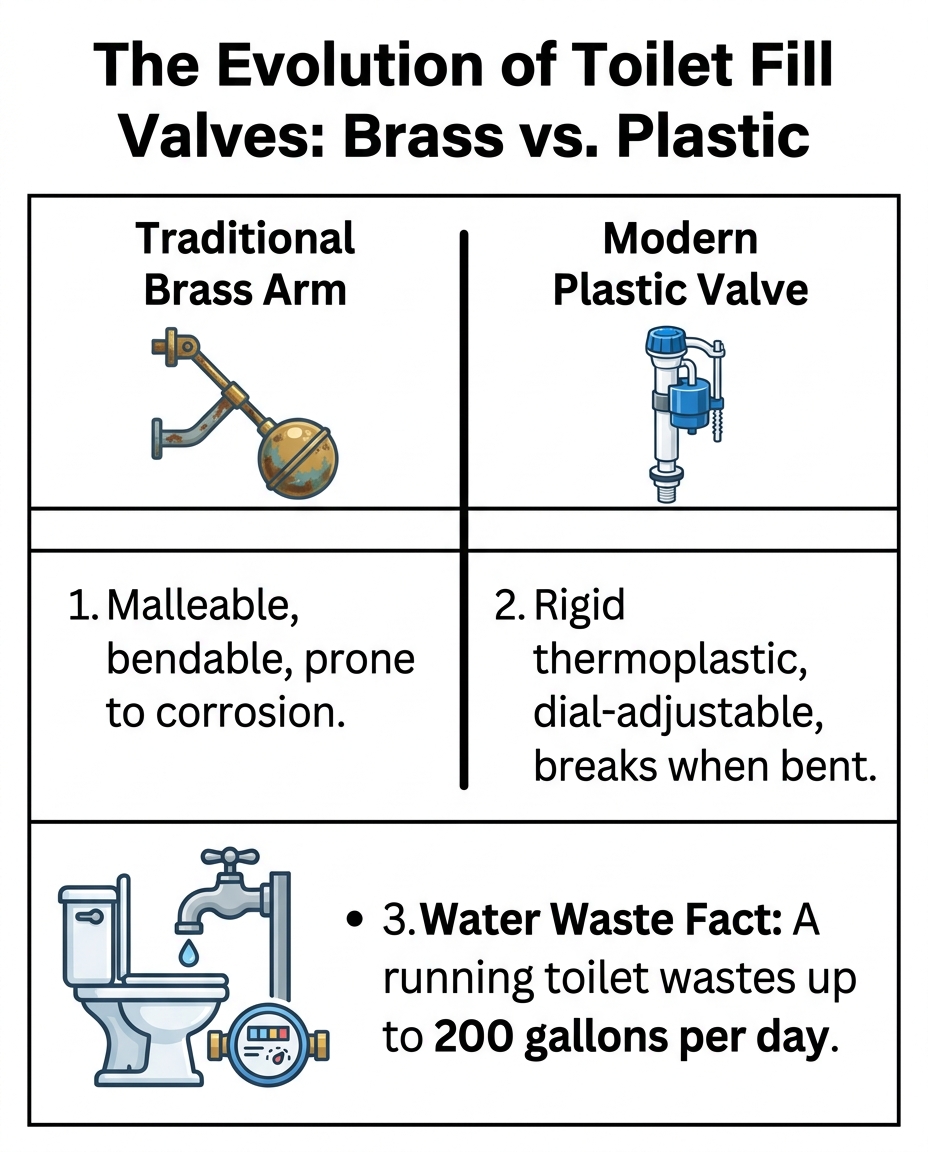
To understand why the old bending trick no longer works, we have to look at the material science shift in plumbing components over the last few decades. In our years of servicing Southern California homes, we've watched this transition firsthand. Historically, toilet fill valves utilized pliable brass float arms connected to a large, hollow copper or plastic ballcock. Brass is a highly malleable metal. This meant it could be safely bent by hand to change the resting water level without compromising the rod's structural integrity. You could bend a brass arm multiple times, and it would still hold strong against the upward force of the water.
Today, the plumbing industry has transitioned almost entirely away from brass in favor of rigid thermoplastics. These modern materials are chosen for their extreme corrosion resistance, low cost, and long-term durability in submerged environments. However, these advanced plastics are engineered strictly for precision dial adjustments, not physical manipulation. They are built to withstand compressive water pressure, but they possess very little flexibility.
• Material Flexibility — Traditional Brass Float Arm: Highly malleable; bends easily without breaking. — Modern Plastic Fill Valve: Rigid and brittle under lateral pressure; snaps when bent.
• Adjustment Method — Traditional Brass Float Arm: Physical bending of the metal rod. — Modern Plastic Fill Valve: Precision turning of a built-in adjustment dial or screw.
• Corrosion Resistance — Traditional Brass Float Arm: Prone to oxidation and eventual degradation over time. — Modern Plastic Fill Valve: Highly resistant to rust, hard water, and chlorine degradation.
• Mechanism Style — Traditional Brass Float Arm: Horizontal rod extending across the tank to a large float ball. — Modern Plastic Fill Valve: Vertical concentric float cup that slides up and down the main shank.
Because modern tanks rely entirely on these rigid plastics, attempting to force them into a new position is a recipe for disaster. When these modern components fail or are accidentally snapped by a well-meaning homeowner, attempting to tape or glue them back together never holds. Instead, the situation usually necessitates comprehensive plumbing repair services from our crew to extract the broken assembly and install a brand new unit.

Why Bending Rigid Plastic Causes Micro-Fractures and Valve Failure
A pattern we see often: You hear the toilet running continuously, you lift the lid, and you see that the water level is too high, spilling over into the overflow tube. Remembering old advice, you grab the plastic arm holding the float and force it downward.
The cause of the damage: Applying physical force to a rigid plastic float arm instantly creates microscopic stress fractures within the material. Thermoplastics are designed to handle the vertical lift of the water, but they cannot handle the horizontal torque of human hands bending them. While the toilet may temporarily stop running because the float is now sitting lower, the structural integrity of the valve is permanently compromised. The plastic has been weakened at a molecular level.
The long-term solution: Constant water pressure and the physical shock of daily flushing cycles will cause these invisible micro-fractures to expand over time. Eventually, the weakened plastic gives out entirely. This dramatically increases the risk of a sudden, catastrophic valve failure, which can lead to continuous water flow and potential indoor flooding if the tank overflows. Properly diagnosing a running toilet by identifying the modern plastic dial-adjustable fill valves vs. traditional brass float arms ensures you fix the problem without creating a worse one down the road.
How to Adjust Toilet Float Mechanisms the Right Way
Instead of risking a broken valve, modern plumbing components are actually much easier to adjust than their brass predecessors—if you know where to look. Our plumbers always point out that manufacturers have built precise calibration methods directly into the assembly for easy homeowner maintenance. Here is the correct, intended method for adjusting modern water levels without causing any damage to the internal parts.
1. Identify your fill valve type: Look inside your tank. Most modern toilets feature a concentric float cup (a plastic cylinder that slides up and down the main vertical tube) or a modern plastic arm attached to a top-mounted valve.
2. Locate the adjustment dial: Find the long, threaded plastic rod connected to the float cup. At the very top of this rod, there will be a plastic dial or a screw head (usually requiring a Phillips head screwdriver).
3. Turn the dial carefully: To lower the water level (and stop the running), turn the dial counterclockwise. This lengthens the rod, which pushes the float cup lower into the tank, telling the valve to shut off sooner. Turn it clockwise to raise the water level if your flushes are too weak.
4. Test the flush: Flush the toilet and watch the tank refill. Ensure the water level stops automatically before it spills into the open pipe in the center of the tank.
Identifying the Correct Water Level Marks
Precision is important when setting the water level. Check the inside back wall of the porcelain tank for a stamped water line indicator or a painted mark. If no line is present, use the overflow tube (the large open pipe in the middle) as your primary reference point. The water should stop refilling approximately one inch below the top rim of that overflow tube. Testing the flush after each quarter-turn of the adjustment dial ensures you achieve perfect calibration without overshooting the mark.
Catching Silent Leaks Before Late Summer Water Bills Spike
A toilet that continues to run due to a compromised or improperly adjusted float valve is more than just an auditory annoyance; it is a significant drain on your household budget. In fact, a single running toilet can waste up to 200 gallons of water per day. Homeowners often remain completely unaware of these silent leaks until they receive unusually high utility bills at the end of the season. Late summer high water bills caused by silently running toilets are a common occurrence, especially as families transition into the back-to-school routine this August and try to track down the source of their increased usage.
In Cerritos' mild climate, indoor plumbing fixtures see consistent, uninterrupted usage year-round without the extreme seasonal breaks experienced in other regions. This constant, daily cycling means a compromised, micro-fractured plastic valve will fail much faster here, making durable, proper repairs absolutely essential. Comprehensive leak checks of all household plumbing fixtures are a highly proactive way to catch failing valves before they impact your monthly budget.
The value of a proactive check: One of our local customers recently requested a comprehensive leak check of all their plumbing and their water heater. A Power Pro Plumbing technician performed a thorough evaluation without up-selling unnecessary services, confirming that no hidden leaks were present and leaving the homeowner completely confident in their system's efficiency. Addressing the root cause of any leak, big or small, is essential for long-term water conservation and maintaining compliance with local utility regulations.
When Troubleshooting Fails: The Value of Professional Component Replacement
Sometimes, no amount of dial turning will stop the water from running. If you have adjusted the float cup downward and the water continues to spill into the overflow tube, the internal seals of the fill valve have likely degraded beyond repair. Rubber diaphragms and gaskets inside the valve head break down over time due to chloramines and hard water minerals. When this happens, replacing the entire fill valve assembly is far safer and more effective than attempting temporary band-aids on failing plastic.
Our team at Power Pro Plumbing, Heating & Air relies on professional diagnosis and proper component replacements rather than temporary DIY band-aids, ensuring homeowners get long-term reliability. When we perform professional installations, we ensure that the new components are properly seated, perfectly sealed, and accurately calibrated to your specific tank dimensions.
In a recent scenario, a Cerritos homeowner required a complete toilet replacement after the internal mechanisms and the porcelain itself began failing. The responding Power Pro technician replaced the entire fixture efficiently, kept the work area spotless, and clearly explained the new assembly to the homeowner, resulting in a perfectly sealed unit and excellent communication. Furthermore, comprehensive bathroom plumbing assessments can also identify related drainage or sewer line issues that might be affecting overall fixture performance. If your toilet is gurgling or draining slowly even after the tank is fixed, you may need our professional drain and sewer services to clear downstream blockages.
Frequently Asked Questions About Toilet Float Valves
Can you bend a plastic toilet float arm?
No, our experts advise that you should never bend a plastic toilet float arm. Bending rigid plastic causes microscopic stress fractures that weaken the structural integrity of the arm. Over time, the pressure of the water and the physical shock of flushing will cause these micro-fractures to expand, leading to eventual valve failure and potential indoor flooding.
How to adjust a toilet float to stop running?
To adjust a modern toilet float, locate the adjustment dial or screw positioned on the top of the fill valve assembly. Turn the dial counterclockwise to lower the float cup along the threaded shank. Continue adjusting and testing the flush until the water stops refilling exactly one inch below the top of the overflow tube.
Why does my toilet keep running after I flush?
A toilet that continuously runs is typically caused by three main issues: a water level that is set too high (spilling into the overflow tube), a degraded rubber flapper seal at the bottom of the tank that lets water escape into the bowl, or a failing fill valve that can no longer shut off the incoming water supply.
Why is my toilet float not stopping the water?
If the float rises but the water keeps flowing, the internal diaphragm seal inside the top of the fill valve is likely worn out or torn. Alternatively, mineral debris or sediment from the water supply line may be blocking the valve's internal mechanism from closing completely, requiring a full professional replacement of the fill valve.
How long do modern plastic fill valves typically last?
With consistent daily use and average municipal water quality in our service area, a high-quality plastic fill valve generally lasts between 5 to 7 years. After this period, the internal rubber seals begin to degrade from constant exposure to water pressure, chlorine, and dissolved minerals, making replacement the safest option.
Securing Long-Term Reliability for Your Home's Plumbing
Relying on outdated myths like bending a float arm only masks the true cause of a running toilet and puts your bathroom at risk of unexpected water damage. Understanding the mechanics of modern plastic dial-adjustable fill valves empowers you to make better, safer maintenance decisions for your home. By utilizing the correct adjustment dials, you protect the structural integrity of your plumbing components. When in doubt, or if adjustments fail to stop the constant trickling, seeking a professional diagnosis from Power Pro Plumbing, Heating & Air ensures that leaks are permanently resolved. Knowing exactly when it is time to replace a failing valve entirely gives you the peace of mind that you are stopping water waste and protecting your home for the long term.