

Do You Need a Permit to Install a Mini Split in California?
Do you need a permit to install a mini split in California? Yes — in nearly every California jurisdiction, you do. Here is a quick breakdown:
Permits typically required for mini split installation in California:
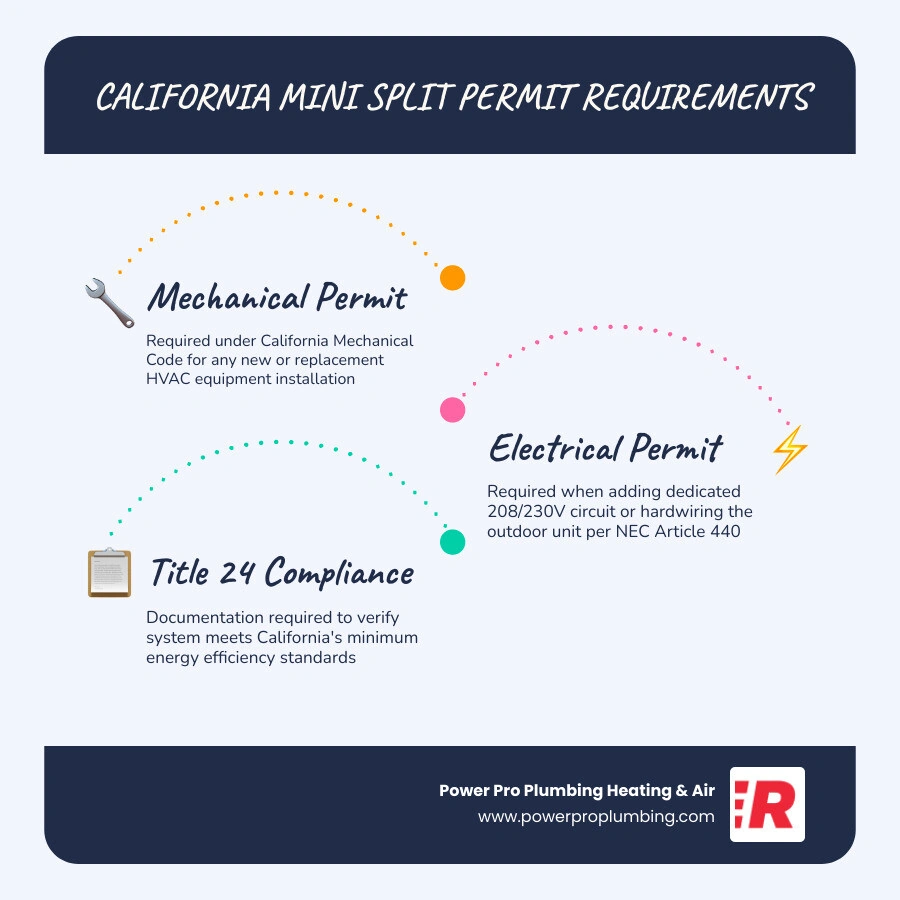
- Mechanical permit — required for any new or replacement HVAC equipment under the California Mechanical Code
- Electrical permit — required when adding a new dedicated 208/230V circuit or hardwiring the outdoor unit
- Building permit — may be required when drilling through exterior walls or making structural changes
- Title 24 energy compliance documentation — required to verify the system meets California's minimum efficiency standards
When a permit is NOT required:
- Routine repairs such as replacing a capacitor or fan motor
- Plug-in window heat pump units under 120V with no dedicated circuit or panel upgrade
The short version: if you are installing a new mini split or replacing an existing one anywhere in Los Angeles County, Orange County, or the surrounding Southern California area, you almost certainly need at least a mechanical permit — and most installations require an electrical permit as well.
As a licensed C20 HVAC tradesman, I'm Daniel Rodriguez, and I've guided countless homeowners through the question of do you need a permit to install a mini split in California — from straightforward single-zone installs to multi-head systems in ADUs. In the sections below, I'll walk you through exactly what's required, what's at stake if you skip the permit, and how the approval process works.
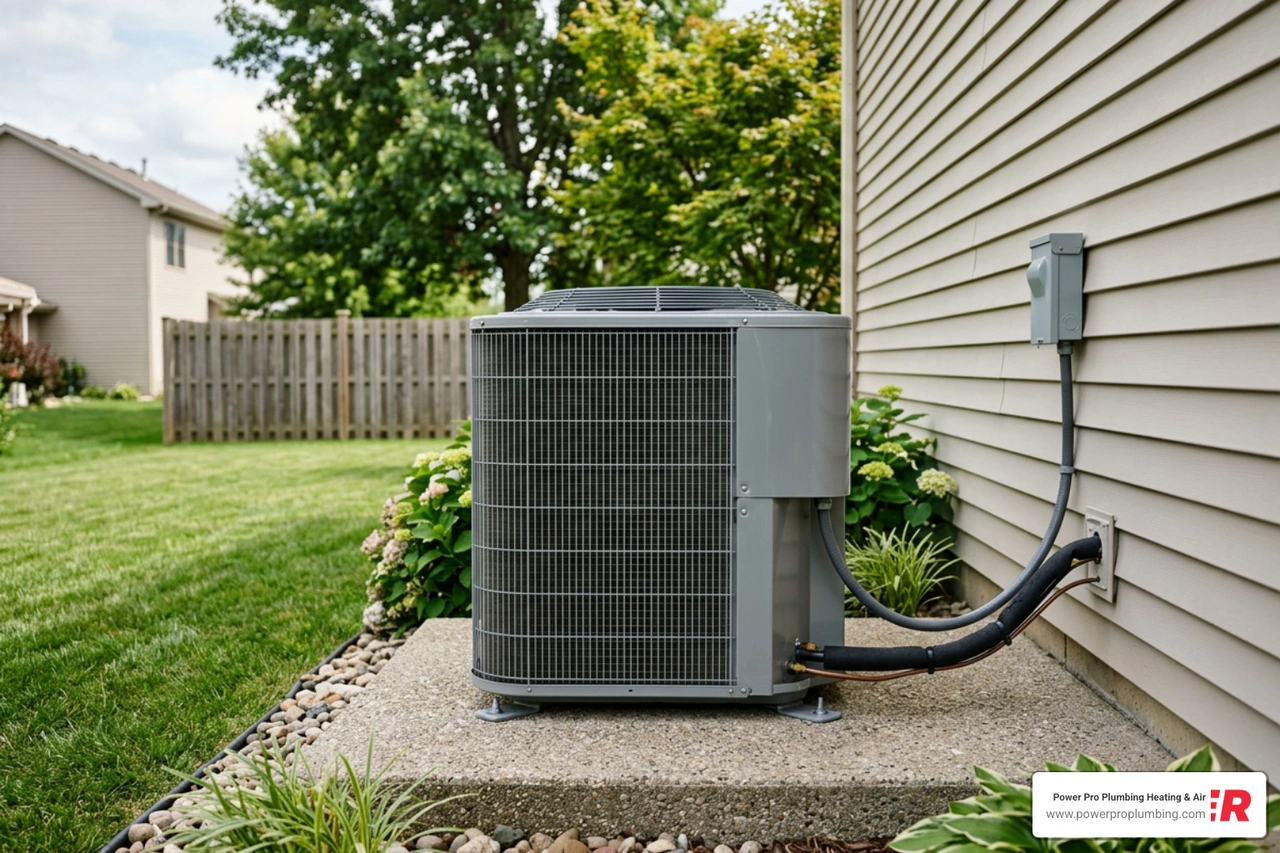
To understand why California is so strict about these systems, we have to look at what actually goes into a ductless installation. A mini split isn't just a heavy appliance you plug into the wall. It is a complex heating and cooling system that requires a structural penetration through your home's exterior envelope, the handling of high-pressure chemical refrigerants, and the installation of a dedicated, high-voltage electrical line.
Under Section 106.1 of the International Mechanical Code (IMC) and the California Mechanical Code, any permanent installation or replacement of heating, ventilation, or air conditioning equipment requires a mechanical permit. Furthermore, because these systems run on dedicated 208/230V circuits, National Electrical Code (NEC) Article 440 triggers the requirement for an electrical permit.
For homeowners in communities like Alhambra or San Gabriel, local municipal building departments bundle these requirements to protect the safety of your household. If you are looking to bring zoned comfort to your home, understanding the rules for Ductless Mini Split Systems Alhambra or Ductless Mini Split Systems San Gabriel is the first step toward a successful project.
To help visualize how different HVAC projects are regulated, here is a quick comparison of standard permitting requirements in Southern California:
| HVAC Project Type | Mechanical Permit Required? | Electrical Permit Required? | HERS Testing Required? | Typical Inspection Type |
|---|---|---|---|---|
| Ductless Mini-Split Installation | Yes | Yes (for new 230V circuit) | Yes (Weigh-in Verification) | Rough Electrical, Final Mechanical |
| Central AC / Heat Pump Replacement | Yes | Yes (if replacing disconnect/wiring) | Yes (Airflow & Refrigerant) | Final Mechanical & HERS |
| Window AC / Plug-in Heat Pump (<120V) | No | No | No | None |
| HVAC Component Repair (e.g., Capacitor) | No | No | No | None |
Understanding California Title 24 and HERS Testing for Ductless Systems
One of the most commonly overlooked aspects of answering do you need a permit to install a mini split in California is the state's strict energy code. Under California’s Title 24 Energy Code, all newly installed space-conditioning systems must meet rigorous efficiency standards.
For mini splits and multi-head heat pumps, the state enforces minimum efficiency standards. As of June 2026, systems must meet or exceed a SEER2 rating of 15.0 and an HSPF2 rating of 7.8. But the compliance process doesn't stop at buying an efficient system; it must also be verified in the field by a certified third-party Home Energy Rating System (HERS) rater.
For traditional central air systems, HERS testing typically involves measuring duct leakage and system airflow. However, because ductless mini split systems do not have traditional ductwork, they are exempt from duct leakage testing (unless you are altering more than 40 feet of existing ducts). They are also exempt from certain mandatory roof deck insulation rules under Exception 1 to Section 150.0(a)1.
Instead, the primary HERS verification required for ductless mini splits is the refrigerant charge verification. Because standard superheat and subcooling diagnostic methods do not work reliably on variable-refrigerant-flow mini splits, installers must use the weigh-in charging method per Reference Residential Appendices (RA3.2). This means the installer must physically weigh the refrigerant added to the system using a digital scale and document the exact amount on the state-mandated CF-2R and CF-3R compliance forms.
Whether you are seeking solutions for Ductless Mini Split Systems Irvine or upgrading your home's zoning with Ductless Mini Split Systems Costa Mesa, adhering to Title 24 and completing HERS testing is not optional. It is the only way the local building department will sign off on and close your permit.
Risks and Consequences of Unpermitted Mini Split Installations
It can be tempting to bypass the permitting process, especially when a handy neighbor or an unlicensed contractor offers to install a system over the weekend. However, installing a mini split without a permit carries severe legal, financial, and safety risks.
1. Code Violations and Fines
If a local code enforcement officer discovers unpermitted work, they can issue a stop-work order or a citation. You may be forced to pay double or triple the original permit fees in penalties, and in worst-case scenarios, you may be ordered to completely remove the system and restore the wall penetration at your own expense.
2. Voided Manufacturer Warranties
Major HVAC manufacturers require professional, permitted installation to keep their equipment warranties intact. If your compressor fails two years from now, and you cannot provide a copy of the closed building permit or proof of licensed installation, the manufacturer will likely deny your warranty claim.
3. Home Resale and Escrow Complications
When you sell your home in California, you are legally required to disclose all modifications and whether they were completed with permits. Home inspectors and savvy buyers will easily spot an unpermitted outdoor condenser. This can lead to delayed escrows, bank refinancing denials, or demands that you obtain retroactive permits before the sale can proceed.
4. Homeowners Insurance Denials
If an unpermitted electrical connection causes a house fire, or an improperly secured condenser leaks refrigerant and causes structural water damage, your insurance provider has the right to deny your claim. They can argue that the damage was caused by unpermitted work that did not meet local safety codes.
For residents looking into Ductless Mini Split Systems Lakewood or considering a replacement with Ductless Mini Split Systems Cerritos, securing a permit is the cheapest insurance policy you can buy for your home and your peace of mind.
The Step-by-Step Permit Approval and Inspection Process
The permitting process doesn't have to be a headache. Thanks to recent state legislation, California is actively working to make heat pump permitting faster and more affordable.
Under legislative bills SB-222 and SB-282, California has declared residential heat pump permitting to be a matter of statewide concern. These laws place caps on permit fees—limiting residential heat pump HVAC permits to a maximum of $150 to $200 in most jurisdictions. Furthermore, the state is transitioning toward online, automated, same-day permit issuance and requiring local jurisdictions to offer asynchronous or real-time video inspections to eliminate the need for homeowners to wait around all day for an inspector.
Here is what the typical process looks like when we handle it for your home:
- Site Assessment and Load Calculations: We calculate the exact heating and cooling loads of your rooms to ensure the mini split is sized correctly.
- Permit Application Submission: We submit a mechanical and electrical permit application to your local city building department (such as Anaheim or Fullerton). This includes a simple site plan showing where the outdoor condenser and indoor heads will be located, setbacks from property lines, and manufacturer specification sheets.
- Equipment Installation: Once the permit is issued, our licensed technicians install the system, ensuring the outdoor unit is anchored to a sturdy concrete pad, the electrical disconnect switch is within sight of the compressor, and the wall penetration is fully sealed.
- HERS Verification: A certified HERS rater verifies the refrigerant charge weigh-in and submits the compliance paperwork to the state database.
- City Inspection: The city building inspector visits your home (or conducts a video inspection) to verify that the electrical wiring, grounding, disconnect box, and physical placement comply with the California Electrical and Mechanical Codes. Once approved, the permit is officially closed.
Whether we are managing the process for Ductless Mini Split Systems Anaheim or coordinating inspections for Ductless Mini Split Systems Fullerton, we handle all the heavy lifting so you don't have to navigate the bureaucracy alone.
Frequently Asked Questions About California Mini Split Permits
Do you need a permit to install a mini split in california for an ADU?
Yes. Accessory Dwelling Units (ADUs) are subject to the same strict California Building Standards Code as primary residences. In fact, because ADUs are often built close to property lines, you must pay extra attention to zoning setbacks (typically requiring the outdoor condenser to be at least 3 feet from side or rear property lines) and local noise ordinances.
Additionally, because ADUs add new electrical load to your property, a permit is required to perform load calculations under NEC Article 220. This ensures your main electrical panel can handle the extra 30 to 50 amps of load without requiring a costly utility service upgrade. If you are building or converting an ADU, we can help ensure compliance for Ductless Mini Split Systems Newport Beach.
Do you need a permit to install a mini split in california if it is a DIY pre-charged kit?
Yes, you still need a permit. There is a common misconception that "DIY-friendly" mini split kits with pre-charged refrigerant line sets do not require permits because they bypass the need for specialized refrigerant handling tools.
While it is true that you do not need EPA Section 608 Certification to physically connect pre-charged lines (since you aren't handling open refrigerant), California state law does not exempt DIY installations from building, mechanical, or electrical permits. The system still connects to your home's electrical grid, still requires a structural wall penetration, and still must comply with Title 24 energy standards. Skipping the permit on a DIY kit carries all the same risks of fines, voided warranties, and resale issues. If you want a safe, code-compliant setup, let us handle your Ductless Mini Split Systems Tustin.
What are the local HOA and setback rules for outdoor condensers?
Homeowners Associations (HOAs) and local cities have specific rules regarding where you can place your outdoor condenser unit. Generally, units must be placed in a side or backyard, must be anchored to a concrete pad at least 3 inches thick, and must maintain a minimum 3-foot setback from property lines.
Noise is another major factor. Many Southern California cities enforce strict residential noise limits—often capping outdoor equipment noise at 50 decibels (dBA) during nighttime hours (10 PM to 7 AM) and 55 dBA during the day. Fortunately, high-quality mini splits are incredibly quiet, but you must still provide the manufacturer’s decibel rating sheets with your permit application.
Under SB-222 and SB-282, HOAs cannot legally prohibit you from installing an energy-efficient heat pump system, but they can enforce reasonable aesthetic guidelines, such as requiring line-set covers that match your home's paint color or landscaping to screen the outdoor unit. We regularly design compliant installations for Ductless Mini Split Systems Brea that satisfy both city inspectors and HOA boards.
Conclusion
At the end of the day, answering do you need a permit to install a mini split in California comes down to protecting your home, your family, and your investment. While the paperwork and state energy codes might seem overwhelming, they are designed to guarantee that your system operates safely, efficiently, and legally for years to come.
At Power Pro Plumbing Heating & Air, we make the entire process effortless. As a trusted Daikin Comfort Pro with thousands of positive reviews across the Greater Los Angeles and Orange County areas, we don't just install your system—we handle the load calculations, submit the permits, coordinate the HERS testing, and walk you through the final inspection.
If you are ready to experience the quiet, zoned comfort of a professionally installed ductless system, we are here to help. Contact us today to schedule your consultation for Ductless Mini Split Systems Coto de Caza or any of our surrounding service locations!