

Is That Warm Patch on the Floor Just a Fall Weather Quirk?
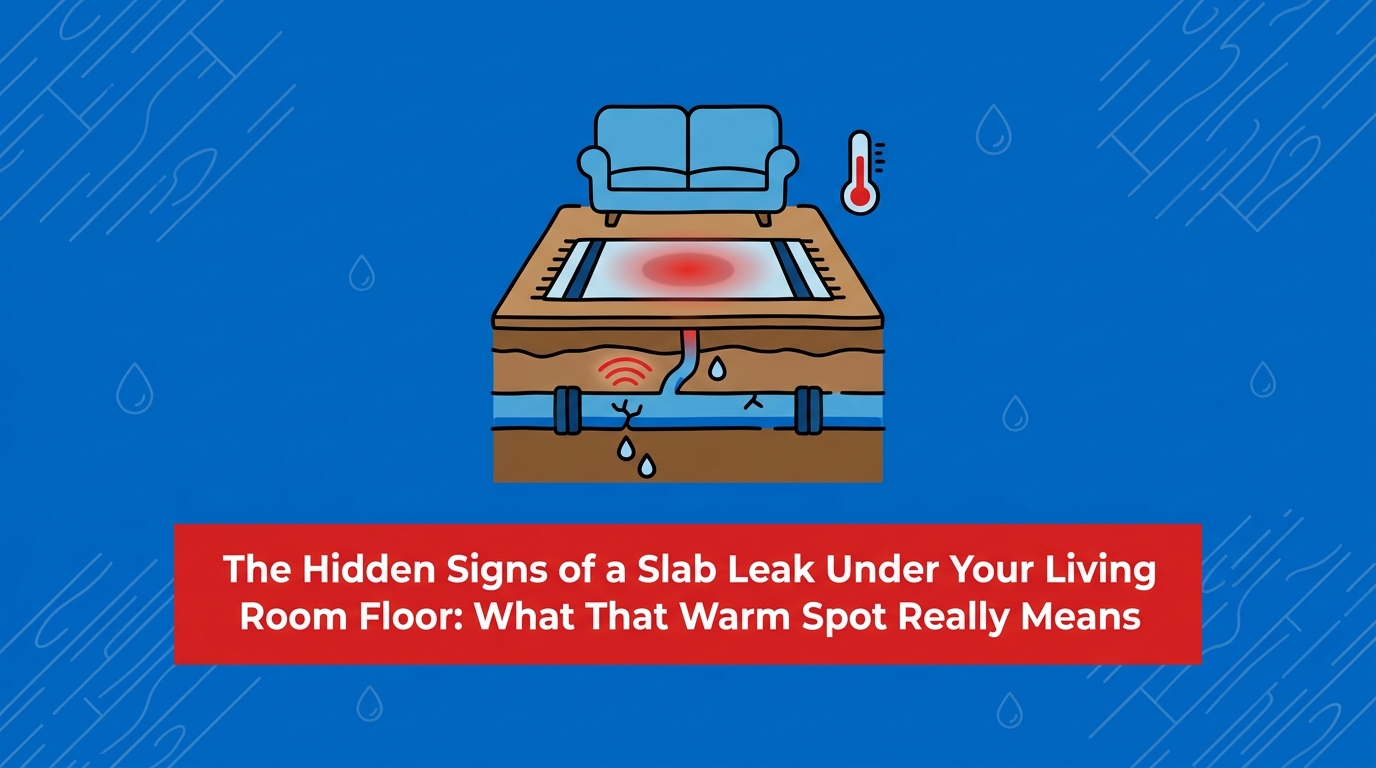
The hidden signs of a slab leak under your living room floor usually begin with a confusing sensory detail: an unexpected warm patch on the tile, laminate, or hardwood. You are walking across the room barefoot, and suddenly, you step on a localized area that feels distinctly heated. During the September transition into early fall, when the weather is shifting and indoor temperatures fluctuate, it is incredibly easy to dismiss this anomaly. At Power Pro Plumbing, Heating & Air, our team often hears from homeowners who assume it is just the afternoon sun baking the floorboards, a lingering summer temperature spike, or an early heating system quirk.
However, heat radiating upward through a concrete foundation is a massive red flag. This psychological decision point—choosing whether to ignore the warm spot or investigate it—can dictate the structural health of your home. Dismissing the heat as a seasonal oddity allows a sub-foundation pipe burst to run continuously, eroding the soil beneath your house. Recognizing it as a warning sign allows you to bring in expert plumbing services before minor symptoms escalate into catastrophic structural damage. Early detection is critical, and understanding why that spot is warm is the first step in protecting your property.
How Soil and Seasons Impact Your Concrete Foundation
To understand why these leaks happen, you have to look at the ground your house is built upon. In our years of servicing Cerritos and Southern California slab-on-grade homes, we have seen firsthand that the vast majority do not have basements or crawlspaces. Instead, they are constructed directly on top of a thick concrete slab, with the main water lines and drainage pipes routed directly beneath or embedded within that concrete. While this construction method is highly durable, it places your plumbing system at the mercy of the soil beneath it.
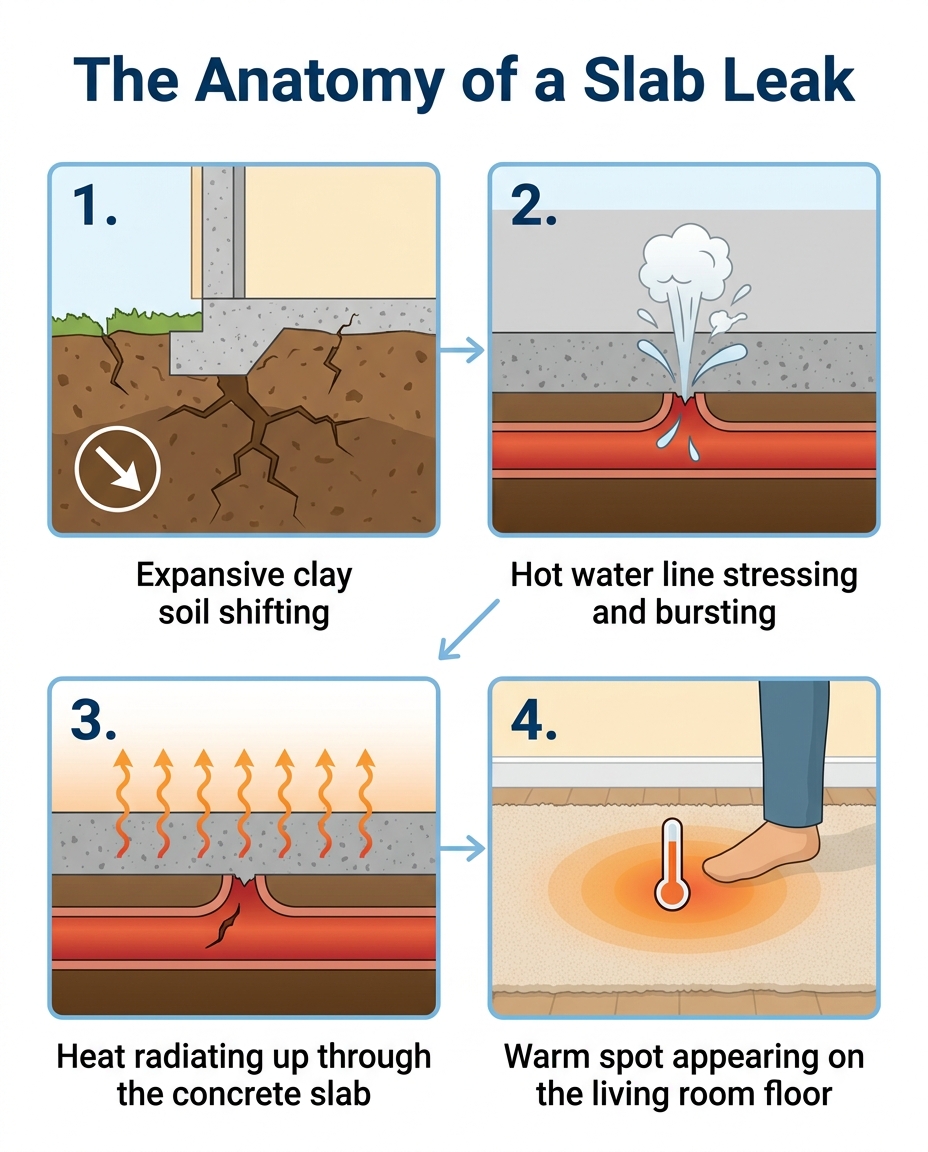
The regional climate plays a massive role in plumbing health. Cerritos experiences distinct dry seasons followed by moisture changes in the early fall. The expansive clay soil prevalent in this area is highly reactive to these seasonal shifts. During the dry summer months, the clay soil becomes dehydrated, shrinking and pulling away from the concrete slab. This removes the physical support beneath your pipes, causing them to sag under their own weight. When the early fall moisture returns, the clay soil rapidly absorbs water, swelling and pushing upward against the foundation with tremendous force.
The Cycle of Pipe Stress:
• Summer — Soil Behavior: Dries out and shrinks significantly — Impact on Foundation & Plumbing: Removes critical support from beneath the concrete, causing rigid pipes to sag and bend.
• Early Fall — Soil Behavior: Absorbs moisture and swells rapidly — Impact on Foundation & Plumbing: Pushes upward against the slab, creating immense crushing pressure on weakened lines.
• Winter — Soil Behavior: Saturated and heavy — Impact on Foundation & Plumbing: Forces existing minor fractures in copper lines to burst open completely.
This constant, year-after-year shifting puts immense physical stress on aging underground pipes. Over time, the friction and bending weaken the copper lines, eventually causing a pinhole leak or a complete rupture. Because this structural stress affects everything buried in the ground, both your pressurized water lines and your gravity-fed drainage systems are highly vulnerable. This is why our team often recommends thorough underground sewer line inspections alongside standard water leak diagnostics to ensure the entire sub-foundation network remains intact.

Sensory Red Flags: Detecting a Sub-Foundation Pipe Burst
Because the actual broken pipe is buried beneath inches of solid concrete, you will rarely see the water itself during the early stages of a leak. Instead, you have to rely on sensory clues that radiate into your living space. Paying attention to these subtle changes during the September transition into early fall can save your foundation.
1. Warm spots on the floor: If a hot water line bursts beneath the slab, the escaping water continuously heats the concrete above it. This heat transfers directly through your flooring materials. You will notice a distinctly warm, localized patch on your tile, hardwood, or laminate that never seems to cool down, regardless of the room temperature.
2. Auditory clues in quiet rooms: Water escaping from a pressurized pipe creates acoustic vibrations. If you stand in your living room late at night when the house is completely silent, you might hear a faint hissing sound or the distinct noise of running water—even when every faucet, shower, and appliance in the home is completely turned off.
3. Visual and olfactory signs: As the water begins to saturate the concrete and wick upward, it damages the materials above. You may notice hardwood floorboards beginning to warp, cup, or buckle. Carpets may feel inexplicably damp or develop dark, discolored patches. Accompanying this moisture is often a strong, persistent musty odor that smells like wet earth or mildew, indicating that mold is actively growing beneath the floorboards.
4. Utility anomalies: The most objective red flag is your monthly water bill. A continuous pinhole leak under the slab can waste hundreds of gallons of water a day. If your water usage spikes dramatically without any changes to your daily habits, a hidden leak is the most likely culprit.
Monitoring Your Water Meter
If you experience any of the sensory red flags mentioned above, the next logical step is to check your water meter. This is a simple diagnostic test that can confirm whether water is actively flowing when it shouldn't be.
First, ensure that absolutely no water is being used inside or outside the house. Turn off all faucets, make sure the washing machine and dishwasher are not running, and verify that the sprinkler system is off. Next, locate your main water meter (usually found in a concrete box near the street or sidewalk). Look at the low-flow indicator on the meter face—this is often a small red triangle or a spinning star dial. If that indicator is moving while all water is shut off in the home, you have an active, continuous leak somewhere on the property. Keep in mind that this step is purely diagnostic; it confirms a problem exists but does not pinpoint the location.
The Hidden Costs of Delaying a Plumbing Diagnostic
Ignoring a warm spot on the floor is a dangerous gamble. What starts as a minor, undetected leak rapidly compounds into a massive structural and financial burden. The costs of delaying a diagnostic go far beyond the wasted water, though that alone is significant. A single, continuous sub-foundation leak can waste thousands of gallons of water annually, straining local resources and driving up your utility bills month after month.
The Threat of Foundation Heave:
The most severe consequence of an ignored slab leak in Cerritos and Southern California slab-on-grade homes is foundation heave. When a pipe bursts, the escaping water has nowhere to go. It saturates the expansive clay soil beneath the concrete. As that soil absorbs the massive volume of water, it swells dramatically, pushing upward against the bottom of the slab. This upward pressure can literally lift the concrete, causing it to crack, buckle, and shift. Foundation heave compromises the structural integrity of the entire house, leading to cracked drywall, doors that refuse to close, and uneven floors.
Secondary Risks to Indoor Air Quality:
Beyond the concrete itself, the constant upward wicking of moisture creates the perfect breeding ground for mold and mildew. When dampness gets trapped between the concrete slab and your living room flooring—whether it is carpet padding, hardwood underlayment, or laminate—mold spores rapidly multiply. These spores eventually become airborne, circulating through your HVAC system and significantly degrading your indoor air quality. Addressing the issue during the early fall transition prevents this compounding damage from taking hold before the heavy winter rains arrive and further complicate the soil conditions.
Pinpointing the Problem Without Tearing Up Your Living Room
The primary reason homeowners hesitate to call a professional when they notice a warm floor is the fear of destruction. The traditional image of fixing a slab leak involves a contractor walking into the living room with a jackhammer, tearing up expensive hardwood, and destroying the space just to find the source of the problem. Today, that fear is entirely unfounded.
Modern plumbing diagnostics utilize advanced, non-invasive technology to see and hear through the concrete, pinpointing the exact location of the pipe burst without causing any unnecessary damage to your home. Our technicians at Power Pro Plumbing utilize state-of-the-art leak detection equipment to accurately map the issue, ensuring that if excavation is eventually required, it is limited to a single, precise location rather than a massive exploratory trench.
Thermal Imaging Cameras:
Because hot water lines are the most common culprits for slab leaks, thermal imaging is an incredibly effective tool. Technicians use specialized infrared cameras to scan the living room floor. These cameras detect temperature anomalies, allowing the plumber to see the exact shape and spread of the heat plume radiating through the concrete. This visually confirms the presence of the leak and narrows down the search area instantly.
Acoustic Listening Devices:
Once the general area is identified via thermal imaging, technicians deploy highly sensitive acoustic listening devices. Escaping pressurized water emits a specific high-frequency sound. By placing acoustic discs on the floor, plumbers can amplify the sound of the leak through the concrete. By tracking the volume and frequency, they can pinpoint the exact square inch where the pipe has failed.
This commitment to non-destructive evaluation provides immense peace of mind. We recently had a customer reach out during the winter months with an unknown plumbing issue, requesting a comprehensive leak check. Our technician performed a thorough evaluation of all the plumbing and the water heater using these precise, non-invasive methods. Fortunately, no issues were found, and the customer received honest answers without being pressured or up-sold. Whether the news is good or bad, knowing the exact status of your plumbing without tearing up the house is one of the greatest benefits of a smart leak detection system and professional diagnostics.
What to Do When You Suspect an Underground Leak
If you have noticed a warm spot, heard running water, or seen a spike in your utility bill, taking the right steps immediately can mitigate further damage to your home. While you cannot fix a sub-foundation pipe burst on your own, your immediate actions are crucial.
• Document the symptoms carefully: Write down exactly when you first noticed the warm spot on the floor. Gather your last three to four months of water bills to check for a steady upward trend or a sudden spike. Having this data ready helps our diagnostic team understand the timeline of the leak.
• Turn off the main water supply if necessary: If you suspect a severe, active leak—especially if you notice water actively pooling at the edge of the baseboards or the warm spot is rapidly expanding—shut off the main water valve to the house. This stops the flow of pressurized water and prevents further soil saturation while you wait for help.
• Avoid any DIY excavation attempts: Never attempt to lift floorboards, peel back carpets, or chip away at the concrete yourself. DIY exploration almost always causes unnecessary cosmetic and structural damage, and it can actually make it harder for professionals to use acoustic equipment if the flooring materials are disturbed.
• Contact a licensed professional immediately: Reach out to our plumbing team, as we specialize in sub-foundation diagnostics for Cerritos and Southern California slab-on-grade homes. Ensure they use thermal and acoustic equipment so the evaluation remains non-invasive.
Frequently Asked Questions About Slab Leaks
What are the first signs of a slab leak?
The first signs of a slab leak typically include localized warm spots on the floor, an unexplained spike in your water bill, and the faint sound of running water when all fixtures are turned off. In Cerritos and Southern California slab-on-grade homes, these symptoms often appear before any visible water damage reaches the surface. You might also notice a drop in overall water pressure or smell a persistent musty odor in a specific room. Catching these early signs prevents severe structural issues.
How do you know if you have a water leak under your foundation?
You can confirm a suspected leak by performing a simple water meter test. Turn off every water source inside and outside your home, then check the low-flow indicator on your main water meter. If the dial is still moving, water is actively escaping somewhere in the system. While this confirms a leak exists, you will need professional acoustic and thermal diagnostics to verify that the breach is located underneath the concrete foundation.
Can a slab leak go unnoticed for a long time?
Yes, a slab leak can easily go unnoticed for months, especially if it is a tiny pinhole leak on a cold water line. Because the pipe is buried beneath inches of concrete, the water often drains downward into the soil rather than pooling upward into the house. It is only when the soil becomes completely saturated, or a hot water line creates a noticeable warm spot, that homeowners typically realize there is a problem.
What does a slab leak sound like?
A slab leak usually sounds like a faint hissing, rushing, or trickling noise coming directly from the floor. You will most likely hear it at night when the house is quiet and no appliances are running. The sound is created by pressurized water escaping through a small fracture in the copper pipe and vibrating against the surrounding concrete and soil.
How do plumbers find a leak under a concrete slab without digging?
Professional plumbers use advanced, non-invasive technology to locate leaks through the concrete. Thermal imaging cameras detect the heat plumes caused by hot water leaks, while highly sensitive acoustic listening devices amplify the sound of escaping water. By combining these two technologies, technicians can pinpoint the exact location of the pipe burst without ever lifting a hammer or tearing up your living room floor.
Are warm spots on the floor always caused by plumbing leaks?
While warm spots are a primary indicator of a hot water slab leak, they are not the only cause. Uninsulated heating ducts running under the floor, radiant floor heating systems, or even intense direct sunlight hitting a dark tile can create temporary warmth. However, if the warm patch remains at a constant temperature day and night, regardless of the weather or HVAC usage, it is almost certainly a hot water pipe leaking beneath the concrete.
Protect Your Foundation Before Winter Arrives
Noticing a warm patch on your living room floor during the September transition into early fall is not something to brush off as a weather quirk. That localized heat, combined with unexplained water bill spikes or the faint sound of running water, is a clear signal that a hot water line has failed beneath your concrete foundation. Ignoring these symptoms allows expansive clay soil to swell, risking severe foundation heave and indoor air quality issues.
Fortunately, diagnosing the problem doesn't mean destroying your home. Professional technicians utilize precise, non-invasive thermal and acoustic equipment to locate the exact source of the issue without unnecessarily tearing up your flooring. If you suspect an underground pipe burst, it is crucial to act quickly. Explore our professional plumbing repair services to accurately assess the situation and secure your foundation before the wet winter season begins.