

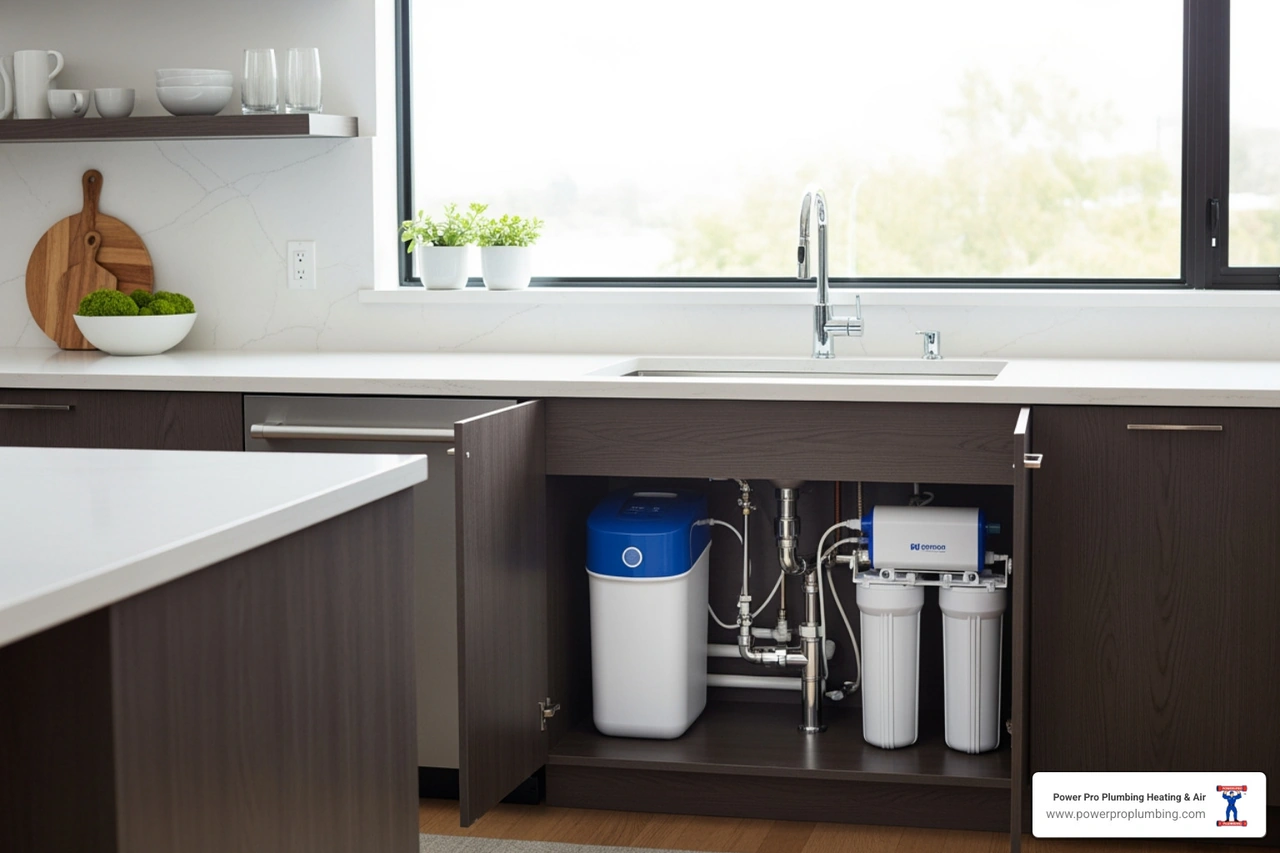
Is a Water Softener or Water Filter Right for Your LA Home?
When it comes to a water softener vs water filtration comparison, these two systems are often confused — but they solve completely different problems. Here's a quick breakdown:
| Feature | Water Softener | Water Filter |
|---|---|---|
| Primary Purpose | Removes hard minerals (calcium, magnesium) | Removes contaminants (chlorine, lead, PFAS) |
| Technology | Ion exchange | Activated carbon, RO, UV, sediment media |
| Fixes Scale Buildup | Yes | No |
| Removes Chlorine/Lead | No | Yes |
| Improves Drinking Water Safety | No | Yes |
| Best For | Hard water damage, appliance protection | Taste, odor, and chemical/biological concerns |
If your dishes come out spotty, your showerheads crust over with white buildup, or your soaps won't lather — you likely need a water softener. If your water smells like chlorine, tastes off, or you're concerned about contaminants like lead or PFAS — you need a water filter. Many Los Angeles and Orange County homes benefit from both.
Hard water is a widespread issue across Southern California, and so are municipal water contaminants that slip through even treated city supplies. Understanding which system — or combination — fits your home can save you money, protect your plumbing, and give your family cleaner, healthier water every day.
I'm Daniel Rodriguez, a licensed C36 plumber and second-generation tradesman with hands-on experience helping LA County and Orange County homeowners navigate water quality decisions — including every type of water softener vs water filtration comparison you can imagine. In the sections ahead, I'll walk you through exactly how each system works, what problems each solves, and how to choose the right setup for your home.
Understanding the Main Difference: Water Softener vs Water Filtration Comparison
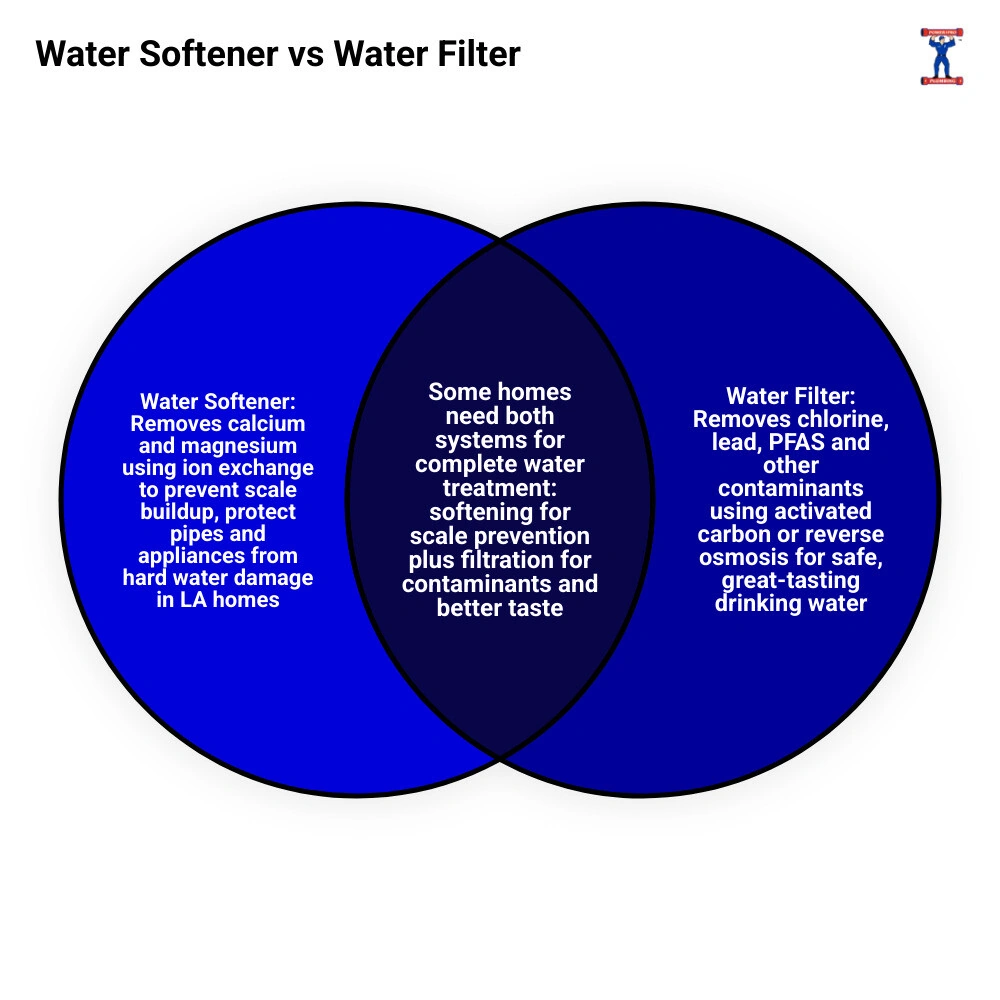
To make the right choice for your home in Beverly Hills or Santa Monica, you first need to understand that "clean" water and "soft" water are not the same thing. In our daily work across Los Angeles County, we see many homeowners who think a water filter will stop their pipes from clogging with scale, or that a softener will make their water taste like a mountain spring. Unfortunately, that isn't how the technology works.
The primary difference lies in what the systems target. A water softener is a specialist. It uses a process called ion exchange to swap out "hard" minerals—specifically calcium and magnesium—for sodium or potassium ions. This changes the chemical structure of the water to prevent it from sticking to your pipes and fixtures.
On the other hand, water filtration is a broad category designed to trap and remove harmful contaminants. While a softener focuses on minerals, a filter focuses on chemicals, sediments, and biological threats. These systems use various media, such as activated carbon or semi-permeable membranes, to catch everything from chlorine and lead to modern concerns like PFAS (forever chemicals).
It is also helpful to understand What Are the 4 Types of Plumbing? because the type of pipes you have in your home—whether copper, PEX, or galvanized steel—will react differently to the minerals and chemicals present in your water supply.
How Water Softeners Protect Your Los Angeles Plumbing
If you’ve lived in the Los Angeles area for any length of time, you’ve likely seen the white, crusty "rock" that forms on your showerheads and faucets. This is limescale, and it is the calling card of hard water. In fact, hard water affects over 85% of U.S. households, and Southern California is a major hotspot for it.
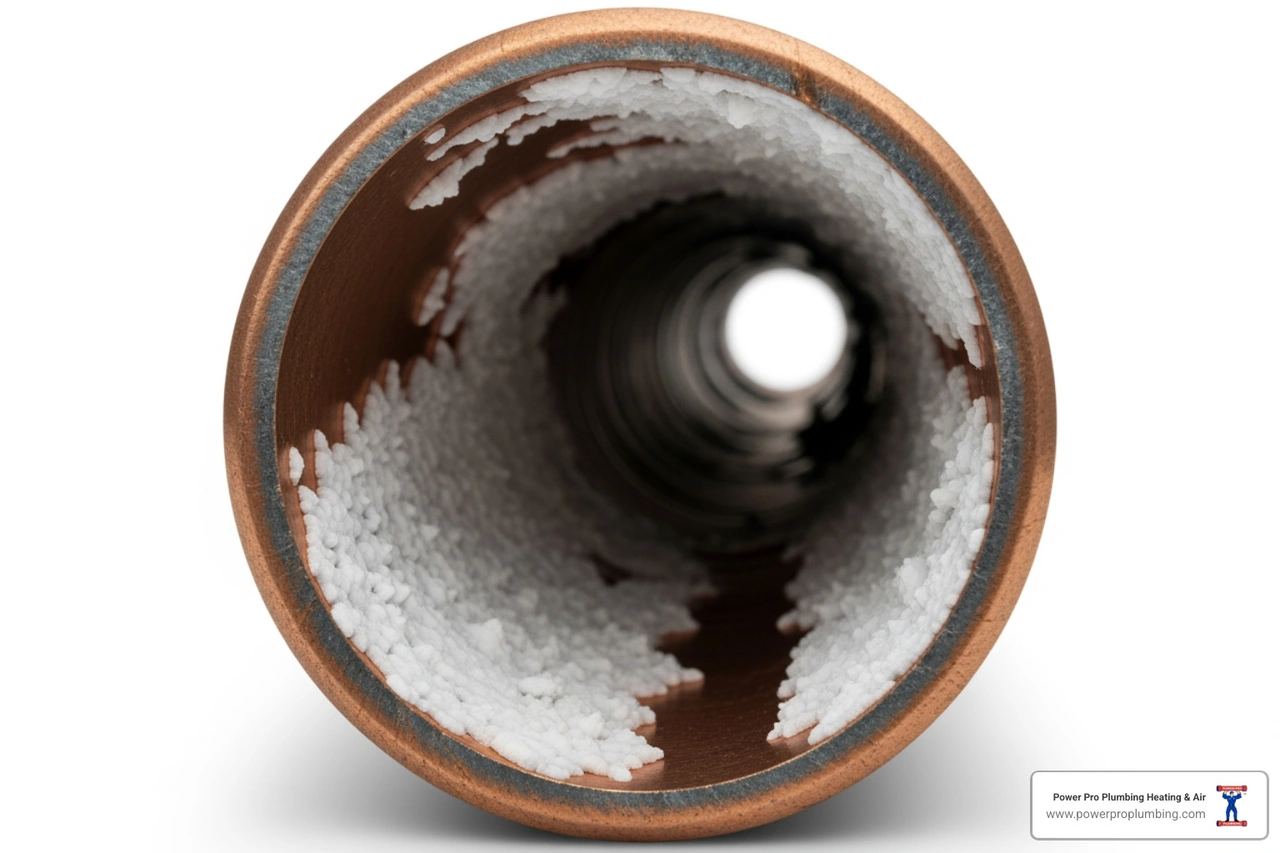
When hard water is heated—like inside your water heater—the calcium and magnesium minerals crystallize and settle. This creates a thick layer of insulation on the heating elements. Research shows that this scale buildup can reduce water heater efficiency by up to 30%. Not only does this mean you’re paying 30% more on your energy bills just to get a hot shower, but it also causes the tank to overheat and fail prematurely.
By installing a water softener, you can:
- Extend Appliance Lifespan: Softeners can extend the life of water-using appliances—like dishwashers, washing machines, and water heaters—by 30% to 50%.
- Protect Your Pipes: Preventing scale buildup keeps the interior of your copper or PEX lines smooth, maintaining proper water pressure throughout the home.
- Save on Cleaning: Homes with softened water use up to 50% less soap and detergent because minerals aren't there to "fight" the suds.
Knowing How to Extend the Lifespan of Your Water Heater is vital for any homeowner in areas like Burbank or Glendale, and a water softener is arguably the most effective tool in that fight.
The Role of Water Filtration in Removing Contaminants
While a softener protects your appliances, a water filtration system protects you. Even though municipal water in the South Bay or Long Beach meets EPA standards, it often contains disinfectants like chlorine or chloramine that can make water smell like a swimming pool and dry out your skin.
A high-quality filtration system, especially one utilizing Reverse Osmosis (RO), can remove up to 95% of total dissolved solids and contaminants. This includes:
- Lead and Heavy Metals: Often introduced by aging city infrastructure or old pipes in historic LA homes.
- PFAS and VOCs: "Forever chemicals" and volatile organic compounds that are increasingly found in groundwater.
- Chlorine and Sediment: Improving the taste and smell of every drop of water that comes out of your tap.
Our Plumbing Services often include installing these systems for families who want the peace of mind that their drinking, cooking, and bathing water is free from the chemical byproducts used in large-scale municipal treatment.
Choosing the Right System for Your Household
Deciding between a softener and a filter starts with a simple question: What is bothering you about your water?
If you see white spots on your wine glasses after a dishwasher cycle or feel a "filmy" residue on your skin after showering, you have a hardness problem. If your water tastes metallic or smells like chemicals, you have a contamination problem.
We recommend starting with a water test. You can check for TDS (Total Dissolved Solids) and GPG (Grains Per Gallon) of hardness. If your hardness level is above 7 GPG, a softener will provide a massive ROI in home maintenance savings. If you’re concerned about health and safety, a whole-house filter is the way to go.
Many common issues can be traced back to your water quality. Understanding Common Plumbing Problems often reveals that what looks like a broken fixture is actually just a victim of poor water chemistry.
Why a Water Softener vs Water Filtration Comparison Matters for Your Health
The health and lifestyle benefits of these systems are distinct. Soft water is famous for making hair feel silkier and skin feel less irritated, which is a huge plus for those with eczema or dry skin in the arid SoCal climate. However, traditional salt-based softeners do add a tiny amount of sodium to the water (usually about 12.5–25mg per glass). While this is safe for most, those on strict low-sodium diets might prefer a salt-free alternative.
Salt-free systems, often called water conditioners, use Template Assisted Crystallization (TAC) technology. These don't actually remove the minerals; instead, they change their structure so they can't stick to surfaces. They are eco-friendly and maintenance-free, though they aren't quite as effective as salt-based systems for extremely hard water.
Making the Final Choice: Water Softener vs Water Filtration Comparison
In May 2026, the trend we see most often in homes from Pasadena to Huntington Beach is the "Dual System." Over 60% of homes with mixed water issues find that installing both a softener and a whole-house filter provides the most comprehensive protection.
When combining systems, the sequence matters. You should always install the filter before the softener. This removes chlorine and sediment that could otherwise damage the softener’s expensive resin beads, helping the whole setup last longer. This proactive approach is similar to learning How to Maintain Copper Pipes—it’s all about preventing damage before it starts.
Frequently Asked Questions about Water Treatment
Water quality can be a complex subject. Here are some of the most common questions we hear from our neighbors in the Greater Los Angeles area. For more general advice, check out our guide on 10 Common Plumbing Issues.
Do I need both a water softener and a water filter in Orange County?
Often, yes. Orange County water is notoriously hard, but it also contains the standard suite of municipal chemicals. If you want to protect your expensive appliances from scale and ensure your drinking water is pure, a combination system is the gold standard for comprehensive home care.
Does a water filter also soften water?
Generally, no. Standard carbon or sediment filters do not remove the dissolved minerals that cause hardness. Some high-end Reverse Osmosis systems can reduce hardness, but they are usually "point-of-use" (like under your kitchen sink) and won't protect the rest of your home’s plumbing. For whole-house protection, a dedicated softener is required.
How long do these water treatment systems last?
A well-maintained water softener can last between 10 and 20 years, though the resin inside may need replacing after 10–15 years. Whole-house filtration systems have a similar lifespan, though you will need to replace the filter cartridges every 6 to 12 months to keep them effective.
Conclusion
Whether you are in the South Bay, the San Gabriel Valley, or right in the heart of Los Angeles, your home's water quality directly impacts your health, your wallet, and your plumbing. Choosing between a water softener and a water filter doesn't have to be a guessing game. By identifying whether your primary issue is mineral scale or chemical contaminants, you can invest in the system that will make the biggest difference in your daily life.
At Power Pro Plumbing Heating & Air, we’ve seen it all. With over 28,573 online reviews and our status as a Daikin Comfort Pro, we pride ourselves on being the trusted experts for Southern California homeowners. From Beverly Hills to Anaheim, we are here to help you test your water and install the perfect treatment system for your needs.
If you’re ready to stop scrubbing scale and start drinking purer water, we offer same-day service and expert consultations. Joining our Power Pro Club can also help ensure your new system stays in peak condition for years to come.
Need help with your home's water quality? Explore our full range of Plumbing Services today and let us help you find the perfect solution for your LA home.