

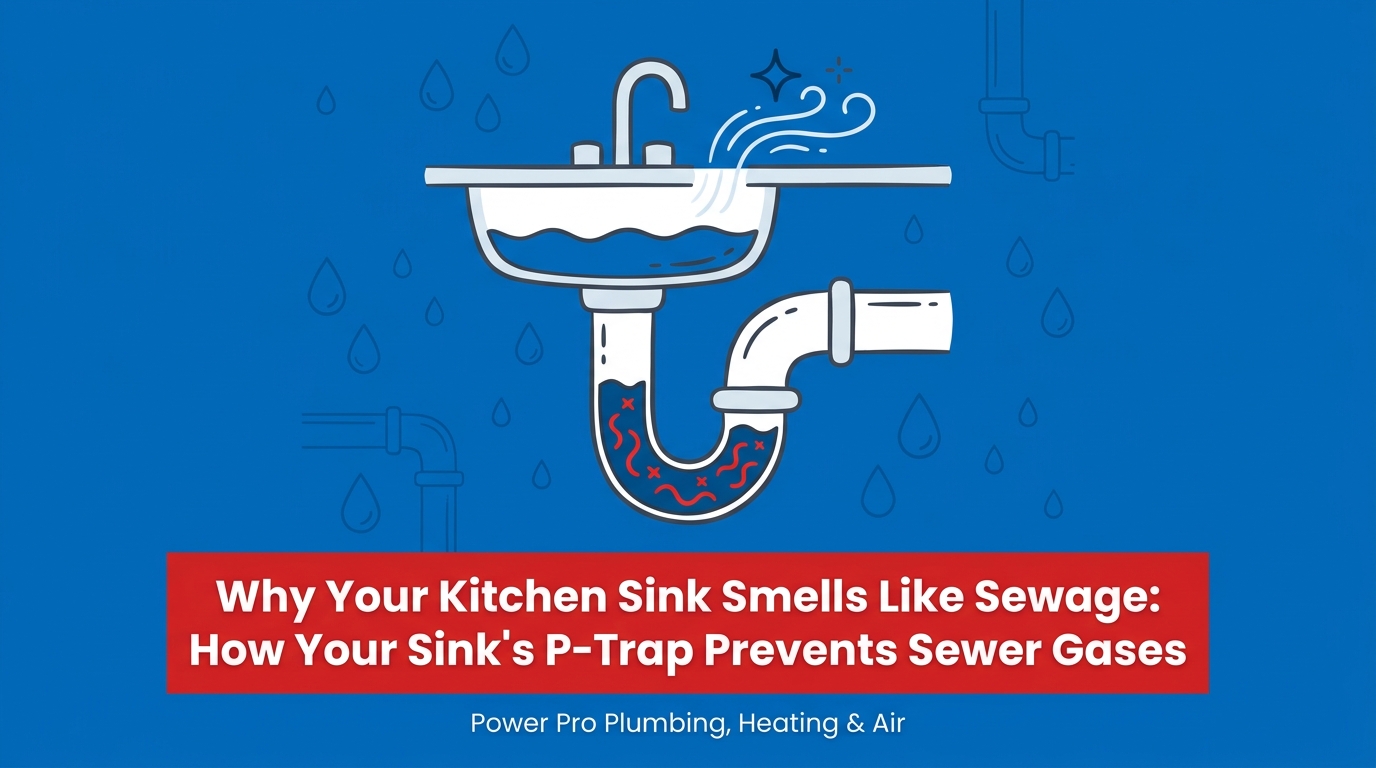
The Unmistakable Odor: When Sewer Gases Invade Your Kitchen
If you have ever walked into your home, headed toward the sink, and been hit with a foul, rotten-egg odor, understanding How Your Sink's P-Trap Prevents Sewer Gases from Entering the Kitchen is your first step toward relief. It is a sudden, unpleasant surprise that can make an entire room uninhabitable and immediately makes you wonder if something is seriously wrong with your home's plumbing. That distinctive, highly offensive smell usually means hydrogen sulfide is escaping directly from your drain lines into your living space. If you are dealing with persistent, overwhelming odors and need immediate assistance, reaching out for professional plumbing services can quickly restore your home's indoor air quality.
The primary defense mechanism standing between your fresh indoor air and the noxious fumes of the municipal sewer system is a surprisingly simple curved pipe located right under your sink. In our years of providing plumbing solutions to homeowners in Cerritos, CA, the Power Pro Plumbing, Heating & Air team has seen firsthand how often this critical component is misunderstood. This mechanism, known as the plumbing P-trap, relies entirely on basic physics to do its job. When it fails, the results are immediate and highly noticeable. Human noses are incredibly sensitive to hydrogen sulfide, capable of detecting it at mere parts-per-billion levels. Because our sensory threshold for these gases is so low, even a microscopic breach in your plumbing's defense system will announce itself loudly.
When faced with this odor, homeowners find themselves at a crucial decision point: determining whether the smell is a minor, temporary issue caused by simple evaporation, or a symptom of a much deeper system failure that requires a professional diagnostic. During a dry September or early fall season, our plumbers frequently respond to calls about minor evaporation issues as indoor humidity drops. However, if the issue stems from a systemic venting failure, ignoring the odor can lead to larger plumbing complications. To understand how to approach the problem, we have to take a first-principles look at how drains, water barriers, and sewer services operate together to keep your home safe and clean.
What Exactly Are You Smelling?
Sewer gas is not a single substance, but rather a complex mixture of toxic and non-toxic gases produced by the breakdown of organic waste. When your sink's defense system fails, you are typically exposed to:
• Hydrogen Sulfide: The primary culprit behind the "rotten egg" smell. It is a byproduct of decaying organic matter and is highly noticeable even in tiny amounts.
• Methane: An odorless, highly combustible gas that naturally occurs in municipal sewer lines.
• Ammonia: A sharp, pungent gas that can irritate the eyes and respiratory system.
• Carbon Dioxide: An odorless gas that displaces oxygen in confined spaces.
While low-level exposure in a residential kitchen is mostly a severe nuisance, chronic exposure to these gases can cause headaches, nausea, and fatigue. This makes understanding and maintaining your sink's plumbing trap an essential part of home maintenance.
How Your Sink's P-Trap Creates a Crucial Water Seal
To understand why your kitchen smells, you must first understand the anatomy of the pipes hidden inside your cabinets. A P-trap is the curved, U-shaped section of piping installed directly beneath the sink's drain. If you open the cabinet doors under your kitchen sink in Cerritos, CA, you will clearly see this distinctive loop before the pipe disappears into the wall or floor. The "P" shape is not merely a design quirk; it is a precisely engineered barrier designed to manipulate fluid dynamics.
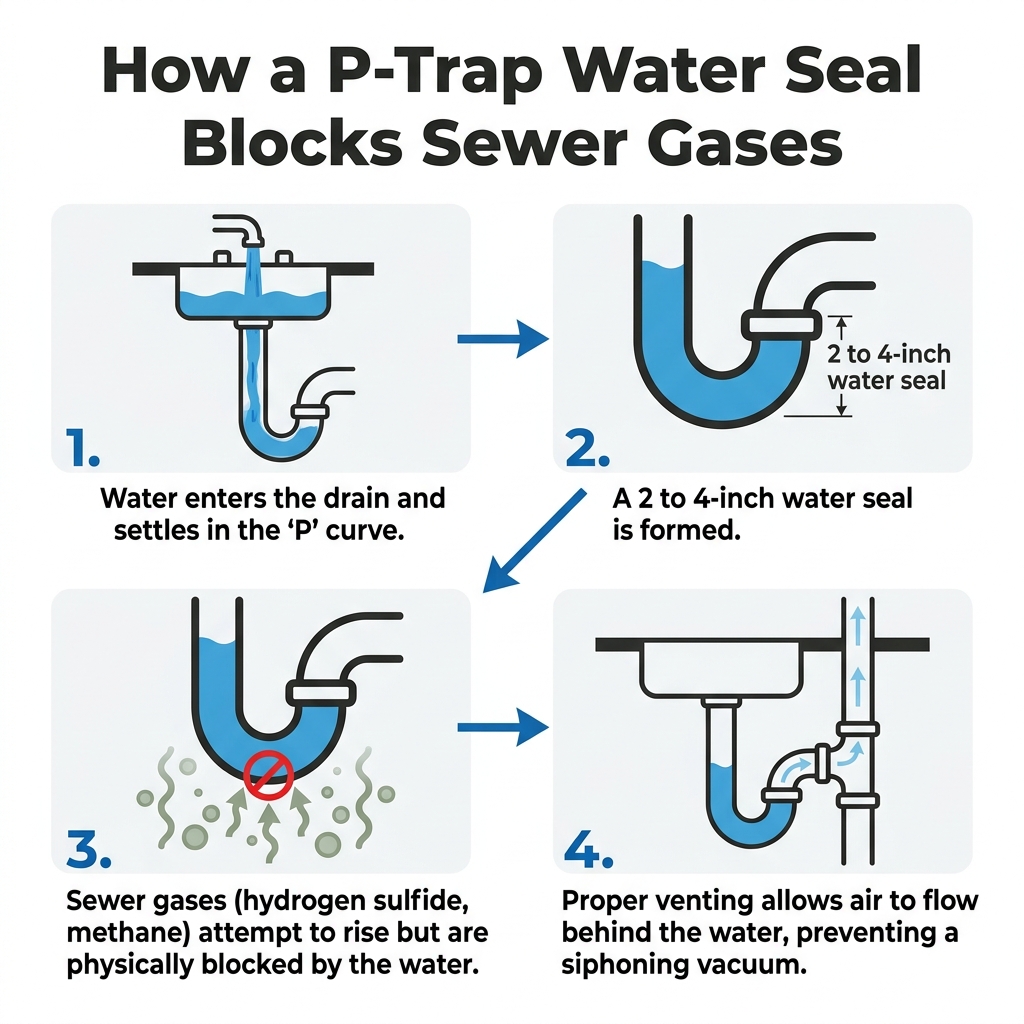
The core function of the P-trap is to create and hold a "water seal." Every time you run the faucet, water flows down the drain, through the curve of the trap, and out to the main sewer line. However, because of the pipe's U-shape, gravity prevents all the water from draining away. A small amount of water—typically measuring 2 to 4 inches deep—remains resting in the lowest point of the curve. This resting water forms a complete, airtight physical barrier across the entire diameter of the pipe.
This simple barrier physically blocks harmful methane, hydrogen sulfide, and ammonia gases from rising up the pipe. Because gases are lighter than water, they naturally travel upward through the sewer lines seeking an exit. When they reach the P-trap under your sink, they hit the water seal and are stopped dead in their tracks. Unable to pass through the dense liquid barrier, the gases are instead routed harmlessly up and out through your home's roof vent.
The Anatomy of a Sink Drain Assembly
Understanding the individual components of your sink's drainage system helps clarify how the water seal is maintained. The assembly consists of several interconnected parts:
• Tailpiece — Location and Function: The straight vertical pipe dropping directly down from the sink basket strainer.
• J-Bend — Location and Function: The actual U-shaped curve of the P-trap where the vital water seal is held.
• Wall Tube (Trap Arm) — Location and Function: The horizontal pipe that carries wastewater from the J-bend into the wall drain.
• Slip Nuts & Washers — Location and Function: The threaded connectors and rubber gaskets that keep the assembly watertight.
As long as this assembly remains intact and the J-bend remains full of water, your kitchen will remain free of sewer odors. However, when that 2 to 4-inch barrier of water goes missing, the gateway to the municipal sewer line is left wide open.

Evaporation vs. Siphoning: Why Water Seals Fail
When the unmistakable smell of sewage enters your home, it means the water seal in your P-trap has vanished. But how does water simply disappear from a closed pipe? The two primary culprits are natural evaporation and active siphoning. Distinguishing between these two causes is the key to solving the problem permanently.
Evaporation is the most common and least alarming reason for a dry P-trap. When a sink is not used for an extended period, the standing water inside the curve simply evaporates into the surrounding air. This is heavily influenced by regional climate factors. For example, the hot, dry early fall climate in Southern California drastically lowers indoor humidity, accelerating the evaporation rate in dormant sinks. If you have a utility sink in the garage or a guest bathroom that rarely sees use, a dry September can easily cause the water seal to vanish in just a few weeks. This is why prepping your guest bathroom plumbing by running water periodically is such an important seasonal maintenance task.
Siphoning, on the other hand, is an active, aggressive process that points to a systemic airflow issue in your home's plumbing. While evaporation takes weeks, siphoning happens in seconds. Siphoning occurs when negative pressure (a vacuum) builds up in your drainage pipes. When a large volume of water rushes down a nearby drain—such as a flushing toilet or an emptying washing machine—it pushes air ahead of it and pulls air behind it. If the plumbing system cannot pull enough replacement air from the roof vent, it will violently suck the air it needs straight through your sink's P-trap, pulling the water seal down the drain along with it.
Recognizing the Signs of Siphoning
If you suspect your water seal is vanishing due to siphoning rather than natural evaporation, watch for these distinct warning signs:
• Gurgling noises: A loud "glug-glug" sound coming from the kitchen sink when another fixture in the house is draining.
• Sudden odors: The sewage smell returns mere hours or days after you run the faucet, long before evaporation could occur.
• Slow drainage: Water pools in the sink and drains sluggishly, indicating a lack of proper airflow in the pipes.
While evaporation is a quick fix that requires nothing more than turning on the tap, siphoning indicates a structural or venting failure that must be addressed to protect your home's air quality.
The Hidden Danger of Illegal S-Traps in Kitchen Drains
One of the most common causes of active siphoning in older homes or poorly remodeled kitchens is the presence of an S-trap. An S-trap is an outdated plumbing configuration that looks exactly like an "S" turned on its side. Unlike a modern P-trap, which features a horizontal arm that connects to a vented wall pipe, an S-trap curves down and then drops vertically straight through the floor. While they were common decades ago, S-traps are now explicitly banned in the modern Uniform Plumbing Code (UPC) for very good reason.
The danger of an S-trap lies in its shape. Because the pipe drops vertically immediately after the trap, a large volume of draining water creates a powerful siphon effect. As the water falls straight down the vertical pipe, it builds momentum, creating a vacuum that easily sucks the remaining water seal right out of the curve. Once the sink finishes draining, there is no water left behind to block the sewer gases. Every single time you use an S-trap, it effectively empties its own protective barrier.
Unfortunately, DIY pipe replacements often accidentally create S-traps when well-meaning homeowners attempt to fix leaks under the sink without understanding venting physics. Using flexible, accordion-style piping to bridge awkward gaps is a common DIY mistake that mimics the dangerous S-trap configuration. Because the fluid dynamics are compromised, the sink will perpetually smell like sewage.
Correcting an illegal S-trap requires more than just swapping a pipe; it requires introducing proper airflow. This is why relying on licensed plumbing repair experts is essential. Power Pro Plumbing's licensed experts ensure correct P-trap installation and venting, protecting homes in Cerritos, CA from toxic gases and completely avoiding the pitfalls of DIY fixes. A professional will typically install an air admittance valve (AAV) or route the drain to a proper vent stack, ensuring the water seal remains stable no matter how much water flows through the system.
When the Problem is the Plumbing Vent, Not Just the Drain
If your sink is equipped with a perfectly installed, modern P-trap but you are still experiencing a disappearing water seal and foul odors, the problem likely extends far beyond the kitchen cabinet. In these cases, the root cause is almost always the plumbing vent system. To maintain proper pressure, every drain in your home is connected to a vent stack—a vertical pipe that typically exits through your roof. This vent allows fresh air to enter the plumbing system, equalizing the pressure so water can flow freely without creating a vacuum.
When this roof vent becomes clogged, the entire drainage system is thrown out of balance. During a dry September or early fall, falling leaves, twigs, and debris can easily accumulate in the exposed vent pipe on your roof. Bird nests and rodent activity are also common culprits. When the vent is blocked, draining water has to pull air from somewhere else. The path of least resistance is usually the P-trap under your kitchen sink.
A blocked vent creates systemic issues that affect multiple fixtures. During a past season, one local homeowner noticed water backing up in their kitchen drains and dishwasher alongside a persistent foul odor. After a thorough inspection, our team determined the issue was rooted in a pressure imbalance. We provided several solution choices to clear the venting and drainage pathways, ultimately performing the chosen repair to restore proper flow and permanently eliminate the backup. This highlights how interconnected your home's plumbing truly is.
Symptoms of a Failing Vent System
Vent clogs are deeply systemic and require professional diagnostics to locate safely. You likely have a vent issue if you notice the following:
1. Synchronized gurgling: The kitchen sink gurgles loudly every time the washing machine discharges or a toilet is flushed.
2. Widespread slow drains: Multiple sinks or tubs across the house are draining slowly, despite having no localized hair or grease clogs.
3. Fluctuating toilet water levels: The water level in your toilet bowl rises and falls dramatically on its own.
4. Persistent odors across rooms: Sewer gases are detected in both the kitchen and adjacent bathrooms simultaneously.
Diagnosing the Odor: Simple Fixes and When to Call an Expert
When you are hit with that rotten egg smell, your first step should always be the simplest diagnostic test available. Start by running cold water down the smelly drain for about 30 seconds. If the issue was simply an evaporated water seal—perhaps because you just returned from a long vacation or haven't used that specific sink in weeks—this quick action will refill the P-trap and immediately restore the protective barrier. Open a window to clear out the existing gas, and the problem should be permanently solved.
However, if the smell returns quickly—within a few hours or days—evaporation is not the issue. A rapidly returning odor indicates that the water seal is actively draining away due to a crack, a loose slip-nut creating a hidden leak, an illegal S-trap, or a systemic venting failure. At this stage, many homeowners make the mistake of pouring harsh chemical drain cleaners down the sink in an attempt to "clean" the smell away. We strongly advise against this. Harsh chemicals generate immense heat that can warp PVC pipes and corrode older metal traps, causing severe damage without doing anything to solve a siphoning or venting issue.
When simple water restoration fails, it is time to bring in professional diagnostics. One customer recently reached out needing a clear explanation of their recurring plumbing problems and foul sink odors. We provided a patient explanation of the underlying pressure issues and probable solutions, ensuring they understood exactly why their sink was failing before moving forward with repairs. If you are experiencing persistent odors, gurgling, or slow drainage in Cerritos, CA, professional drain cleaning solutions and camera inspections are the safest way to identify the root cause without risking damage to your pipes.
Frequently Asked Questions About Sink Odors and P-Traps
Why does my kitchen sink smell like sewage?
A sewage smell in the kitchen is usually caused by a dry P-trap allowing sewer gases to rise unimpeded from the municipal lines. When the protective water seal in the curved pipe beneath the sink vanishes, hydrogen sulfide and methane can enter your home. Occasionally, the smell can also be caused by decaying food trapped deep inside the garbage disposal or a heavily clogged vent pipe. If running water does not eliminate the odor permanently, professional diagnostics are required.
What causes a P-trap to dry out?
A P-trap typically dries out due to either natural evaporation or active siphoning. Evaporation occurs when a sink is left unused for several weeks, a process that accelerates significantly during a dry September or early fall when indoor humidity drops. Siphoning occurs when negative pressure in the plumbing system—often caused by an improper S-trap installation or a blocked plumbing vent—violently sucks the water out of the trap as a nearby fixture drains.
How do you fix a siphoned P-trap?
Fixing a siphoned P-trap requires identifying and eliminating the source of the negative pressure in the drainage system. This often involves climbing onto the roof to clear debris from the main plumbing vent stack to restore proper airflow. If the siphoning is caused by an outdated, illegal S-trap under the sink, the entire pipe assembly must be replaced with a properly vented modern P-trap or fitted with an air admittance valve (AAV) by a licensed professional.
Can a P-trap leak cause sewer gas smells?
Yes, if a crack or a loose slip-nut allows the water seal to slowly drip out, the protective barrier is broken and sewer gases will escape. Even a minor leak that seems insignificant can drain enough water from the curve to expose the air gap. If you smell sewage, you should always check the cabinet floor under the sink for moisture, dampness, or dried water stains around the pipe joints.
Are sewer gases from a sink dangerous?
In low concentrations, sewer gases are mostly a severe nuisance, but they should never be ignored. Prolonged exposure to hydrogen sulfide and ammonia can cause headaches, nausea, dizziness, and respiratory irritation. Because the human nose detects these gases at extremely low levels, the smell serves as an early warning system. Restoring the water seal requires prompt attention to ensure your home's indoor air quality remains safe and healthy.
Protect Your Home's Air Quality with Professional Diagnostics
Dealing with foul odors in your kitchen can be highly distressing, but understanding the mechanics beneath your sink puts you in control. While a dried-out trap from natural evaporation is a simple fix that only takes 30 seconds of running water, recurring sewer odors indicate a much deeper systemic issue. Whether you are dealing with an illegal S-trap that constantly siphons itself dry, or a blocked roof vent that is pulling vacuums across your entire home, these are not problems that can be solved with store-bought chemicals.
Protecting your home's indoor air quality means relying on licensed professionals to diagnose the root cause rather than just treating the symptom. A proper diagnostic ensures that your water seals remain intact, your venting operates smoothly, and your family breathes clean air. If you are struggling with persistent odors, gurgling pipes, or slow drains in Cerritos, CA, we encourage you to explore professional drain and sewer services. Our team is dedicated to providing patient explanations and effective solutions to ensure your plumbing system is safe, up to code, and completely odor-free.